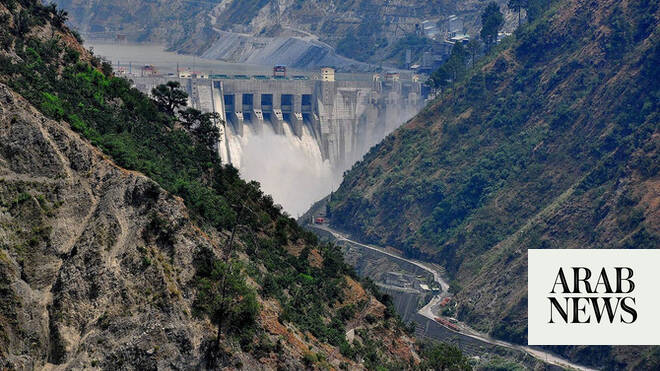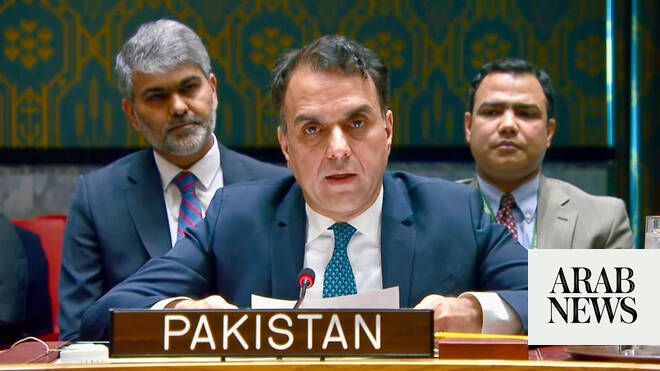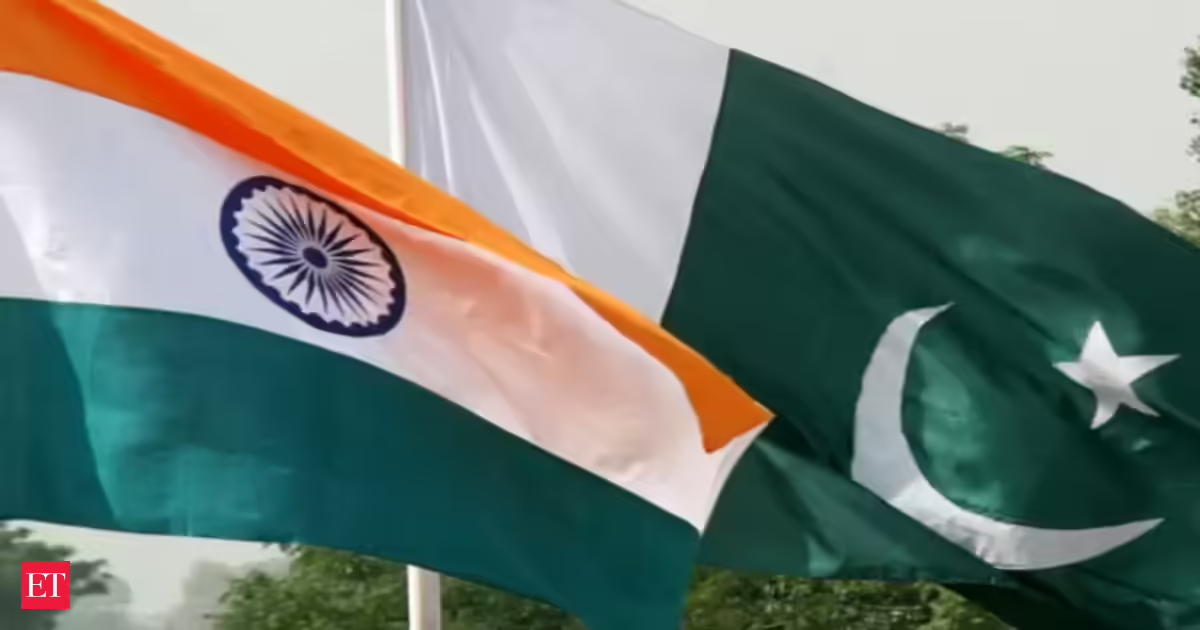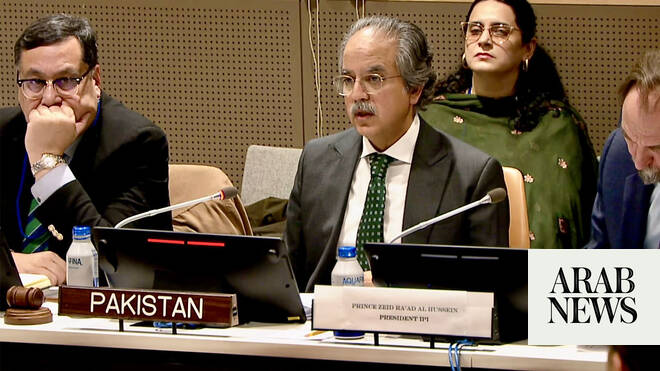
ISLAMABAD: Pakistan’s UN Ambassador Asim Iftikhar Ahmad warned the international community this week that any unilateral suspension of the Indus Waters Treaty (IWT) by India carries with it humanitarian, peace and security implications.
India last year announced it was holding the IWT, mediated by the World Bank in 1960, “in abeyance” amid increasing political tensions with Islamabad. The IWT divides control of the Indus basin rivers between the two nuclear-armed neighbors.
It grants Pakistan rights to the Indus basin’s western rivers — Indus, Jhelum, and Chenab — for irrigation, drinking, and non-consumptive uses like hydropower, while India controls the eastern rivers — Ravi, Beas, and Sutlej — for unrestricted use but must not significantly alter their flow. India can use the western rivers for limited purposes such as power generation and irrigation, without storing or diverting large volumes, according to the agreement.
Speaking at the “Arria Formula Meeting of the Security Council on Upholding the Sanctity of Treaties for the Maintenance of International Peace and Security” on Saturday, Ahmad noted the IWT was regarded as one of the most resilient water-sharing treaties that had stood the test of time, crises and political tensions.