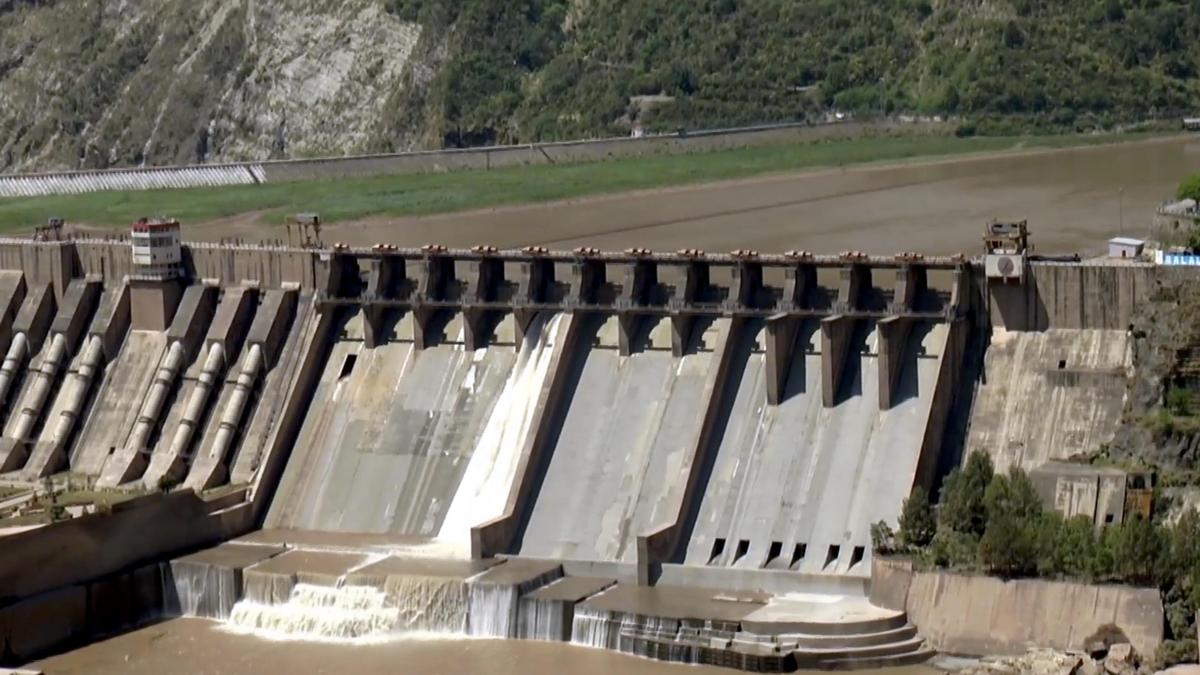
ISLAMABAD: Pakistan on Friday accused India of manipulating flows of Indus waters in violation of a 1960 water-sharing treaty, warning that unilateral actions over the transboundary waters could heighten tensions and pose risks to regional peace.
The Indus Waters Treaty (IWT), mediated by the World Bank, divides control of the Indus basin rivers between the two nuclear-armed neighbors. India said in April it was holding the treaty “in abeyance” after a gun attack in Indian-administered Kashmir killed more than 26 tourists. New Delhi blamed the assault on Pakistan, Islamabad denied it.
The treaty grants Pakistan rights to the Indus basin’s western rivers — Indus, Jhelum, and Chenab — for irrigation, drinking, and non-consumptive uses like hydropower, while India controls the eastern rivers — Ravi, Beas, and Sutlej — for unrestricted use but must not significantly alter their flow. India can use the western rivers for limited purposes such as power generation and irrigation, without storing or diverting large volumes, according to the agreement.
Speaking to foreign envoys in Islamabad, Pakistani Deputy Prime Minister Ishaq Dar accused New Delhi of “material breaches” of the IWT that may have consequences for regional stability, citing “unusual, abrupt variations” in the flow of Chenab river from April 30 to May 21 and from Dec. 7 to Dec. 15.