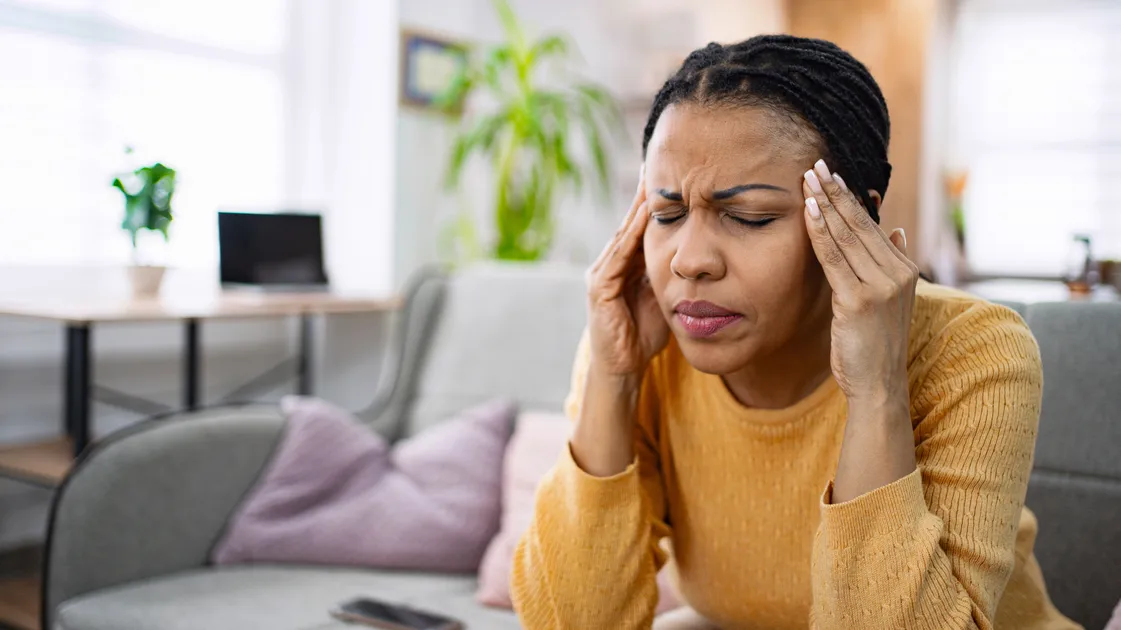
There are more than 39 million people in the United States living with migraines or other severe headache disorders, and millions more of us find ourselves occasionally dealing with an obnoxious throbbing in our noggins.But when should we be worried that the pain we’re feeling might be serious and require immediate medical attention?That’s what we — Raj Punjabi-Johnson and Noah Michelson, the hosts of HuffPost’s “Am I Doing It Wrong?” podcast — asked Christopher H. Gottschalk, a professor and practicing physician at Yale University who established the school’s first headache medicine program, when he stopped by our studio.Listen to the full episode about demystifying headaches by pressing play:Michelson shared a question that came from a listener named Caroline: “She said, ‘I became terrified of brain aneurysms after a friend’s mom died after complaining of a headache one day. When should we be worried about a headache? Are there any symptoms or situations that would make you say, go see a doctor ASAP?’”“If you suddenly get the worst headache of your life, especially if it’s something that went from zero to 60 in a minute or two, yeah, you should call an ambulance because there’s a chance that that’s something like an aneurysm,” Gottschalk told us. He emphasized that a “sudden, severe, explosive headache that makes you miserable and sensitive to light and noise” should be investigated “pretty fast,” but clarified that if someone in their 20s, 30s, 40s or 50s is experiencing more typical headache sensations, it’s most likely a migraine. However, if an older individual notices sudden or unusual pain, they should talk to a doctor.“A person who starts to get headaches for the first time in their life when they’re 60 and they’re having trouble walking, yeah, it’s probably not a migraine — that deserves some evaluation,” he said.So is there a way to prevent ourselves from getting a headache in the first place or experience fewer of them in the future? That’s what the Yale Headache & Facial Pain Center continues to research. Gottschalk told us that striving to be as healthy as possible — getting a full night’s sleep, eating well, moving our bodies, connecting with our communities, and practicing mindfulness — is typically going to “make your quality of life better and are at least going to prevent you from making a disease that you have worse.” However, he was adamant that headaches aren’t a punishment we bring upon ourselves.“A healthy lifestyle is only going to help you, but the flip side of that is what we’re trying to get away from, which is it is not true that people get headaches because they’re not taking care of themselves,” he said. “That’s just blaming the victim.”So, he continued, we need to figure out “how to say that in a way that says, ‘Sure take good care of yourself — it’s good for anything that ails you — but you don’t have this problem because you aren’t living right.’ That [notion] needs to go away.”For more mind-blowing insights about headaches, listen to the full episode above or wherever you get your podcasts.Have a question or need some help with something you’ve been doing wrong? Email us at AmIDoingItWrong@HuffPost.com, and we might investigate the topic in an upcoming episode.
If You Experience These Symptoms During A Headache, Call An Ambulance Immediately
The director of Yale's Headache & Facial Pain Center schools the hosts of HuffPost's "Am I Doing It Wrong?" podcast on everything we need to know about headaches.
542 words~2 min read