Being able to understand the comedian talking in French in his Dress to Kill show led to me learning several languages and working on the continent
ntil the age of 13, I had never taken much interest in school French lessons. I had visited the country a couple of times, on family driving holidays to Brittany and Normandy, but my parents did all the talking and I didn’t see the point of learning le and la, soixante-dix or quatre-vingts. It was just something on the curriculum that I had to do.
Then, one evening at home, in Stirlingshire, Scotland, with everyone else in bed, I sat on the sofa and put on a VHS of Eddie Izzard’s standup show Dress to Kill. My parents were fans and I’d caught a glimpse on TV and thought it looked funny. I was young and some of the material was probably too rude but I enjoyed the surreal and absurd comedy, impressions and mad tangents.
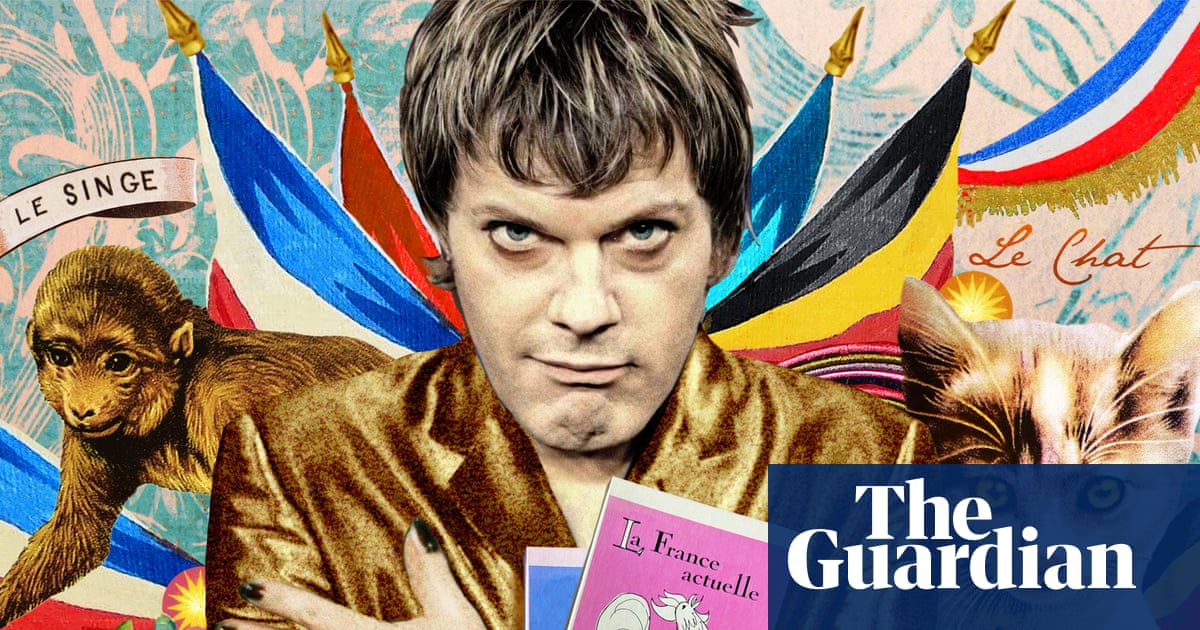
Suddenly, Izzard did a bit about learning French then put together an absurd situation using all these random school French phrases during a trip to France, most memorably trying to bring the words cat (le chat), mouse (la souris) and monkey (le singe) up in conversation. I loved it. It spoke to an experience of the language that I understood. Then, as part of the encore, Izzard redid a whole section of the show in French. I found I could actually understand it. There was one line in particular, “le singe a disparu” (the monkey has disappeared) where a whole verb table suddenly clicked into place. And another sequence about getting out of an awkward conversation by saying “Je dois partir parce que ma grand-mère est flambée” (My grandmother is on fire). Being able to follow had not only let me in on the joke, it made it funnier. All those dry verb tables, conjugations and vocabulary lists finally made sense and I realised languages can be funny – and fun. Unexpectedly, Dress to Kill gave French a purpose.