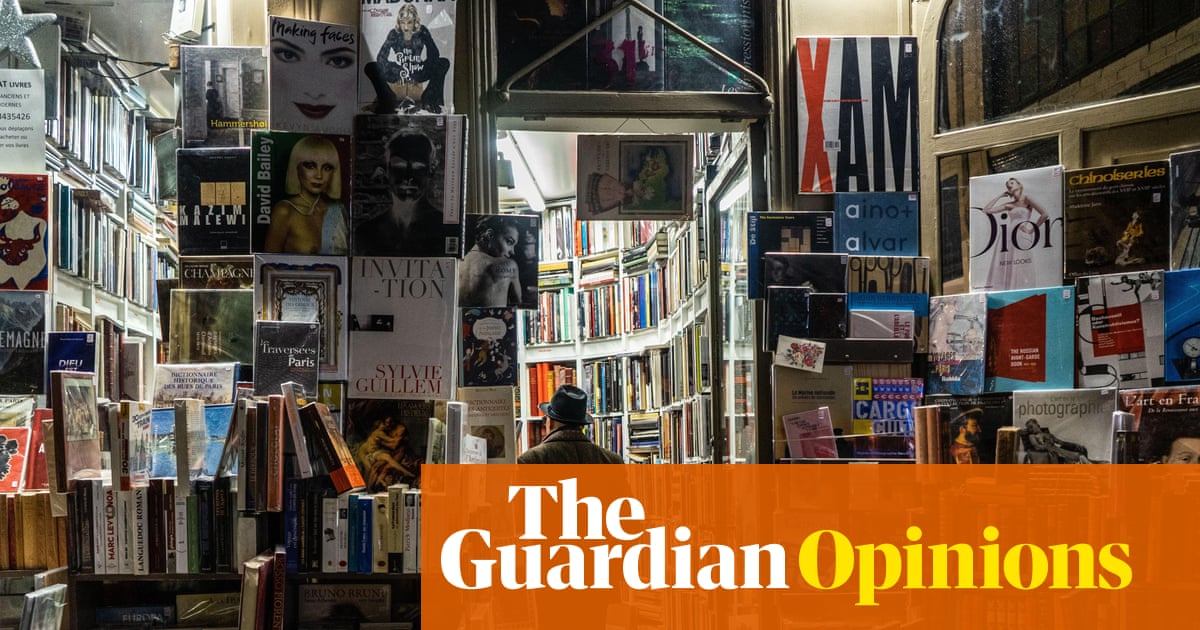
From hefty literary magazines to thriving newspaper kiosks and book sales, the French publishing industry refuses to let printed matter die
I
t took me nine months of 20-hours-a-week French language instruction, and the mycelial network of a year spent in Strasbourg, to feel courageous enough to walk into a bookshop to buy something more challenging than Le Petit Prince. I was immediately humbled: there was an entire new universe, just barely linguistically accessible, and I had no idea who was who, who was writing what or what might interest me.
A year later, I came back to France for graduate school after an 11-month interlude working for an NGO in southern Chad, still feeling like an intellectual toddler in my now two-year-old second language. During the first week of courses, I asked a highly bilingual classmate where in the French media landscape I could find long-form narrative reporting with a literary edge – something comparable to the New Yorker. “You have to read XXI,” he told me, and then a few days later brought me a copy.
Now 18 years old and recently rebranded as Revue21, the thick quarterly publication is a major reference point for France’s “mook” (magazine-book) scene, and for French narrative long-form journalism. It specialises in stories that – as its editor, Guillaume Gendron, put it to me – allow the writer to be present in them, acknowledge their own subjectivities and doubts, and in so doing establish a relationship of trust with the reader. Holding the 162-page winter issue in my hands, I feel the effort that went into reporting and drafting these stories. If I’m going to get lost in something, it’s not in one of a hundred open tabs – it’s in the physical pages in front of me.