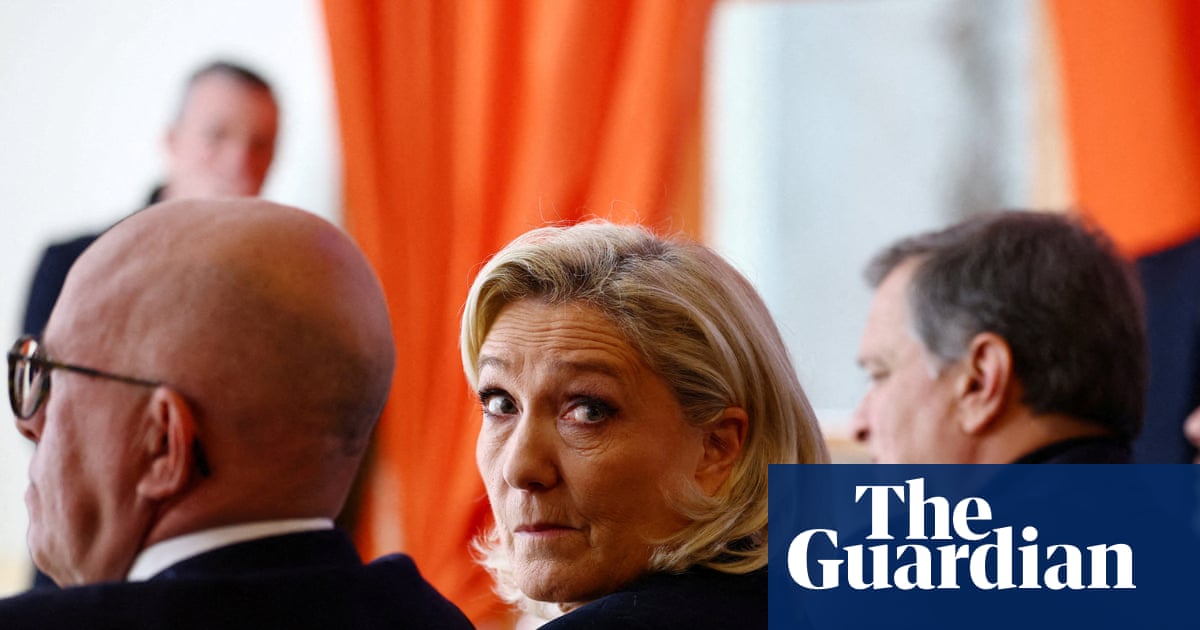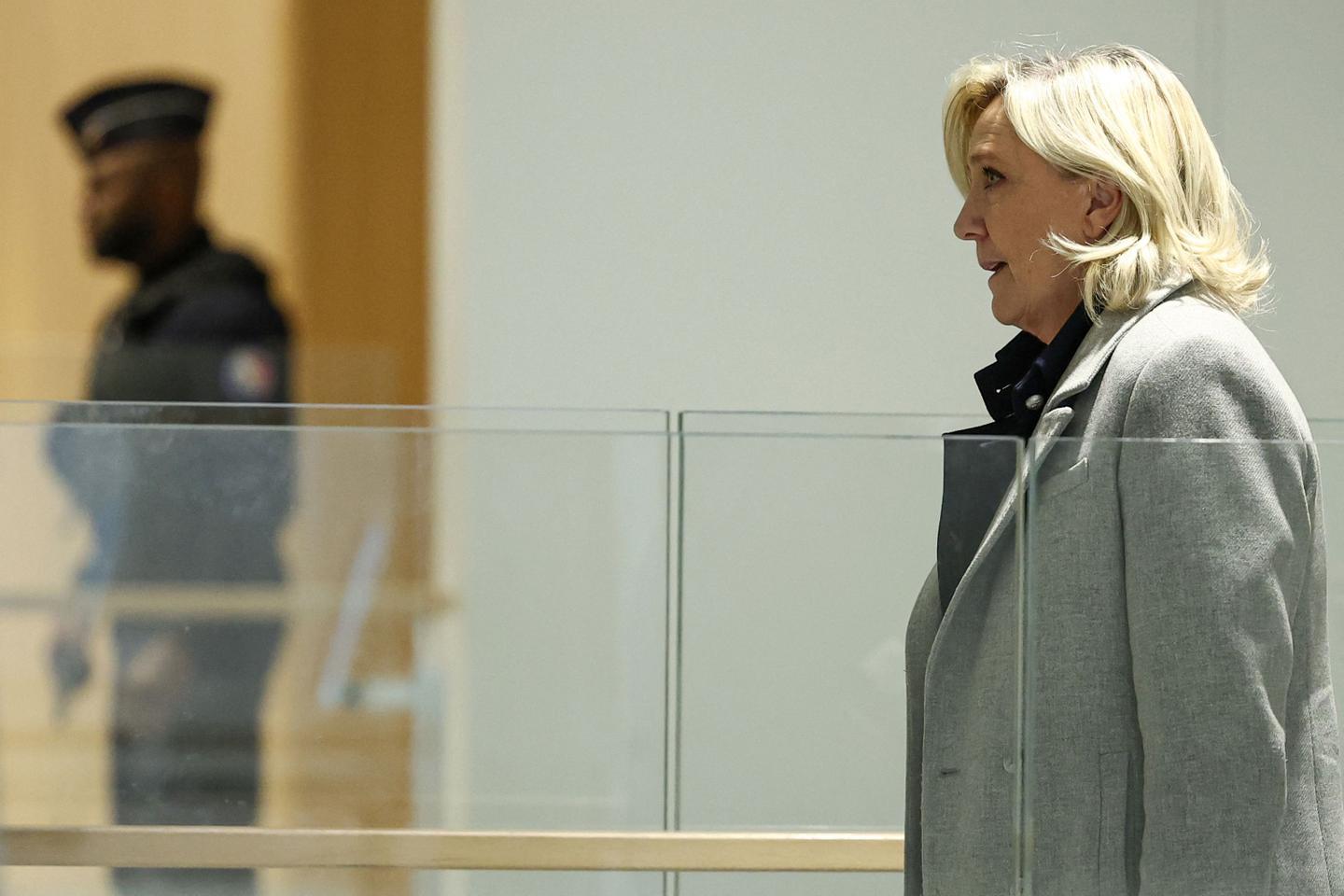
Marine Le Pen, the Rassemblement National (RN, far-right) MP for Pas-de-Calais, at the end of the first day of her appeal trial in the case concerning the parliamentary assistants of the Front National, the predecessor to the RN, at the Paris court on January 13, 2026. THOMAS SAMSON/AFP
On Tuesday, January 13, Marine Le Pen, closely followed by her 11 co-defendants, significantly shifted her defense strategy on the first day of the appeal trial over hiring fake European parliamentary assistants who were actually working for the far-right Front National (FN), renamed the Rassemblement National (RN) in 2018.
There was no longer any question of challenging the court's legitimacy on the grounds of separation of powers, denying any wrongdoing, or insisting that the assistants only carried out "political work" for their MPs in Paris or Strasbourg, and that it was not for the European Parliament to decide otherwise.
This strategy, adopted during the first trial, did not succeed. On March 31, 2025, the judges found that Le Pen, like most of her co-defendants, had misused European public funds by paying parliamentary assistants who, according to the investigation, were assigned to other tasks. The conviction resulted in a prison sentence and a five-year ban from holding public office for Le Pen, effective immediately.