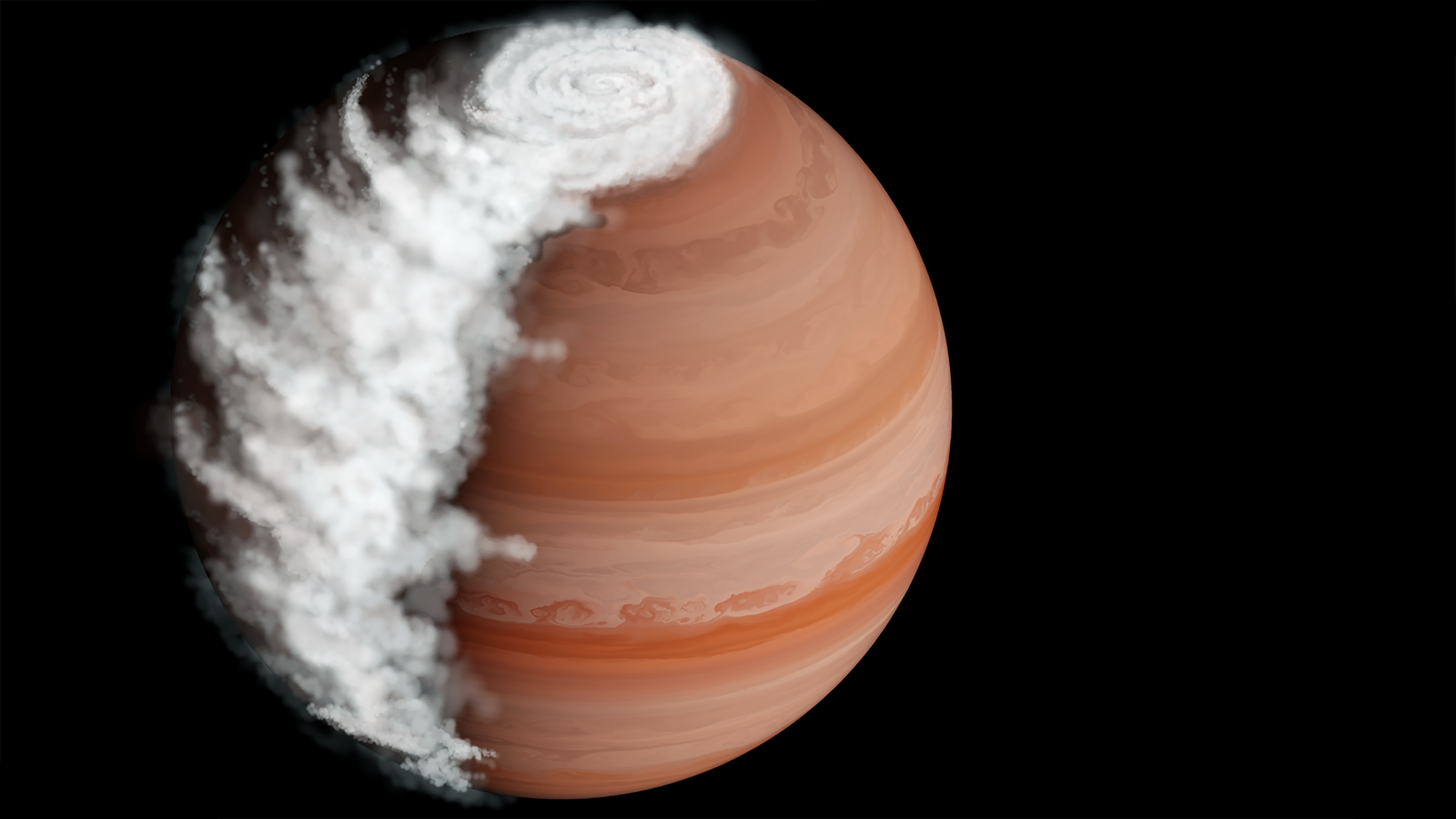
Scientists from the Indian Institute of Astrophysics (IIA) have unveiled an intriguing secret behind the dusty veil of a young star named T. Chamaeleontis (T. Cha), quietly forming planets about 350 light years from Earth when part of its circumstellar inner wall collapsed partially.
According to the Department of Science and Technology, this can help rewrite our understanding of how planetary systems evolve.
T Chamaeleontisan (T. Cha) is surrounded by a planet-forming disk called circumstellar disk that contains a wide gap- likely carved out by a newborn planet.
“Normally, the dense inner regions of such disks act like a protective wall or veil blocking much of the star’s ultraviolet light from reaching the colder, outer regions. That shielding makes Poly Atomic Hrydrocarbons (PAHs), flat, honeycomb-shaped molecules (Benzene rings) made of carbon and hydrogen thought to be among the earliest precursors of life’s chemistry, especially hard to detect around low-mass, Sun-like stars,” the department said.
While these molecules are common in interstellar clouds, detecting them in the disks of low-mass, Sun-like stars has been challenging due to the low amount of ultra violet light produced by them.