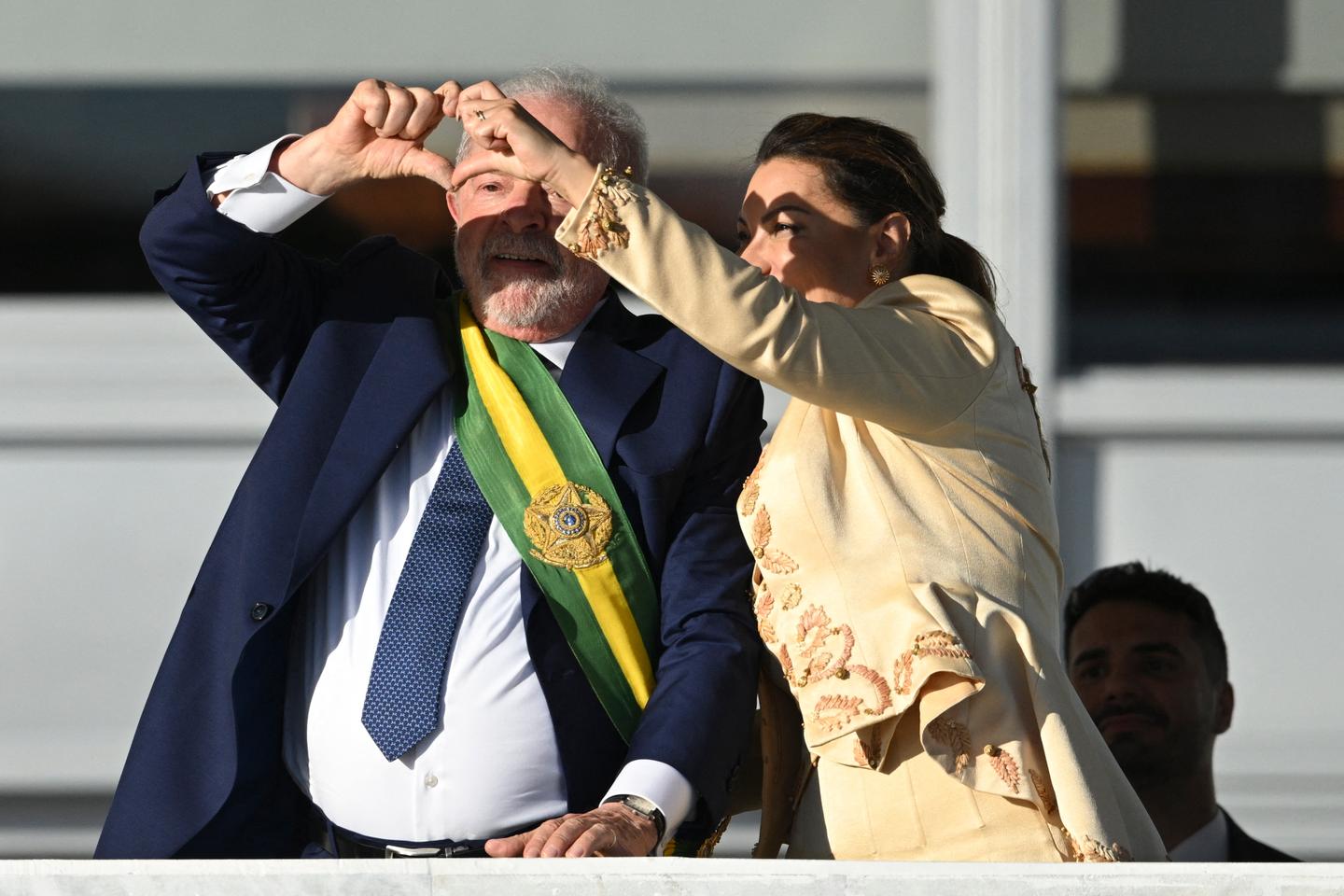
Brazilian president Luiz Inacio Lula da Silva and his wife, Rosangela da Silva, form a heart with their hands after the inauguration ceremony in Brasilia, January 1, 2023. EVARISTO SA/AFP
"Adeus, ano velho, feliz ano novo!" ("Goodbye old year, happy new year!") As in the rest of the world, New Year's Eve draws near under the tropics. On January 1, millions of Brazilians will wish each other the best for the coming months: money "in their pocket," health "to spare" – but above all, love. Hoping to attract their soulmate, lonely and superstitious hearts jump three times, wear red underwear or eat lentils or 12 grapes under the table – making sure to keep the seeds in their wallet.
No one takes these traditions lightly. In Brazil, love is a major subject. There are countless ways to express, define, implore or wish for it. The topic has long overflowed from the domestic sphere to the social, political and even collective identity. "Brazil, be the symbol of eternal love," proclaims the national anthem.
Brazil nearly included love in its national motto. When the Republic was proclaimed in 1889, the phrase "Order and Progress," borrowed from the French positivist philosopher Auguste Comte, was chosen for the flag. Yet the full quote was: "Love as a principle, order as the foundation, progress as the goal." Love, deemed frivolous, was cut. This omission was never accepted by Socialist MP Chico Alencar, who repeatedly – and as recently as this year – proposed to amend it to "Love, Order and Progress."