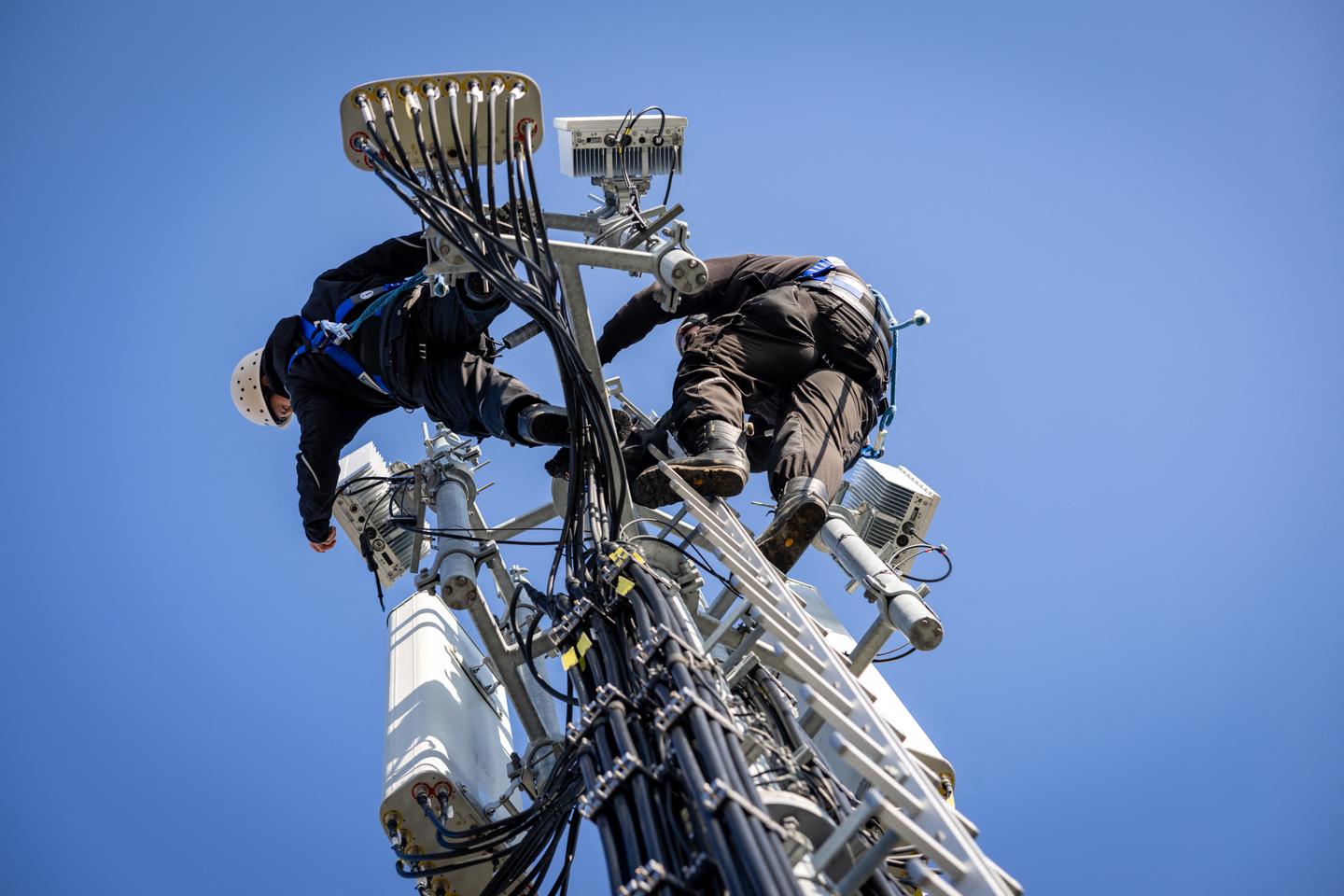
Technicians from Deutsche Telekom repair an active 5G antenna in Nuremberg, Germany, on January 21, 2025. DANIEL KARMANN/DPA/PICTURE-ALLIANCE/MAXPPP
The axe fell three days before Christmas. On Monday, December 22, Telefonica approved a sweeping redundancy plan affecting 5,500 jobs. For employees, these cuts – which represent one fifth of the historic Spanish operator's workforce – were a further blow, as the group had already eliminated 3,400 positions in 2024. Its goal is to save nearly €600 million per year starting in 2028.
But Telefonica was not the only telecom giant to make sweeping workforce cuts. Many other companies, both in Europe and the United States, took similar cost-cutting measures in 2025, turning the year into a particularly harsh one for workers. In the first half of the year, the British operator BT, another historic company, cut 5,000 jobs. The same was true for its German counterpart, Deutsche Telekom, which let go of 3,300 employees in the third quarter over the course of a year, as well as the Scandinavian operator TeliaSonera, which announced plans to cut up to 3,000 jobs in Sweden.
American operators also tightened their belts. Verizon, the leading telecommunications company in the US, launched the largest restructuring in its history on November 20, affecting 13,000 jobs. Equipment manufacturers in the telecom sector fared no better: the Finnish company Nokia, which announced 14,000 job cuts over three years in October 2023, asked France in November to bear 427 layoffs and warned Germany it would close a site employing 700 people in Munich by 2030. Ericsson, its Swedish rival, also planned to reduce its headcount in France by 130.