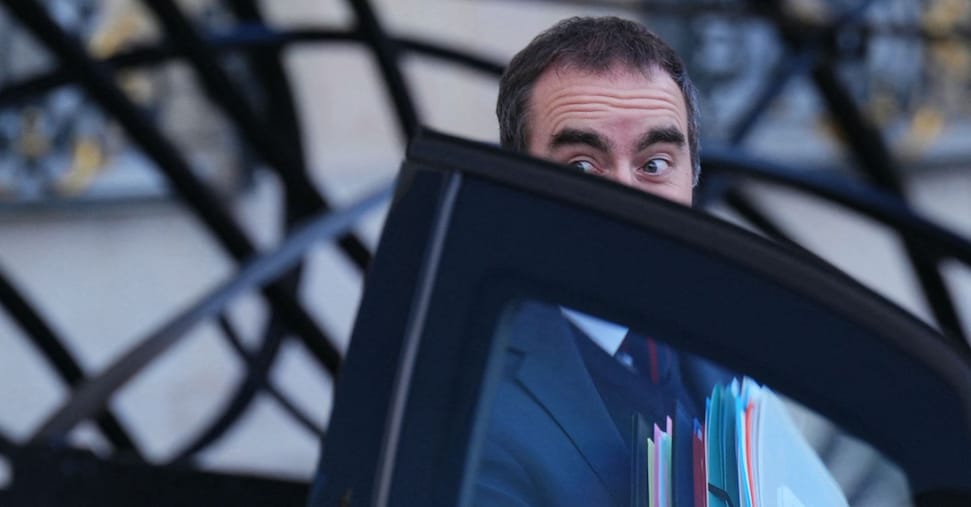
Prime Minister Sébastien Lecornu, at the Elysée Palace in Paris, on December 22, 2025. STEPHANE DE SAKUTIN/AFP
France will wake up on January 1, 2026 and still not have a budget. With parliament unable to reach an agreement on the state budget bill, the government chose not to risk a no-confidence vote. Instead, on the evening of Monday, December 22, it put forward a "special law" during a cabinet meeting. "The question isn't how the budget is passed, but what we put in the budget," said government spokesperson Maud Bregeon, though the budget bill's content had already been under parliamentary discussion for two and a half months.
Subscribers only
French PM Lecornu faces high-stakes dilemma on 2026 budget
The special law, a temporary measure that provides for funding the day-to-day operations of the state, public administrations and local authorities, "is not a budget," "does not solve the deficit problems" and, "on the contrary, creates problems regarding the country's priorities," Emmanuel Macron said, behind closed doors at the cabinet meeting. "This is not satisfactory," the president explained, adding that "we will have to, as soon as possible, in January, give the nation a budget." He said that the budget bill "must meet the 5% deficit target and fund our priorities," adding that the special law, which could be unanimously adopted by parliament on Tuesday, "demonstrates the government's willingness to give one last chance to final negotiations." Meanwhile, Prime Minister Sébastien Lecornu said that the budget "could still be passed without government intervention."