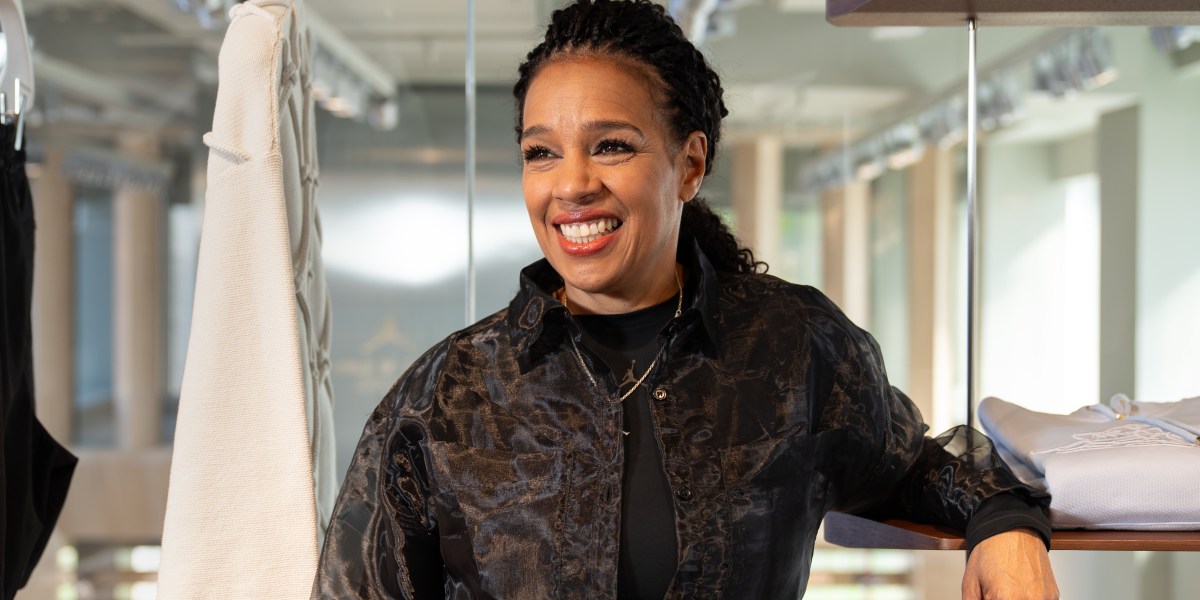
Within Nike, the Jordan brand has always come with a significant opportunity—and challenge. The more than $7 billion business is the “blueprint” of what it means to be an athlete-centered brand, says brand president Sarah Mensah (so much so that its origin with Michael Jordan was dramatized in the film Air).
But for some athletes, the Jordan legacy has come with too much pressure. “In the men’s game, we tend to compare every athlete: are they another MJ?” Mensah says. “That can kind of get in your head.”
That’s one reason Mensah is excited about the potential for female athletes and the Jordan brand, as well as its women’s business. “You don’t have that same sort of comparison with female athletes,” Mensah says. WNBA star Napheesa Collier moved from an overall Nike deal to the Jordan brand earlier this year, citing the investment the brand was making in the women’s game as a reason for the switch. Last year, the Jordan brand debuted the Jordan Heir series, which was designed for WNBA stars. It was the first line of product from the brand “specifically for female hoopers,” Mensah says.
Beyond comparisons with a basketball legend, Mensah thinks female athletes inherently understand the DNA of the Jordan brand, which comes down to “greatness” on the court and off. “They’re defining the game in their own terms, and they’re overcoming adversity,” she says. “They’re overcoming perceptions. And there’s something about that. There’s something about charting a new course, going in a new direction, redefining the game.” These themes are among the top reasons female athletes resonate so strongly with consumers, making them the most effective influencers compared to male athletes or general lifestyle influencers.