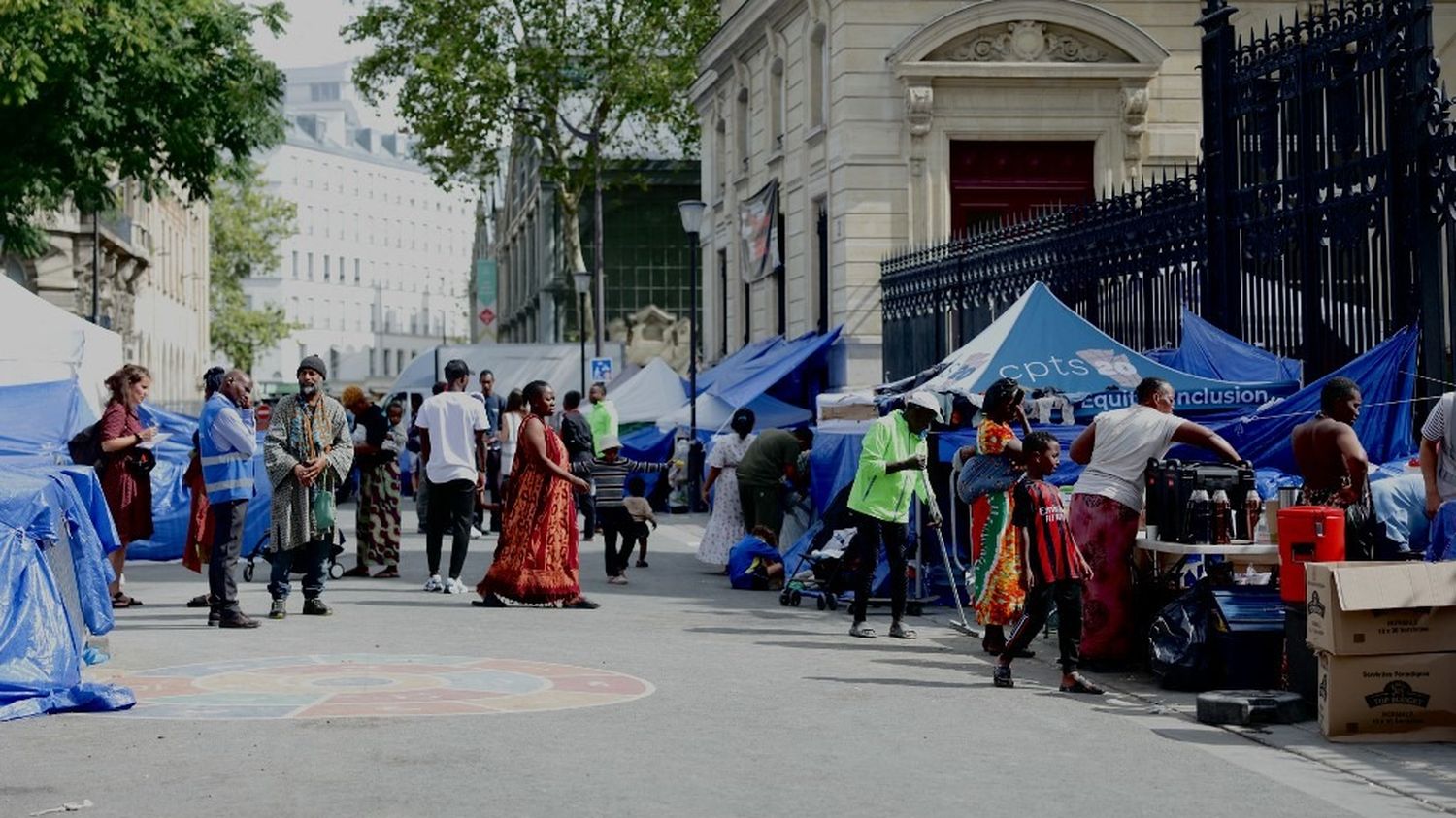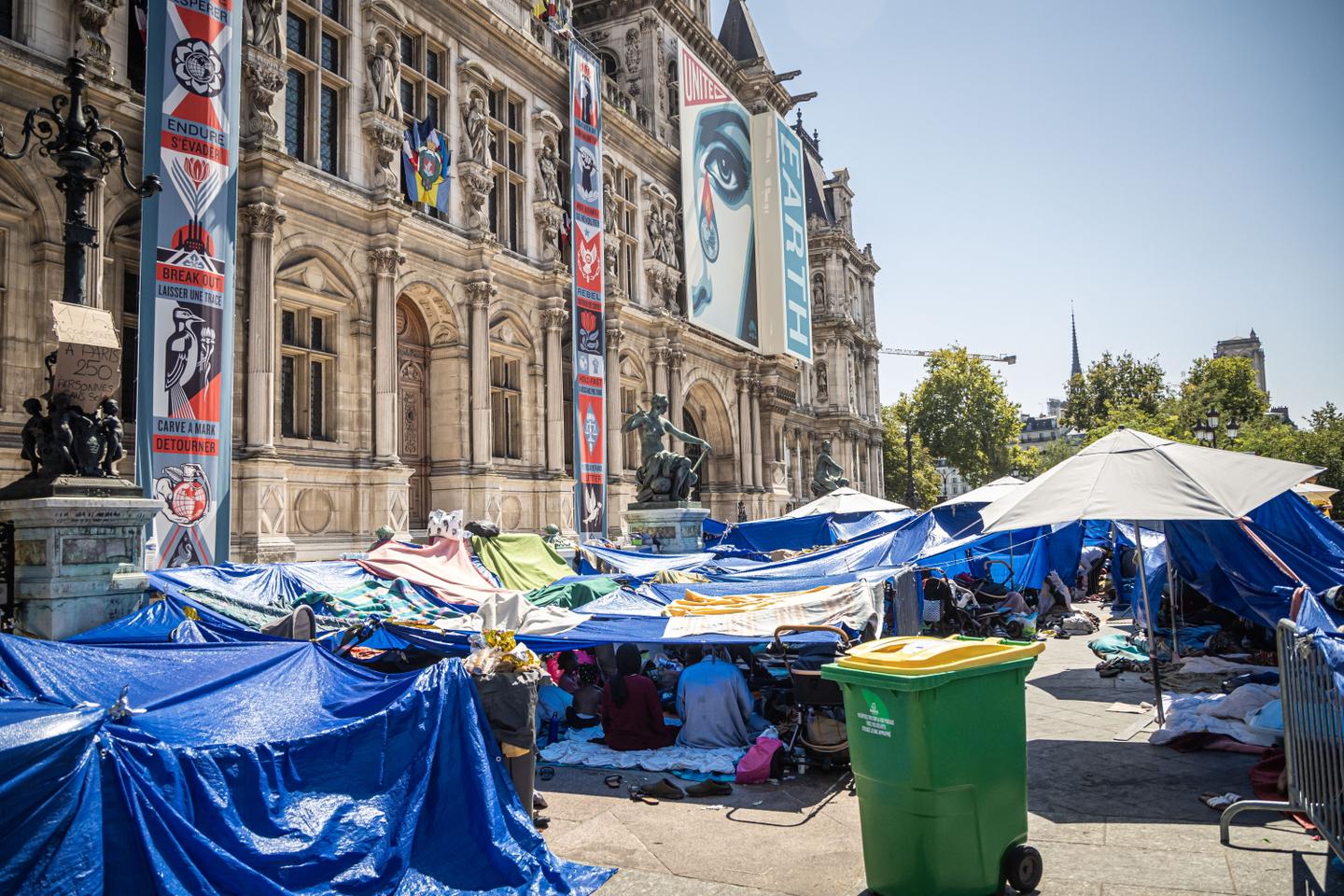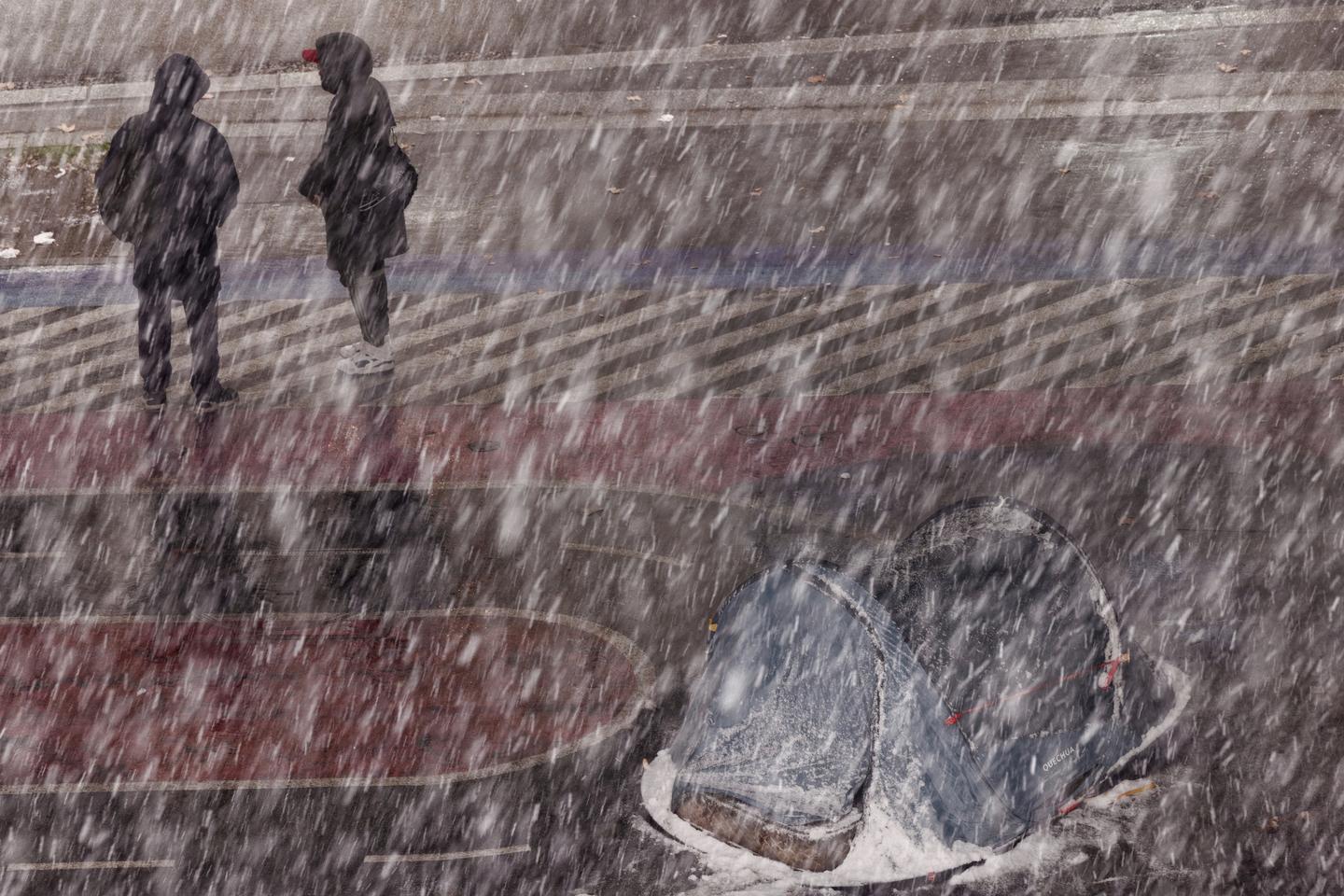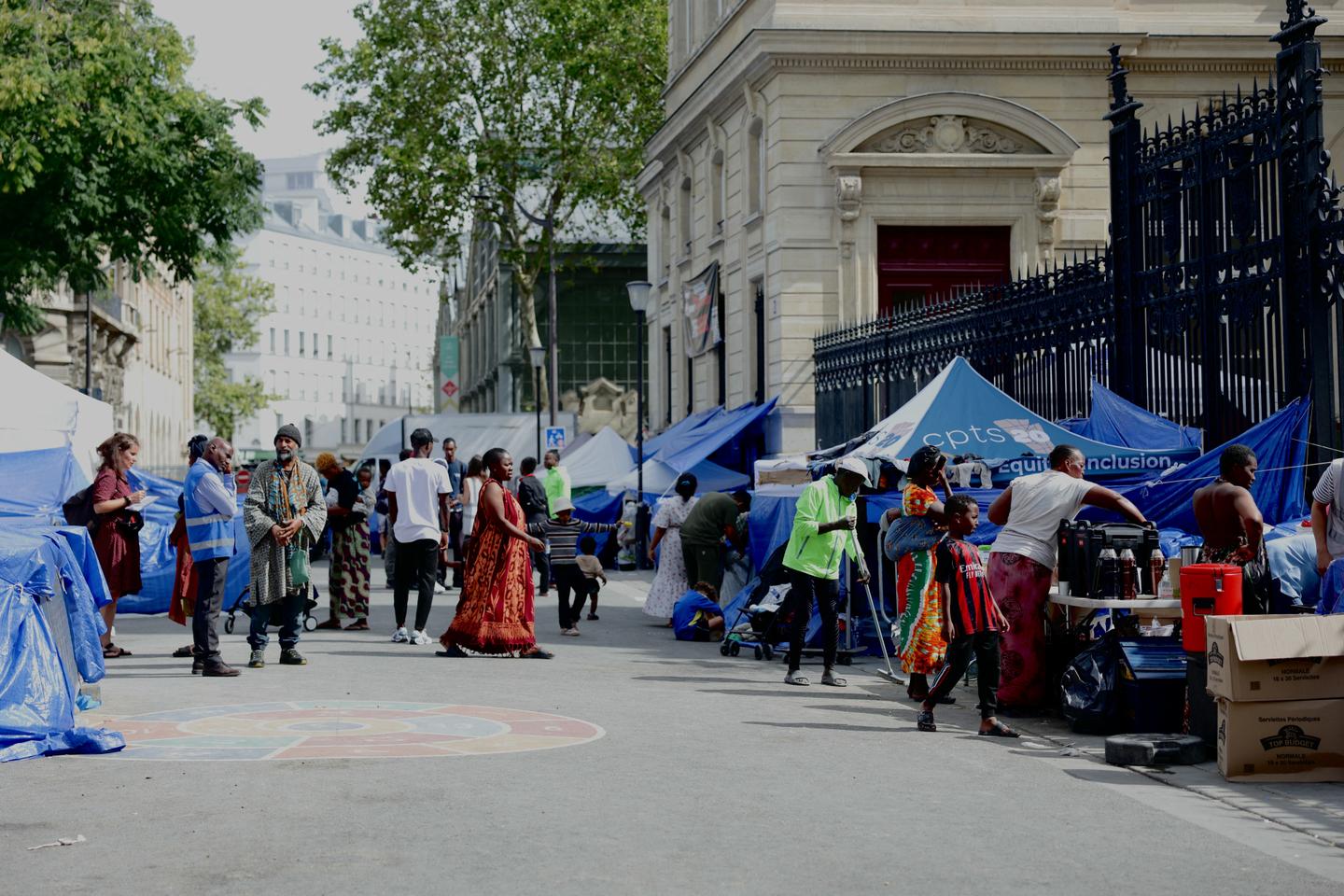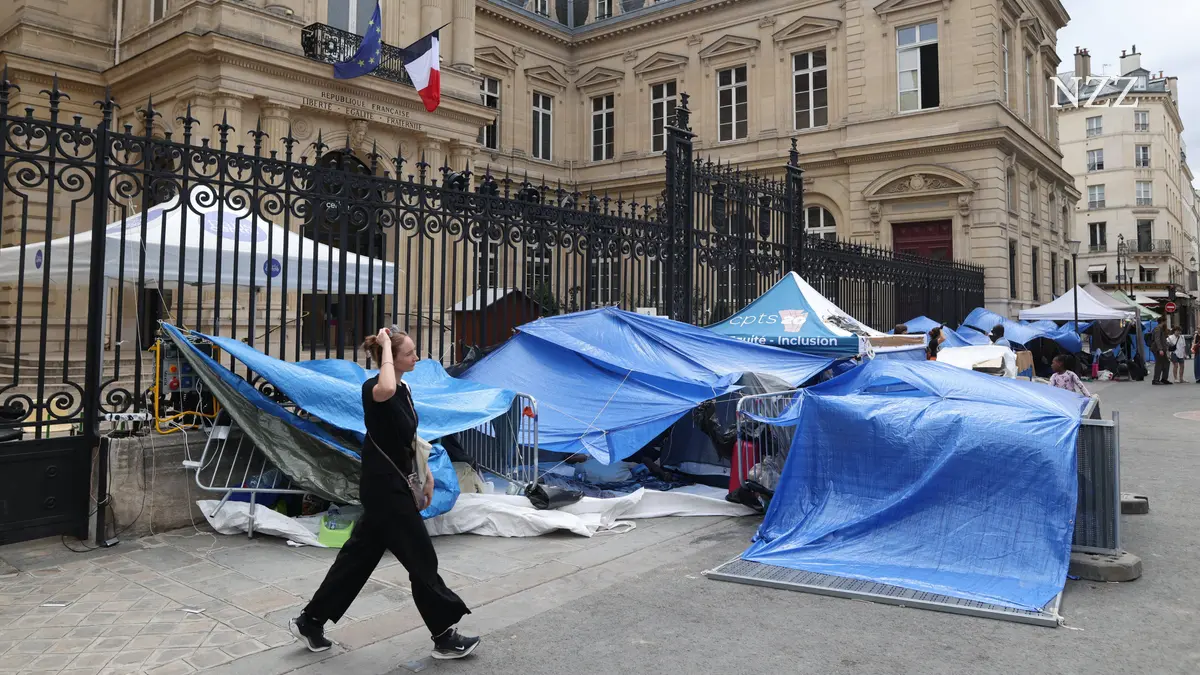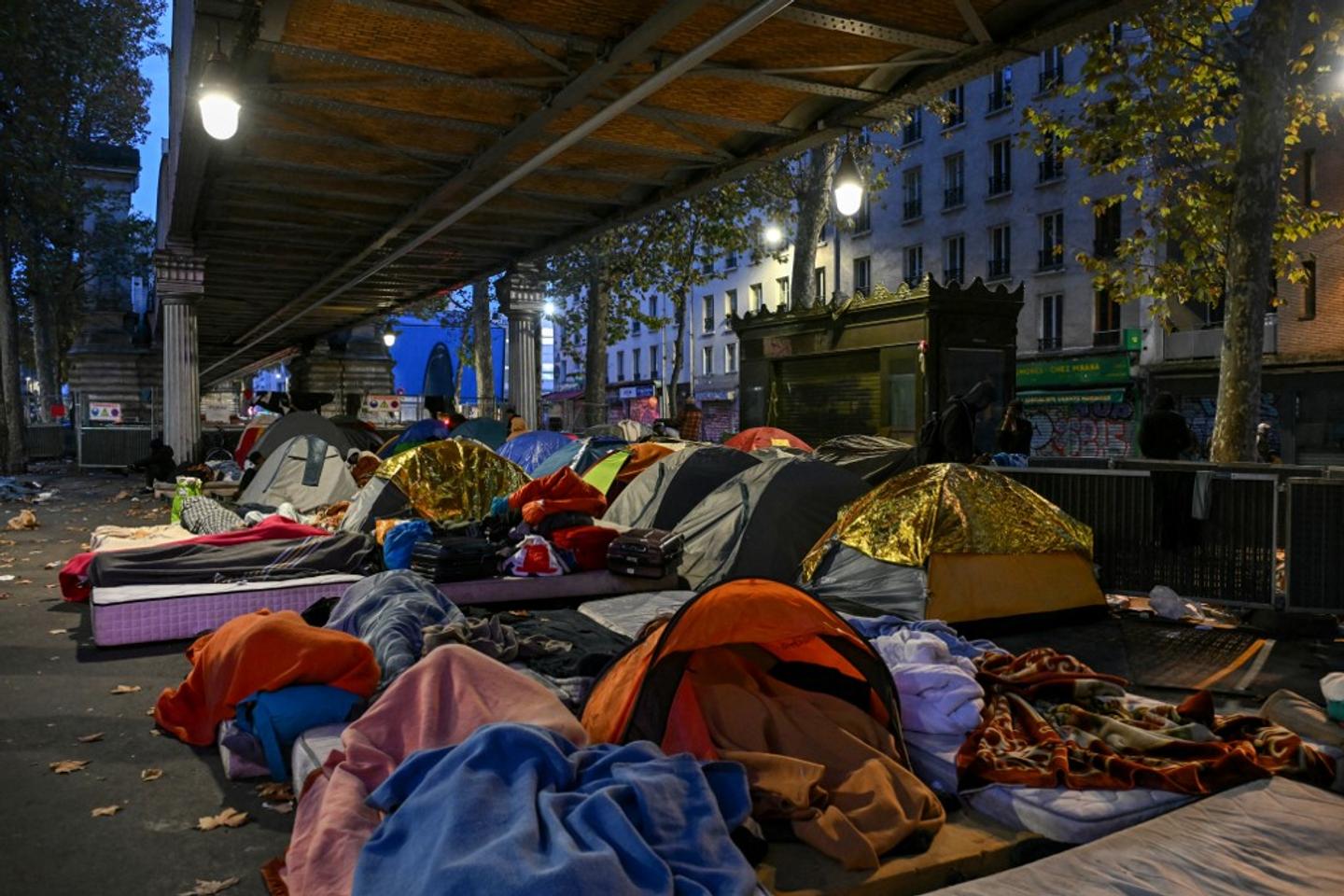
A migrant camp under the elevated metro at Stalingrad station, Paris, November 5, 2025. BERTRAND GUAY/AFP
The few tents set up on construction pallets near the Canal Saint-Martin in the 19th arrondissement of Paris appeared empty on the afternoon of Friday, December 12. Léa and Ismail (those cited by first name have requested anonymity), who work for the outreach service that government and city officials have entrusted to the charity France Terre d'Asile, nevertheless tried calling out "bonjour."
Only one tent opened. Sitting cross-legged on thick blankets, Atiqullah, clean-shaven, explained mostly in English that he was Afghan, 45 years old and had been granted asylum. A gardener and construction worker in his home country, he had worked in Belgium for two years but found nothing in France. Did he have access to a doctor? He showed his box of paroxetine, an antidepressant. How long had he been on the streets? "A long time. Too long," he replied wearily.
By entering the refugee's residence permit number into her phone, Léa could see that her colleagues had already met him, and that in July, he had agreed to go to the city of Bourges in central France. He went to spend three weeks in one of the regional reception centers meant to help direct homeless people from the Paris region, where shelters are overwhelmed. But places were lacking in Bourges as well. Once turned back out onto the street, Atiqullah preferred to return to Paris.