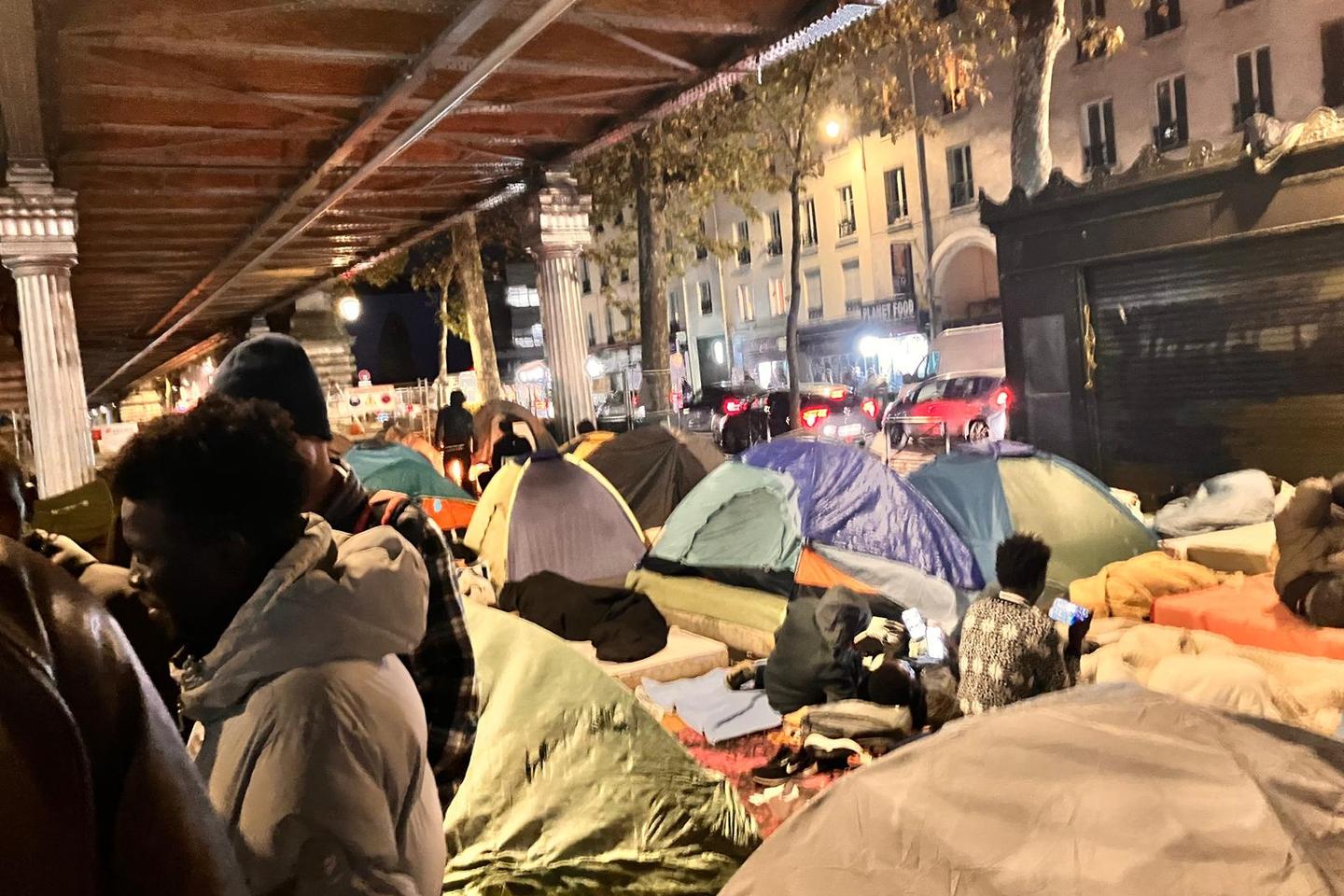
Under the bridge that Paris metro line 2 runs on, near Stalingrad station, Friday, November 7, 2025. MUSTAPHA KESSOUS
On his first night on the Paris pavement, Nouri Issa Daoud jumped at a metallic noise that came from above. "I was afraid," said the 24-year-old Sudanese from Nyala, the capital of South Darfur. The rumble reminded him of the bombings in his city and the war that has ravaged his country since April 15, 2023, pitting the regular army against the paramilitaries of the Rapid Support Forces (RSF). The sound was only that of the métro line 2 passing, which runs just above the improvised camp.
On the evening of November 10, Daoud – wearing a purple hat on top of a scar in the middle of his forehead and a down jacket – was preparing to sleep for the third time on a mattress yellowed by the weather, laid on the central median of Boulevard de la Chapelle, in Paris's 10th arrondissement, a stone's throw from Stalingrad station in the north of the city.
Around him were tents, other makeshift beds and about 100 Afghan, Tunisian and Sudanese exiles. The latter, newly arrived in France, said they had fled "death," leaving behind a conflict that has killed tens of thousands and displaced 12 million civilians.