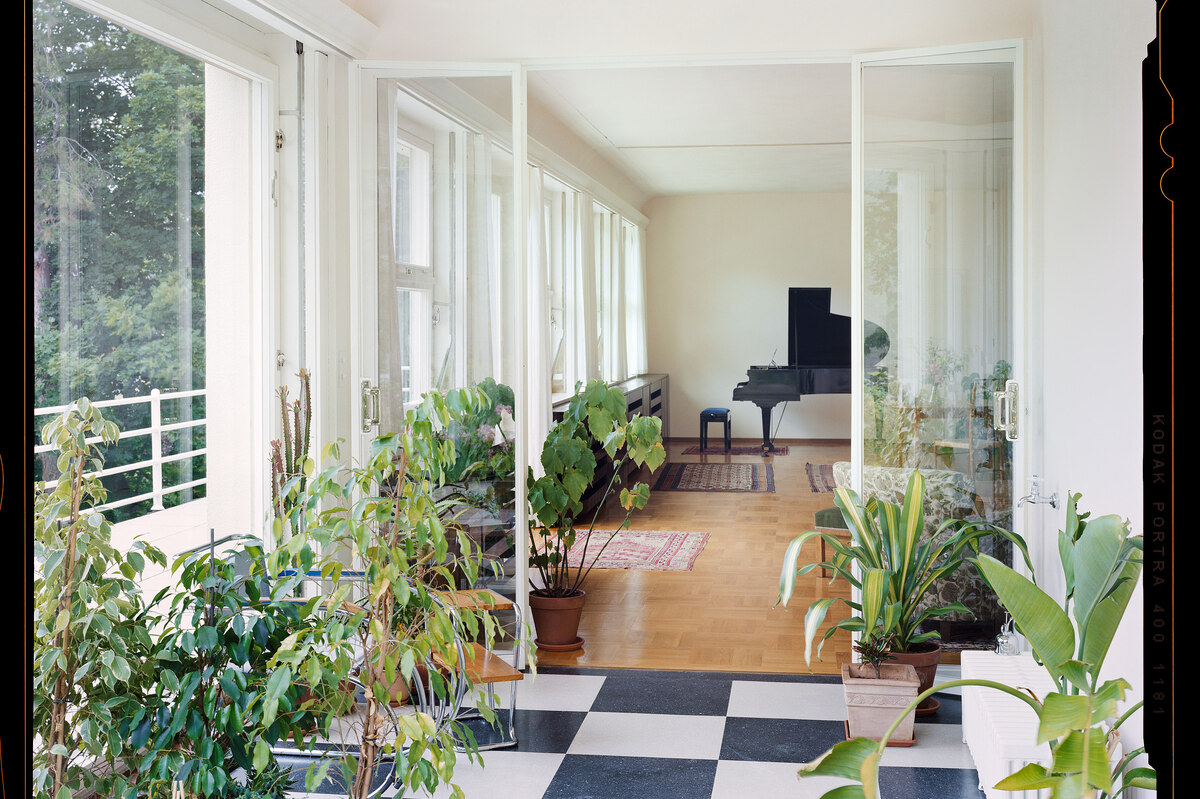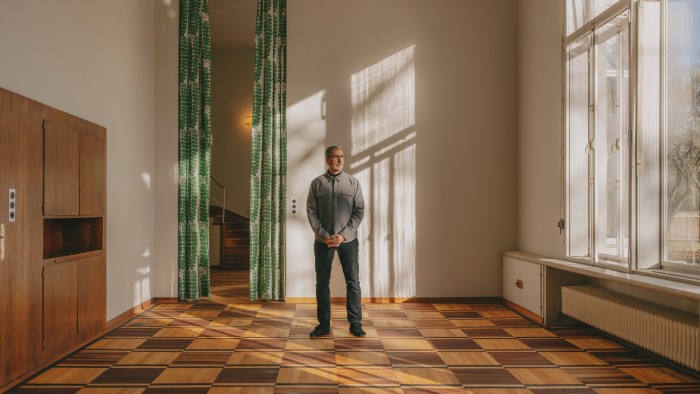
In 1929, Julius Beer, co-owner of the Berson rubber company, bought a sizeable plot of land in the Viennese neighbourhood of Hietzing and began making plans for an ambitious new home. The Beers, a family of wealthy industrialists, weren’t out of place among the other residents in this affluent corner of the capital. But rather than plumping for one of its many art nouveau mansions, Beer envisioned a sleek modernist house that pushed the boundaries of contemporary architecture. For this, he turned to Josef Frank and Oskar Wlach.
A view from the garden of the villa’s bay windows and terraces © Julius Hirtzberger
The architects had worked mostly on social-housing projects and had only designed a handful of private homes – of which Villa Beer would be by far the largest. The house was completed just three years before the ascent of Nazism and an increasingly antisemitic climate forced Frank, who was Jewish, to emigrate to his wife’s native Sweden. It was in Scandinavia that the colourful textiles and furniture he designed for Svenskt Tenn, the Stockholm home-furnishings company, would secure his name as a leading figure in midcentury design. But in the early 20th century, Frank was known for his buildings: he had represented Austria at the first meeting of Le Corbusier’s International Congress of Modern Architecture in 1928.