RIYADH: Wolves are often portrayed in Western stories and films as dangerous, unpredictable predators. In contrast, Arabic perspectives offer a more nuanced view.
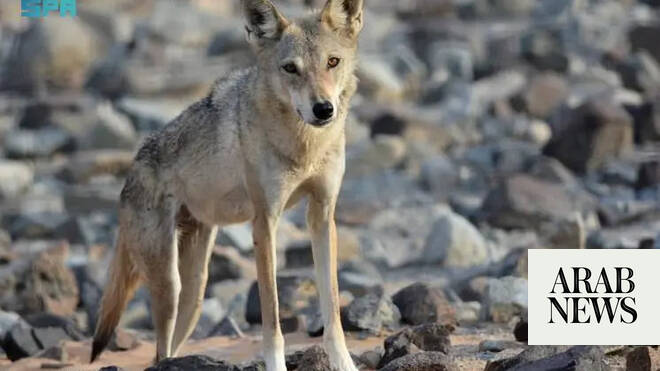
In Saudi Arabia, wolves are admired for their resilience, intelligence, and role in the natural environment. The Arabian wolf, or Canis lupus arabs, is one of the Peninsula’s iconic native predators.
For centuries, it shaped both ecological and cultural landscapes across Saudi Arabia. However, its population declined in recent decades. Today, conservation efforts led by the National Center for Wildlife aim to protect and restore this species.
Saudi regulations now make it illegal to display, sell, or transport wolves without authorization. NCW’s initiatives include studying wolf genetics, developing breeding programs to restore wild populations, raising public awareness, and imposing fines of up to SR80,000 ($22,000) for unlicensed hunters.
The Arabian wolf, or Canis lupus arabs, is one of the Arabian Peninsula’s iconic native predators. (SPA)