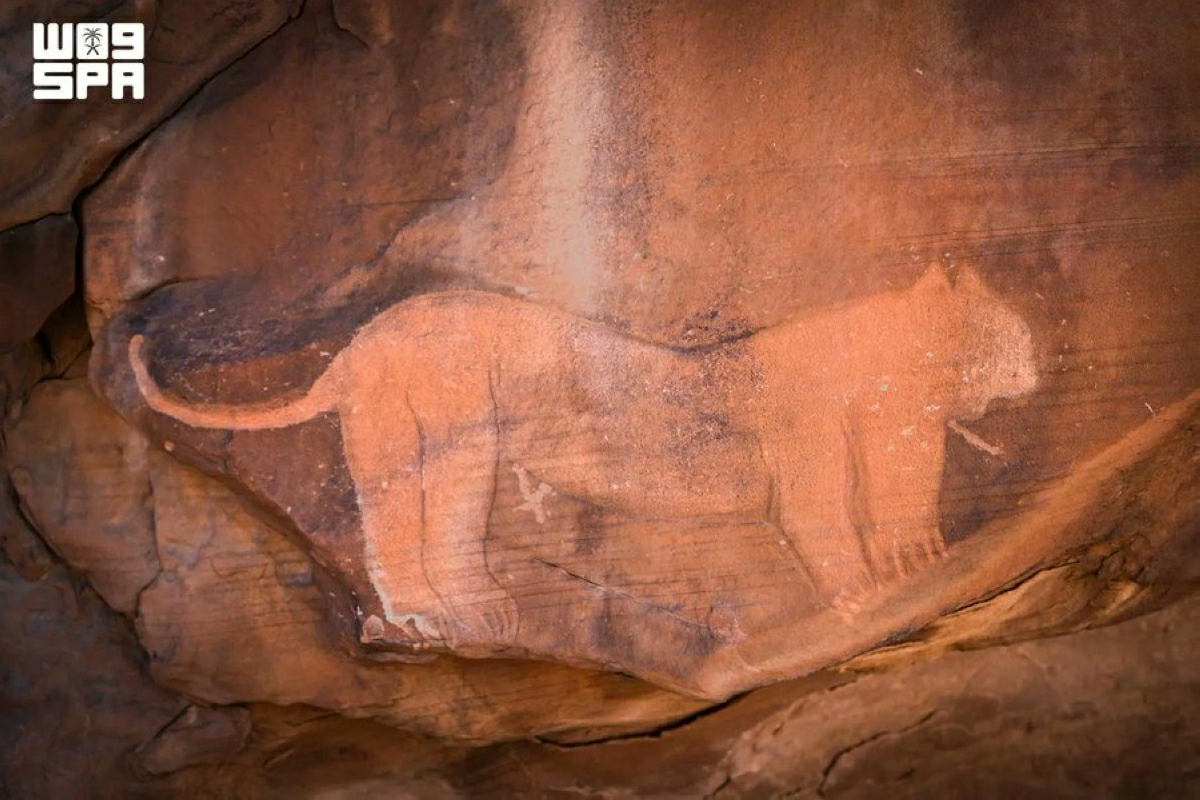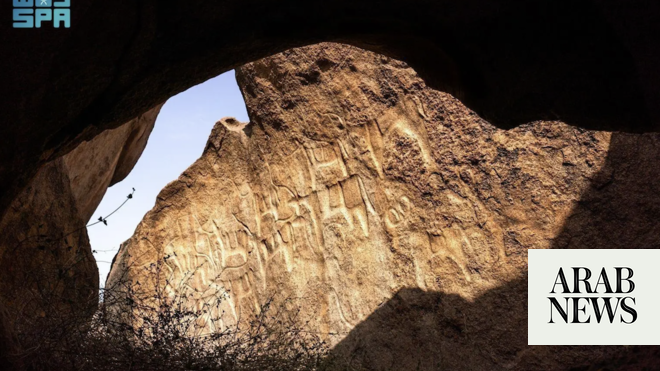
RIYADH: On World Lion Day, a global awareness event for the species’ decline, rock engravings in northern Saudi Arabia offer rare evidence of a time when these majestic big cats might have lived in the region.
Although lions do not roam wild in the Kingdom, their presence and interactions with ancient societies were notable.
According to the Royal Commission of AlUla, numerous lion depictions in AlUla symbolize strength, royalty, nobility, and bravery. These include carved guardians of a tomb at Dadan, dating back about 2,500 years.
During the early to middle Holocene (8,000 to 4,000 years ago), the region was wetter and greener, and lions may have been widespread. Archaeological finds of early human activity in AlUla from this time period include lion engravings.
As the region dried, the lion habitat may have shrunk to mountainous zones in Yemen and along the western Arabian edge into Jordan, Syria and Iraq.