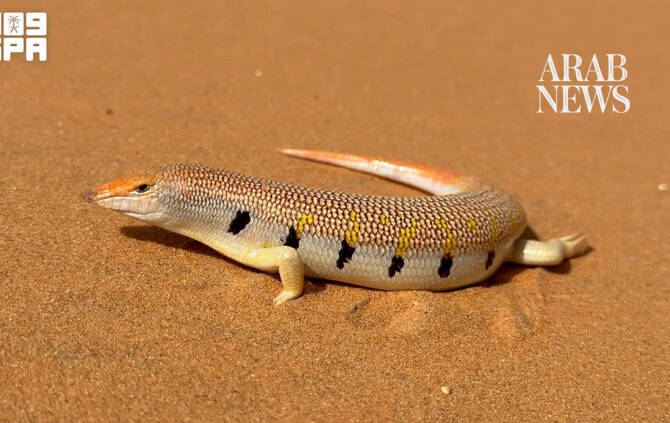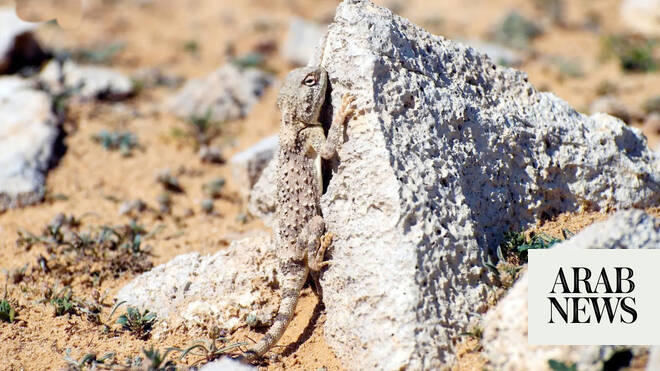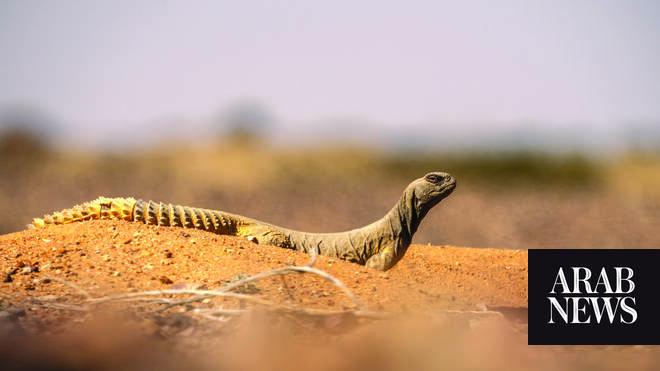
JEDDAH: Among the most iconic and ecologically important reptiles in Saudi Arabia, the Arabian spiny-tailed lizard, locally known as “dhub,” stands out not only for its size and behavior, but also for the essential role it plays in sustaining the desert ecosystem.
Found across vast stretches of the Kingdom’s deserts, as well as in parts of Jordan, Iraq, Syria, Egypt and eastern Iran, the dhub is both a cultural symbol and a keystone species.
Scientifically known as Uromastyx aegyptius microlepis, the Arabian spiny-tailed lizard belongs to the Agamidae family. This species is robust, diurnal (active during the day), and known for its ability to survive extreme temperatures and long dry spells. The adult dhub can reach lengths of up to 85cm, and its coloring, from sandy gray to earthy yellow, helps it to blend into arid landscapes.
Found across vast stretches of the Kingdom’s deserts, as well as in parts of Jordan, Iraq, Syria, Egypt and eastern Iran, the dhub is both a cultural symbol and a keystone species. (Supplied)
But its value goes far beyond survival. “The dhub plays a vital role in the desert ecosystem,” Mohammed Al-Mutairi, director of the reptiles and amphibians department at the National Center for Wildlife Development, told Arab News. “It feeds on desert plants such as ramth, akrash, Al-’alanda, and sa’dan, and also on small insects, ants and locusts. In turn, it serves as prey for desert predators like birds of prey, young carnivores and the desert monitor lizard (Varanus griseus).”