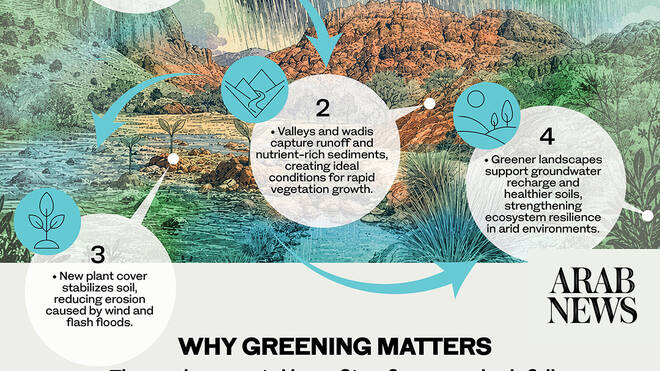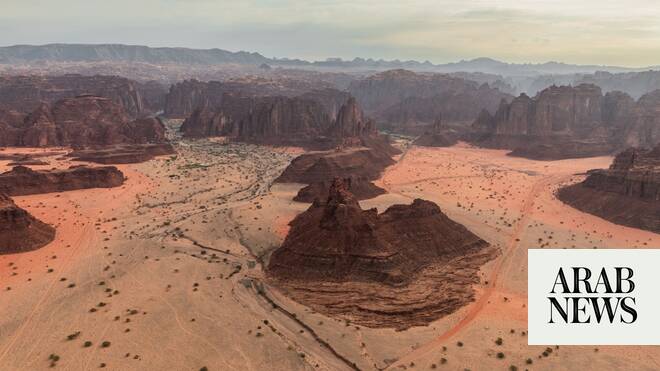
RIYADH: Drought in Saudi Arabia intensifies ecological imbalances by reducing water availability, degrading soils, and accelerating desertification in a landscape already adapted to scarce rainfall. The consequences are far-reaching: vegetation thins, pollinator and herbivore populations decline, seasonal valleys dry up, and the loss of plant roots increases wind and water erosion, weakening soil fertility and slowing recovery.
In addition, drought pressures groundwater resources as communities and agriculture compensate for surface water shortfalls, lowering water tables and threatening microhabitats that support migratory birds and endemic species. Over time, these environmental stresses ripple into human lives, endangering livelihoods and food security.
“The value of having a balanced ecosystem is that we then understand that it can sustain those people who rely on it,” Inger Andersen, executive director of the UN Environment Programme, told Arab News.
She added: “Some people who are living in cities may think they aren’t relying on the ecosystem because they get their food from the grocery store, but the reality, of course, is that there was an ecosystem somewhere in the world that provided that food that they purchase.