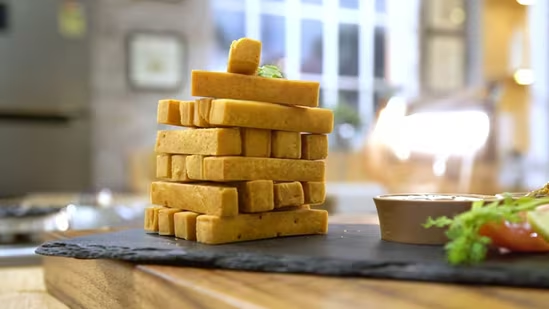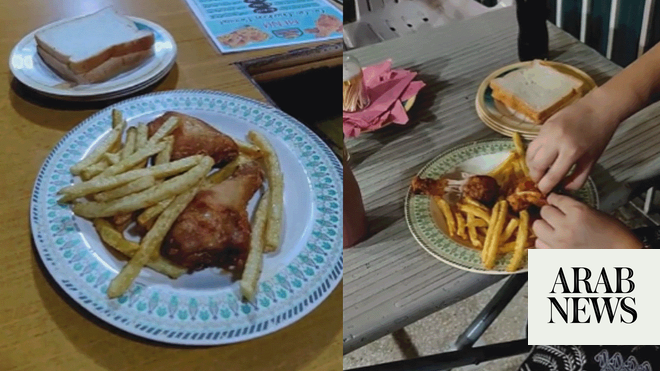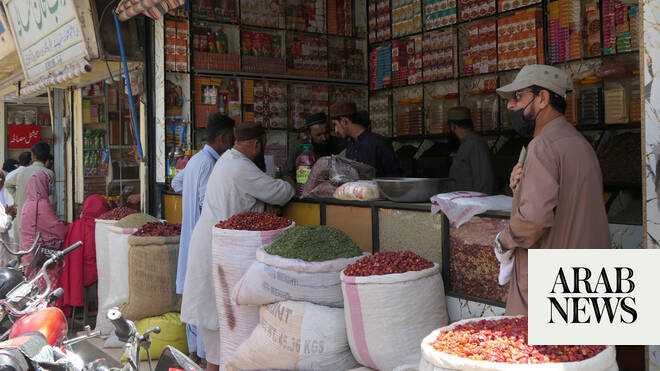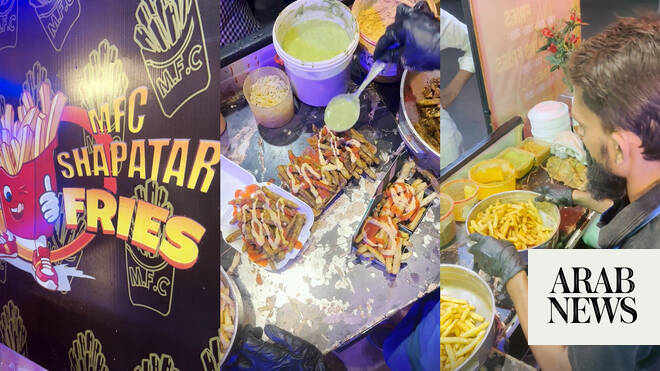
KARACHI: Muhammad Taufeeq Lakhani stands amidst a dizzying display of nearly 60 spices as his hands move quickly to prepare a French fries order for a customer in the congested Moosa Lane street in Lyari, a neighborhood historically associated with gang violence and drugs in the Pakistan’s Karachi.
The 40-year-old, who once battled drug addiction, is rewriting his story, one heavily spiced potato strip at a time, and serves each batch, dusted with a complex mix of 20 or more ingredients, with a stern, yet necessary, disclaimer: “Eat it at your risk.”
Lakhani started working at a garments shop in 1997, when he was just 13. His life changed tragically in 2016 with the onset of mental health issues, following years of drug addiction, and residents of his area began calling him by cruel monikers such as ‘Psycho,’ ‘Charsi’ (drug addict) or ‘Nafsiati’ (mentally ill).
The 40-year-old underwent two years of rehabilitation and fully recovered in 2018, only to lose his general-item store made with three years of struggle to the urban floods in 2021. In Nov. 2022, he set up a small French fries stall, named after his daughter, Mahnoor, now 13.
While a fire gutted his ‘Mahnoor Fries Corner’ in July this year, Lakhani rebuilt and rebranded it as ‘MFC Shapatar Fries’, expanding his offerings. Today, his menu of around 60 flavors includes the very monikers that once defined the darkest period of his life.