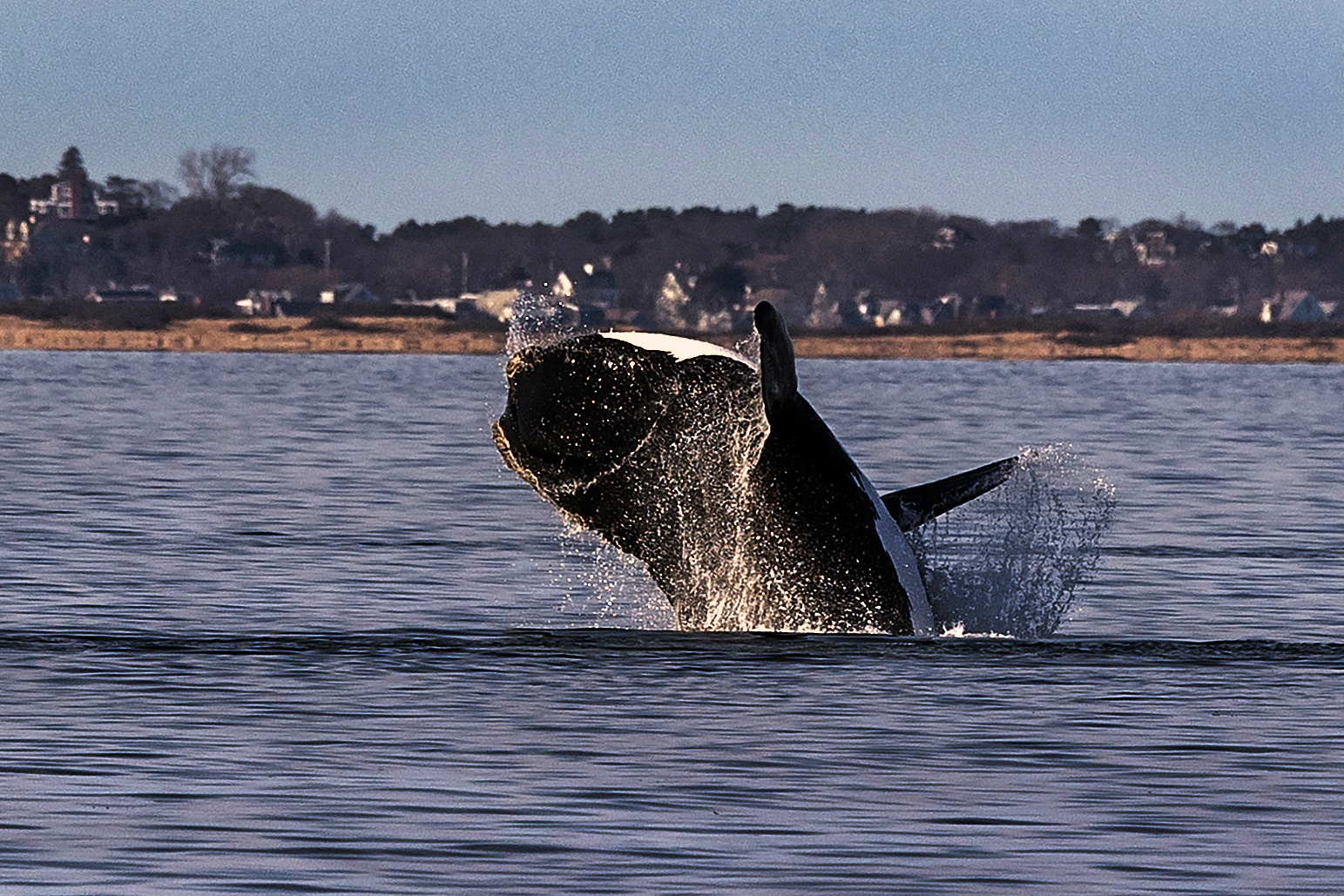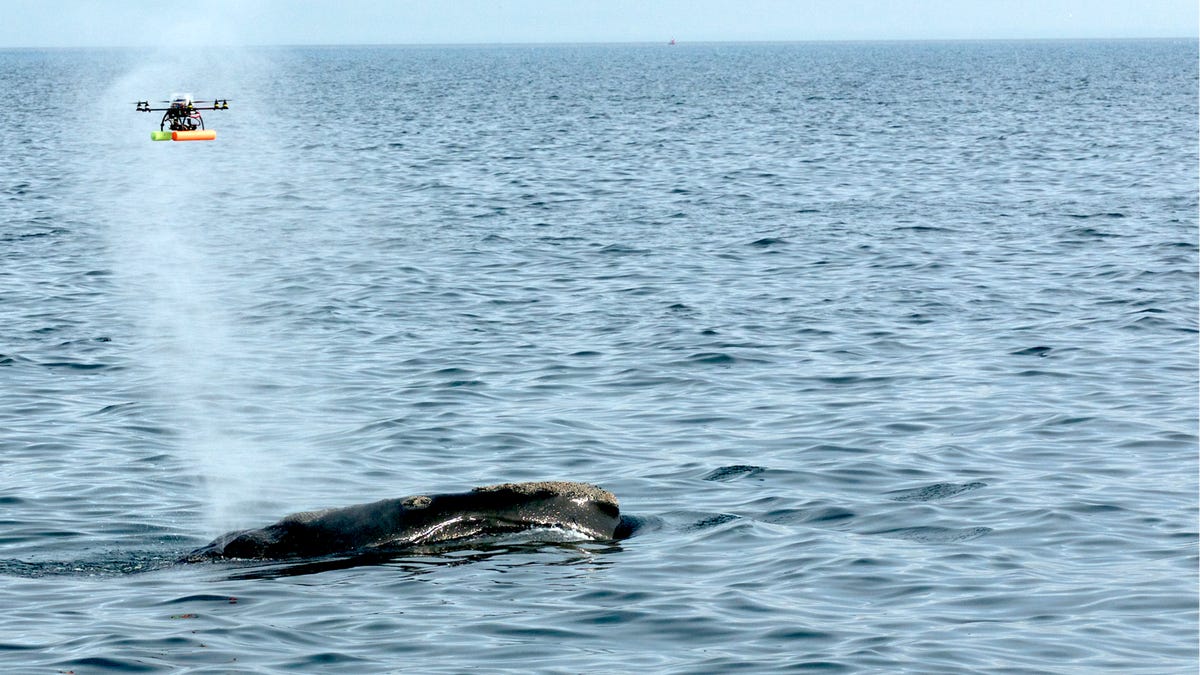
You can call it spit, snot or respiratory drops, but a research team has found the moisture that emerges in the unique v-shaped "blow" of endangered North Atlantic right whales holds important clues about their health.
Researchers have collaborated for decades on ways to improve the care, treatment and management of the critically endangered species. But treating the animals when they are ill is a difficult proposition.
The whales weigh in at 70 tons and are longer than a school bus, so taking them to the local vet is out of the question. And when a vet goes to the whale, either to try to remove entangled fishing gear, administer antibiotics or take a biopsy or blood sample, it's dangerous to be so close to such massive animal in the open ocean.
It's also "really stressful and impactful for the animals" when people try to get that close, said Carolyn Miller, a research associate at Woods Hole Oceanographic Institution who has studied right whales for decades. That makes treating them for injuries "a huge challenge."
In 2016, Miller and others began flying a drone with a petri dish through the spray that a whale exhales when it surfaces. By 2024, they had captured more than 100 samples from 85 individual whales in Cape Cod Bay.