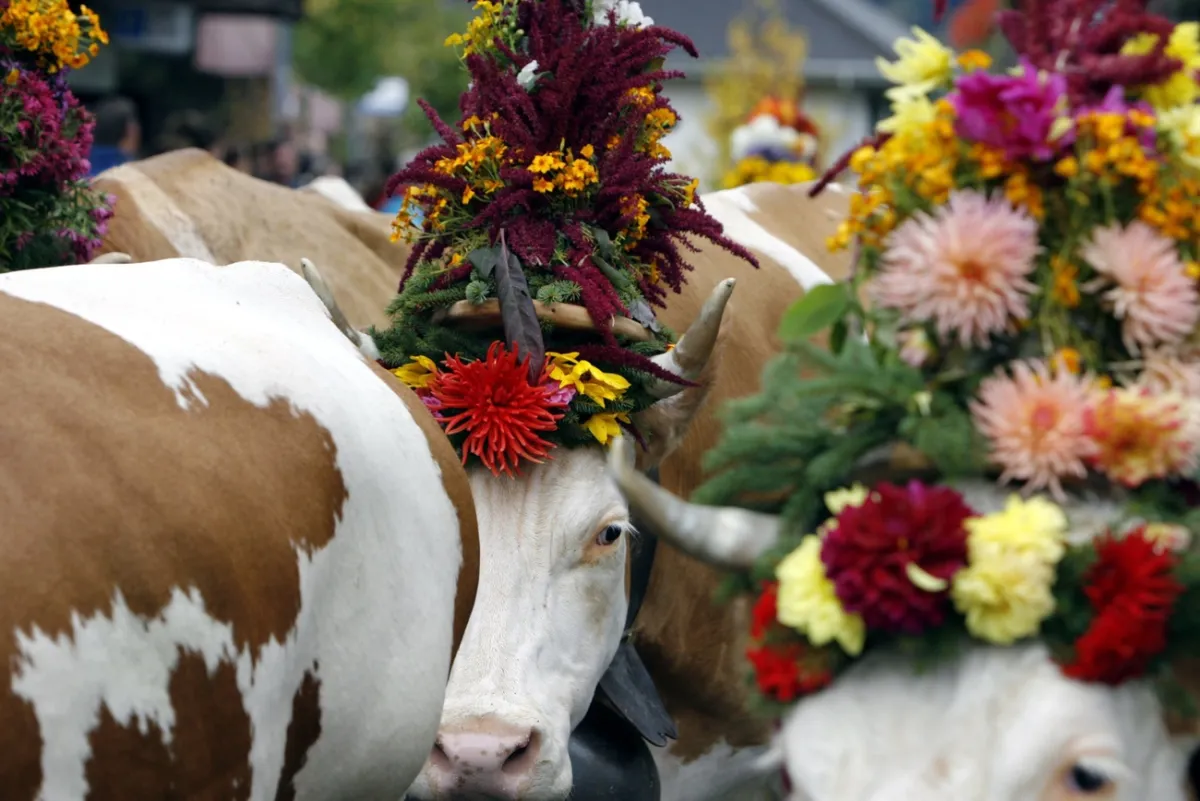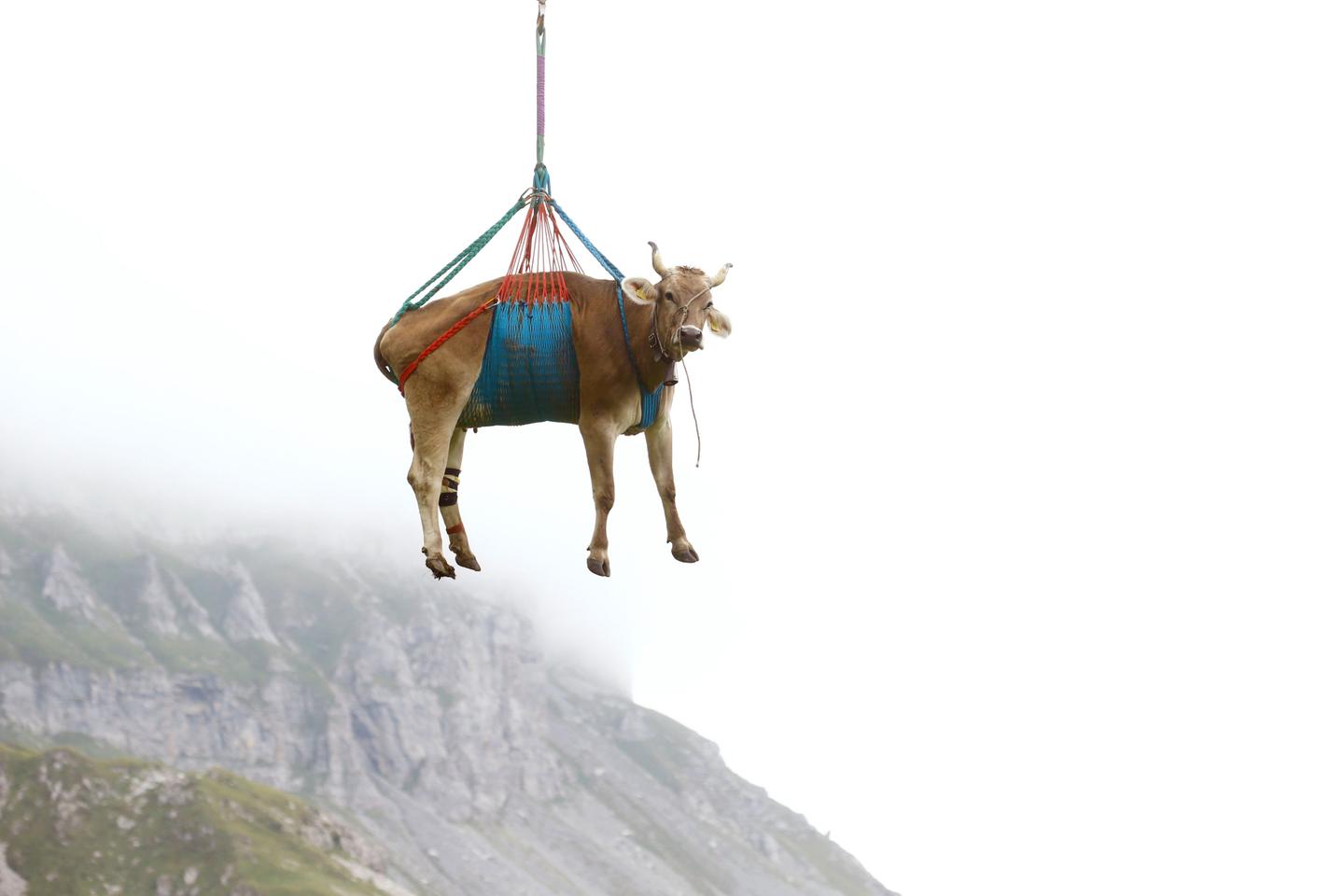
A cow transported by helicopter after its summer in the Swiss Alps near the Klausen Pass, August 27, 2021. ARND WIEGMANN / REUTERS
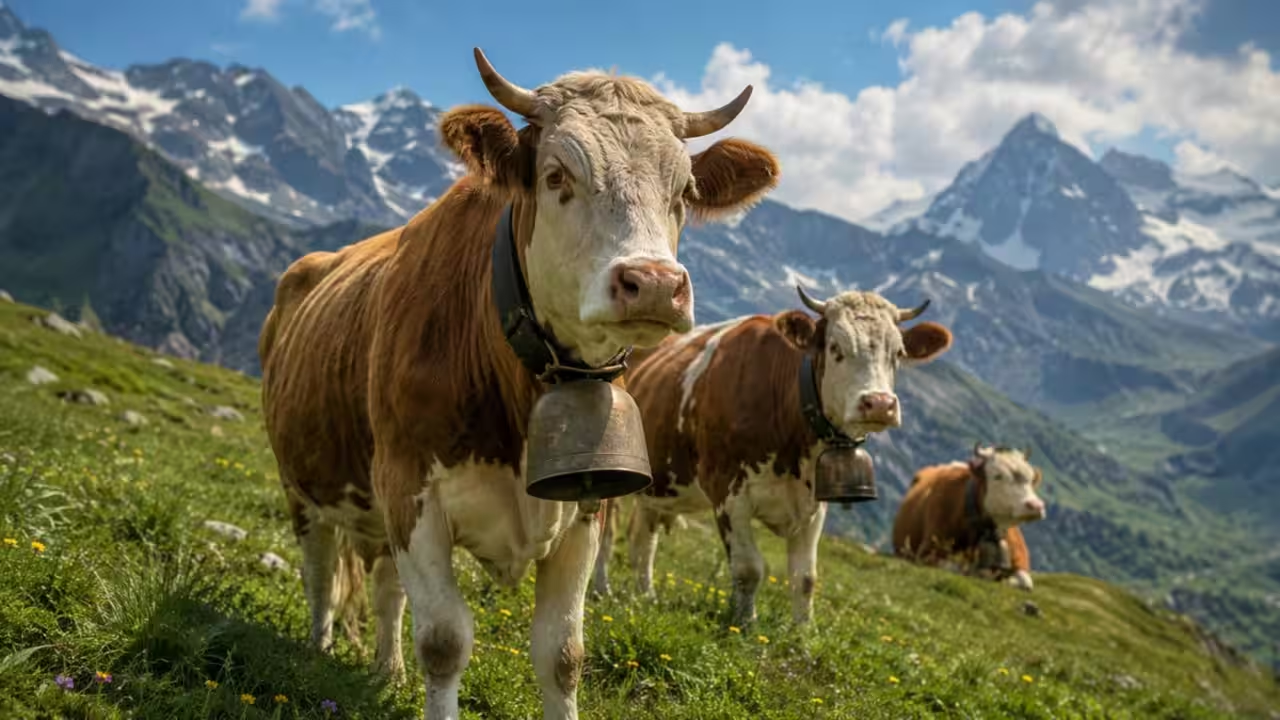
Pastoral, pristine scenery, rolling pastures that seem greener and better maintained than anywhere else, where cows graze methodically and look cleaner than their peers abroad: Of all the Swiss clichés, the image of the mid-mountain landscape is the most enduring, even for the Swiss themselves. Cows, adored across the confederation, are everywhere. A symbol of tranquility and quiet strength, and a staple of advertising campaigns, it is easy to see why the Switzerland Tourism Office prefers the image of a cow over a Zurich banker to promote the country abroad. But the postcard image has started to fade and, in recent weeks, things have gone from bad to worse.
First, there was the 39% customs tariff imposed on nearly all Swiss dairy products by the Trump administration in early August, which immediately hit Swiss goods. After protracted negotiations that concluded on Friday, November 14, the rate was reduced to the level applied to European Union countries (15%), but there is no guarantee that this will limit the damage already done.
The first casualty was Gruyère, whose stocks piled up. Americans had previously consumed 13% of the total production of this famous hard cheese, but since Swiss producers passed on the entire price increase, the market collapsed in the United States, where Gruyère now sometimes sells for over $100 per kilogram. It has become a luxury item, even though that is not its intended market segment.