For Marie (who did not wish to give her last name), 23, watching and listening to sped-up content became "a logical extension of her studies." After completing a preparatory literature course, she entered Sciences Po Aix and immediately felt out of step with her classmates: "I felt like I had no cultural background compared to them," she said. In the morning, as Marie got ready, she would play news or political science podcasts at increased speed. "I just want to get as much information as possible and then go deeper. But my first approach is always sped up."
When she started her master's at Sciences Po Paris, everything accelerated: classes, internship searches, involvement in student organizations. A 15-minute video quickly became eight to 10 minutes of content. "In prep classes, we had time for two-hour documentaries. Here, everything is too fast. If there were a way to speed read texts, honestly, I would use it," Marie added.
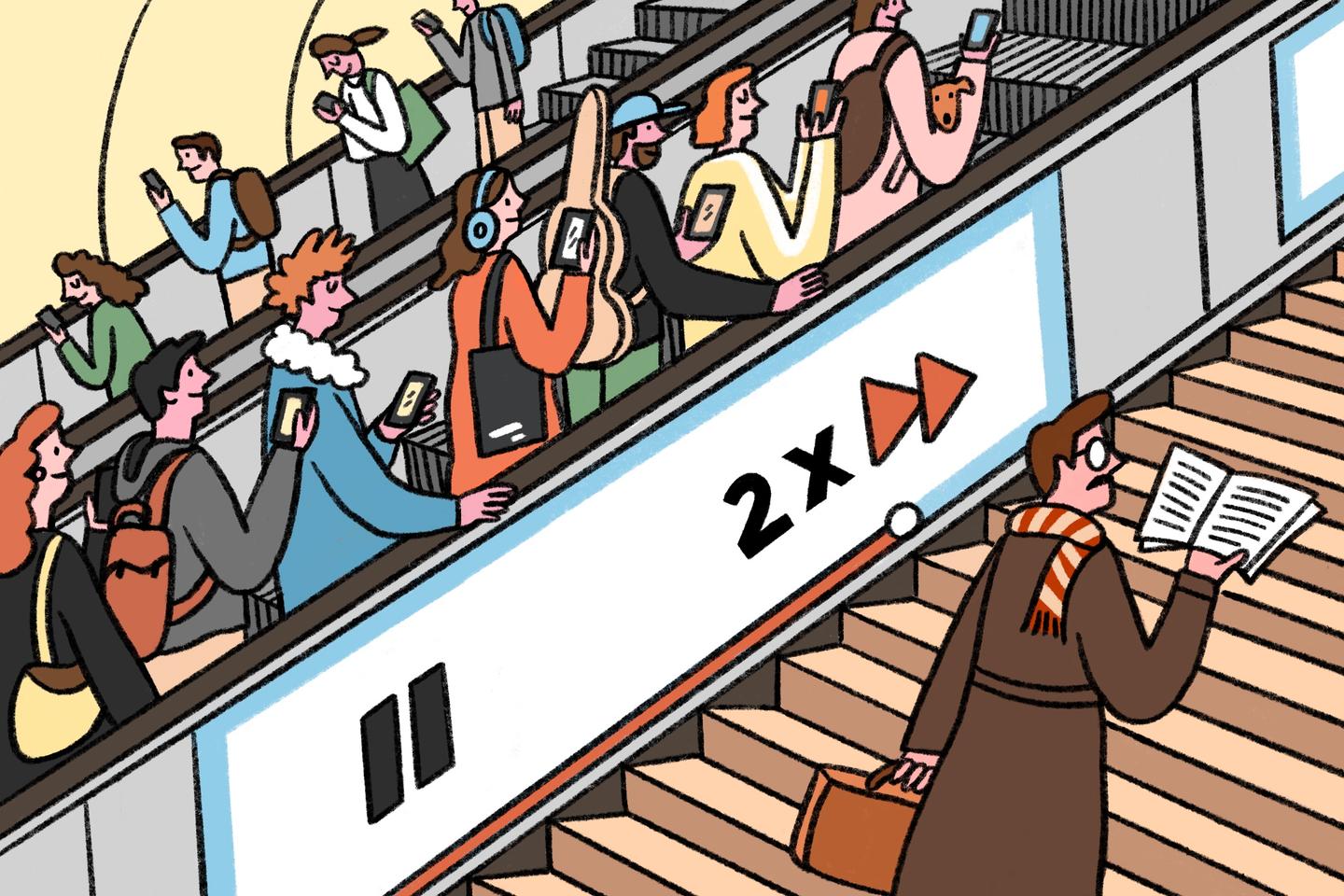
Sped-up content has now become a real market: All these platforms, along with some TV and podcast apps, have adopted "speed watching." On apps like TikTok or YouTube, simply holding your finger on the right side of the screen often doubles the speed. On other platforms, a simple menu lets you choose 1.25×, 1.5×, 1.75×, 2× and up to 3× or 4× for premium subscribers. The goal is clear: consume faster to absorb more content. According to YouTube's official blog, more than 85% of users with access to this feature have already tried it.