Education in any community must begin with an understanding of that community. When the British introduced their school system, they studied India’s languages and cultures. They emphasised on grammar and local languages even as they promoted English-medium education. They produced a large number of grammar books and dictionaries for many Indian languages, including smaller and tribal ones.
Modern India has made education a fundamental right. The National Education Policy stresses that children should learn in their mother tongue. Linguists affirm that mother-tongue education supports both intellectual and emotional growth. Among the many reasons for the region’s educational backwardness, language stands out as a crucial one.
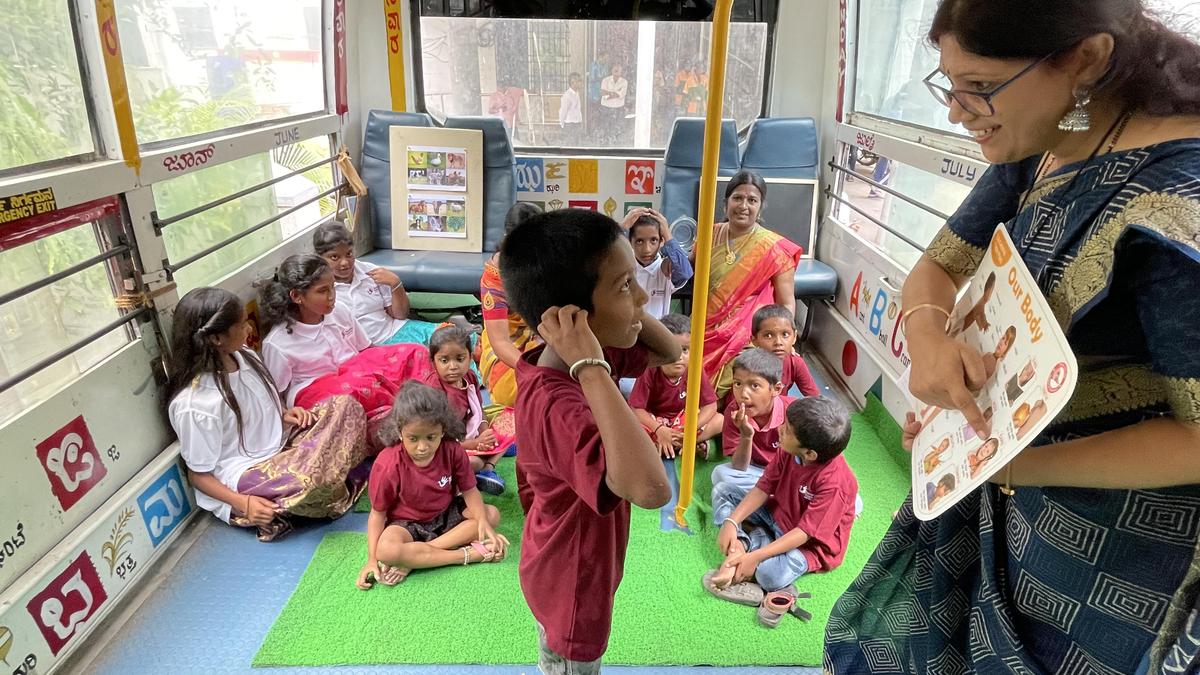
Education should lead learners from ‘the known to the unknown’. When children are taught unfamiliar concepts in an unfamiliar language, learning suffers. Therefore, connecting the child’s home language with the language of textbooks is vital for real educational growth. Language is the most crucial medium in education, yet it is rarely treated with the seriousness it deserves.
Peculiar case of Hyderabad-Karnataka region
The Hyderabad-Karnataka region represents one of the most complex and intricate linguistic environments in Karnataka. Unlike other linguistically diverse regions, such as the coastal belt, the linguistic density and diversity here have deeper historical and socio-cultural roots. Any planning, especially in education and textbook design, must recognise this multilingual reality.