Following a Central Board of Secondary Education (CBSE) circular emphasising the use of mother tongues in foundational classes, schools in Delhi-NCR have been mapping the various languages spoken by students, which has revealed linguistic diversity in most classrooms. The exercise being carried out independently by the schools has shown that students in the region speak between 10 and 20 different languages, including Hindi.
Most CBSE schools in Delhi-NCR are English-medium and offer Hindi, Sanskrit, or Urdu as the second language from Class 1, and a third language from a pool of foreign and local languages from Class 6.
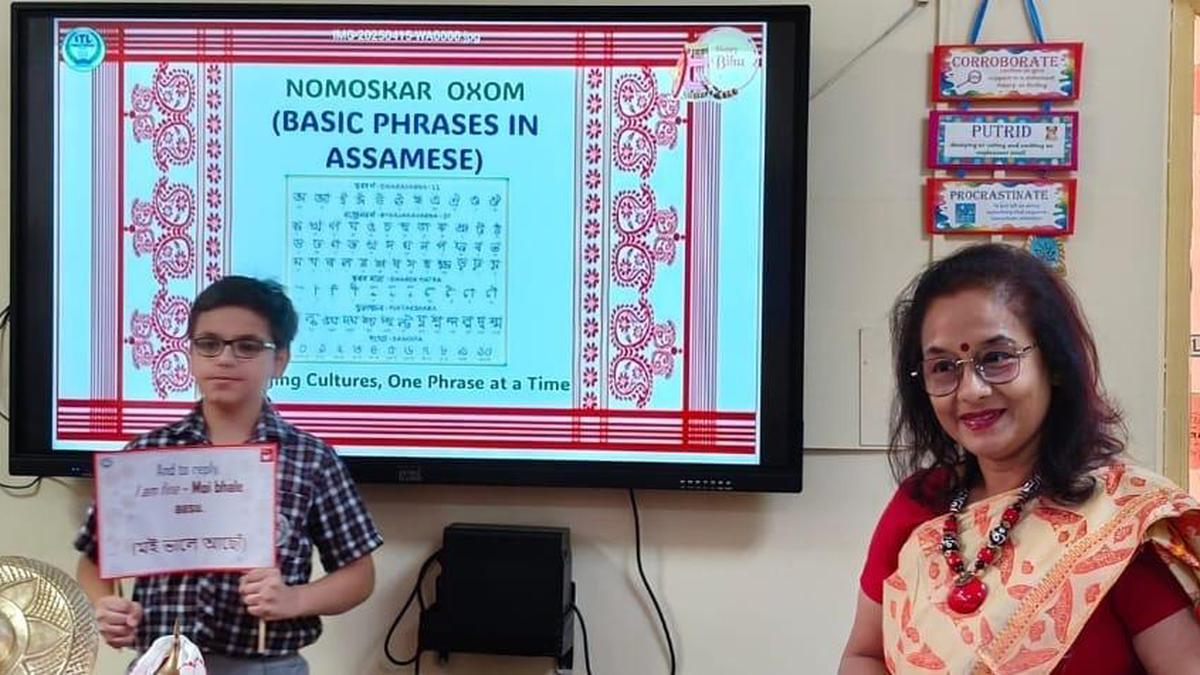
Most principals The Hindu spoke to said that while English will remain the official medium of instruction, as most parents seem to be in favour of it, Hindi will be used “informally” in the primary classes for assistance, as is the practice in most CBSE schools. Many also said that they are formulating ways to use oral and visual media to introduce children to different languages, as incorporating those into the pedagogy right away wouldn’t be possible.
The CBSE directive dated May 22 referred to the National Curriculum Framework, which recommends that the “first language of literacy (R1) should ideally be the mother tongue or a familiar State or regional language”. It adds, “If there are practical considerations, such as classroom diversity, resource limitations, or oral traditions lacking written forms, R1 may shift to the State language, which would be a familiar language. R1 must serve as the medium of instruction until foundational literacy in another language is achieved.”