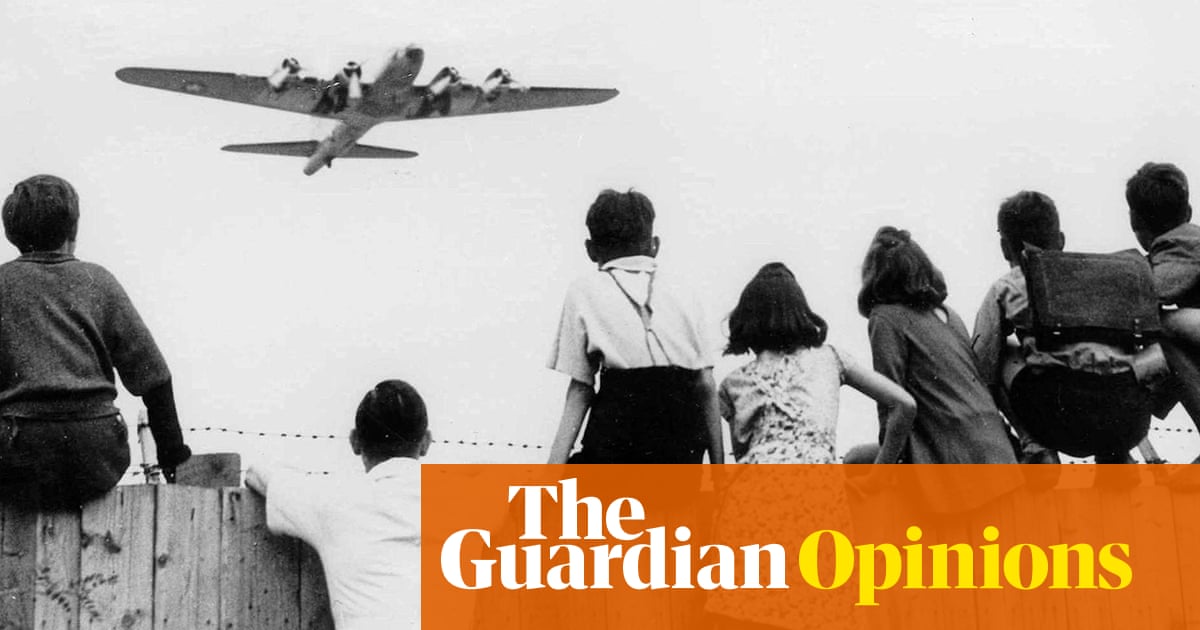
The Berlin airlift was a cold war victory that relied on a persuasive story about starving civilians. But was it true?
W
e in the west used to play dirty – and during the cold war, we were good at it. Nowadays, we leave grey-zone tactics and hybrid warfare to Russia, which is winning the disinformation war. Europe’s pride in playing by the rules might just be democracy’s achilles heel.
The Berlin airlift is a good example of what we once did well – and have since forgotten. The cold war arguably began and ended in Berlin, bookended by the 1948-9 airlift and the fall of the wall in 1989. The former was the largest air relief operation in history. It supplied Berlin when Stalin tried to force out the western allies. In parallel, the west used radio (RIAS, or Radio in the American Sector, a precursor to the CIA-funded Radio Free Europe (RFE) and Radio Liberty), and strengthened soft power with cultural missions such as the British-staged Shakespeare in the rubble, and education through American-run libraries and courses.
The biggest western tool, however, was disinformation. The allied airlift cost the equivalent of almost $3bn today, and needed a persuasive narrative to win public support. It’s one that almost everyone still believes today: Berlin was blockaded, its land routes sealed, and women and children were starving.