On this side of the Atlantic, World War II can appear in the popular imagination as a contest between liberal democracies and totalitarian empires.
That narrative, shaped largely by Cold War enmity between Washington and Moscow, tends to overlook the unimaginable sacrifices of the Soviet Union and its people, roughly one in seven of whom died in the conflict.
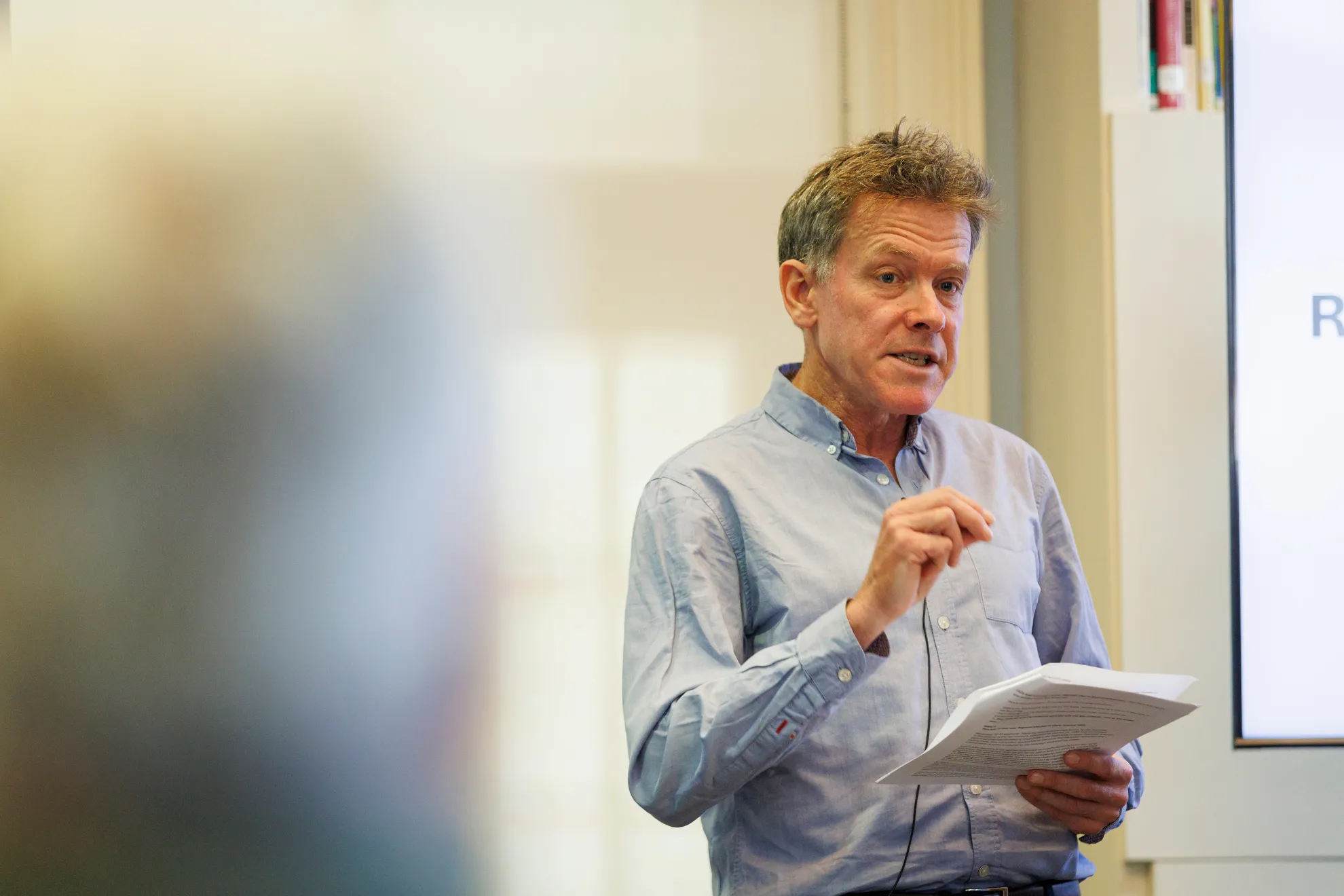
So, though it covered familiar names and dates, Jochen Hellbeck’s lecture on campus last Thursday carried an unusual charge.
Hellbeck, a German-born historian who now teaches at Rutgers University, has spent his career using archives to relocate the center of the European war to points well east of Normandy — specifically, to the collision between Nazi Germany and the Soviet Union.
By the numbers, that shouldn’t be controversial. As they invaded the U.S.S.R. in the summer of 1941, Germany and its European Axis allies opened the bloodiest theater of war in human history.