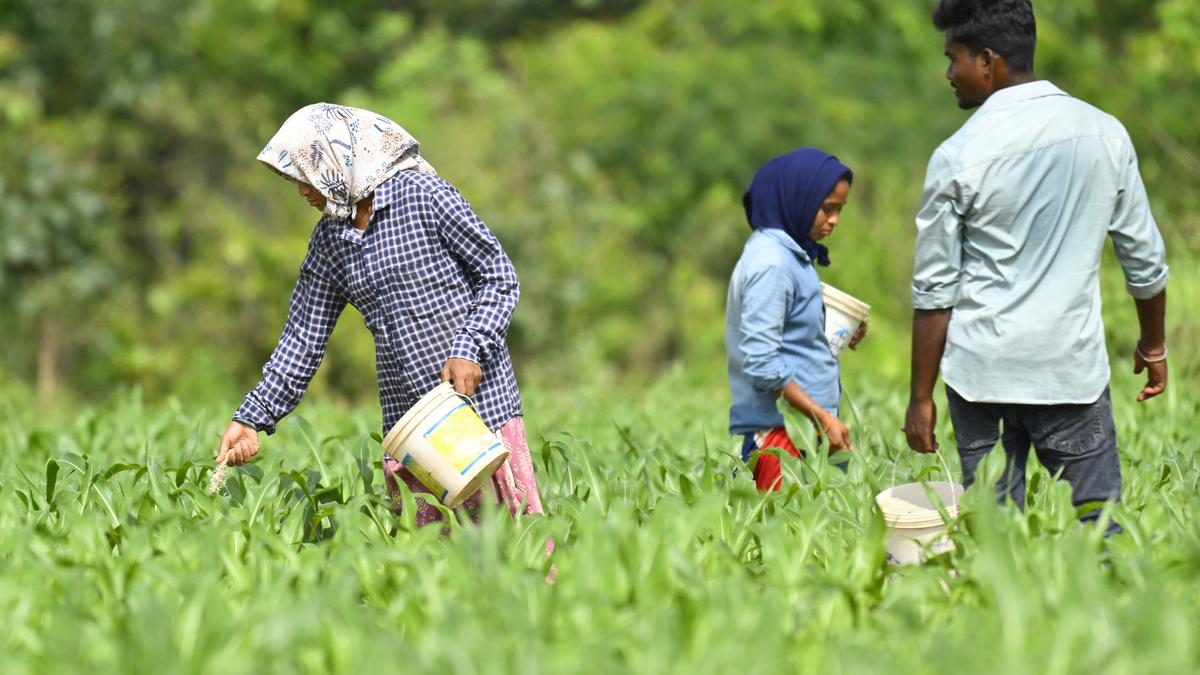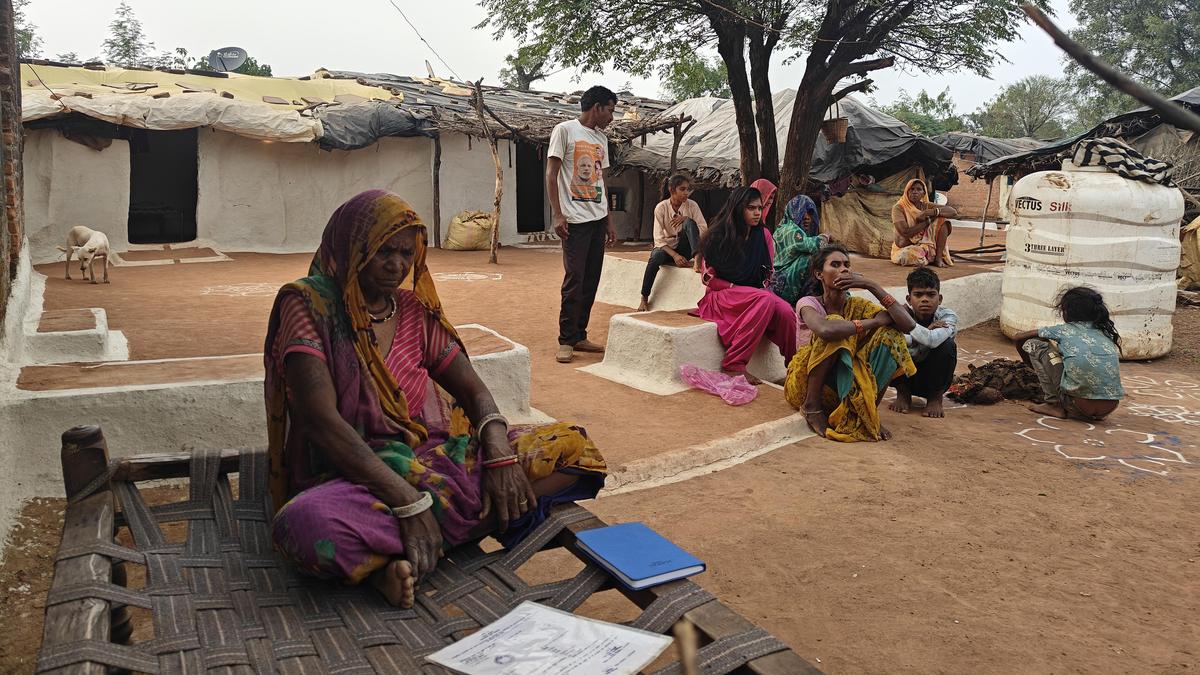
Nestled in a corner of the Madhav National Park in the northern tip of Madhya Pradesh’s Shivpuri district, is Binega village. The village is home to about 60 Sahariya families, a notified Scheduled Tribe, that has been listed as a Particularly Vulnerable Tribal Group (PVTG). The families mainly survive on daily-wage labour. Less than 20 metres from the banyan tree marking the entrance to Binega village is the criss-crossed wire fence of the outer boundary of the Shri Paramhans Ashram, where Uttar Pradesh-based Swami Adgadanand Maharaj’s Yatharth Geeta is followed, taught, and practised. The forest’s green shrubbery half-hides the fence.
The decade shifts around depending on who tells the story, but devotees of the Ashram recount its beginning to be between 30 and 40 years ago, when a “Sant” known as Nanhe Maharaj arrived in the forests on his travels and found it to be a “chaste and pure land” to meditate. “When they first came, it was just one Swamiji and four or five of his disciples. They kept to themselves and eventually wanted to build a place for meditation and a temple,” Sugrabai Adivasi, one of the elders in Binega, says, sitting on the khatiya on her porch.