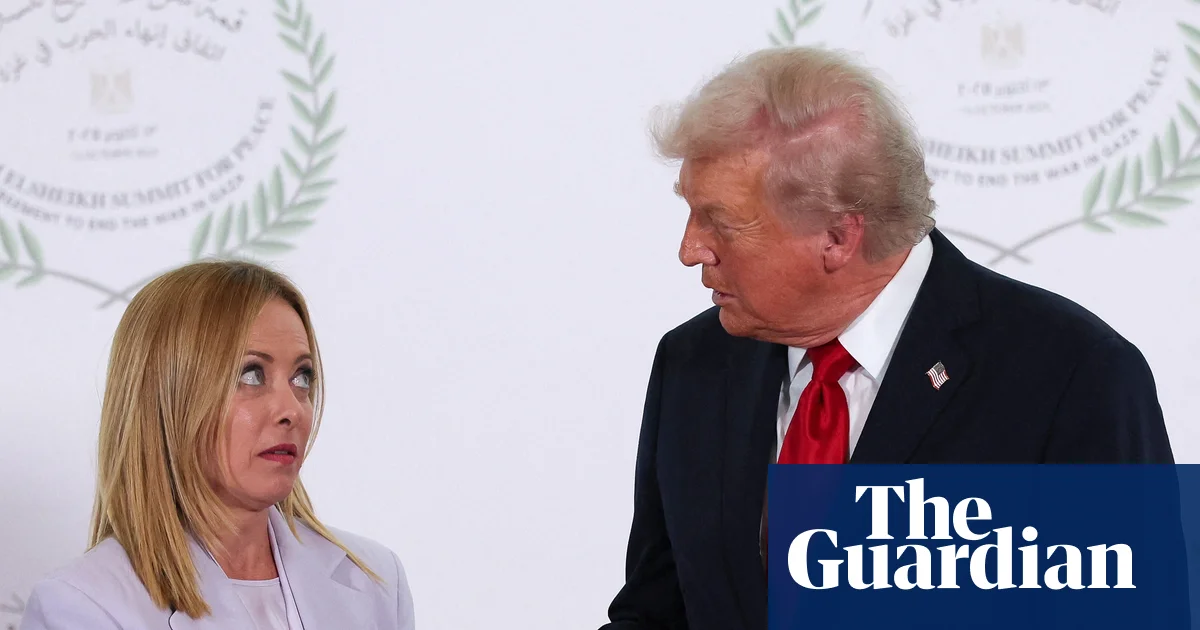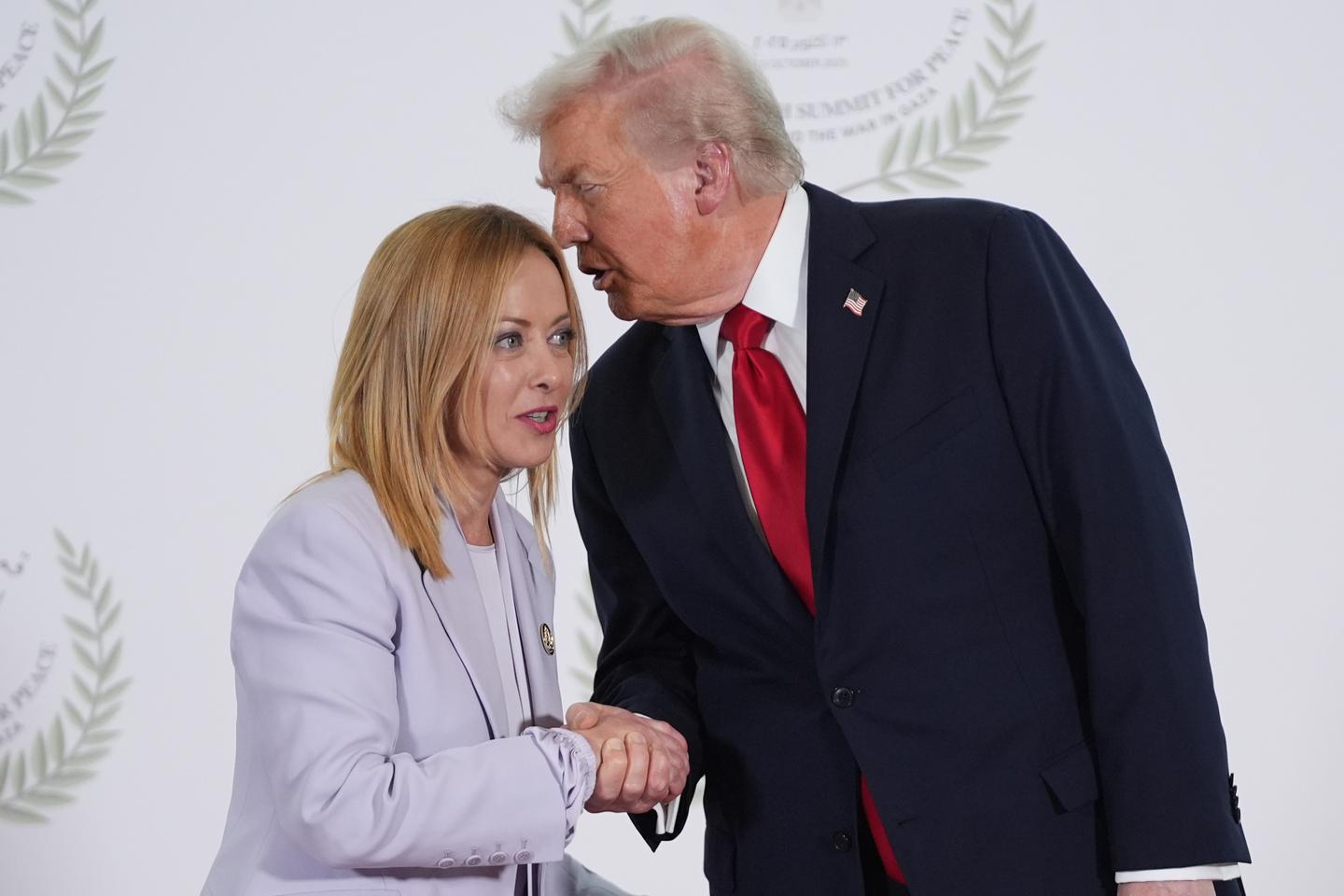
Giorgia Meloni and Donald Trump at the Gaza summit, after the ceasefire agreement, Sharm el-Sheikh, Egypt, October 13, 2025. EVAN VUCCI/AP
Unlike most of her predecessors, Giorgia Meloni, who came to power on October 22, 2022, has had the skill – or perhaps the luck – to endure. The first woman in history to serve as Italian prime minister, she is also the first from her political family, which traces its roots to fascism, to lead the Italian government since Mussolini's regime fell. On Sunday, October 19, her government became the third-longest lasting executive since 1946 and the start of Italy's republican era.
Beyond this stability – which Italy had so long lacked – she restored the country's credibility, notably through a reduction of the public deficit. That result won her favor with credit rating agencies and attracted curious, sometimes admiring attention from the right wing in France.
To endure and project an image of seriousness: sure. But to what end? Reforms capable of addressing the structural weaknesses of the Italian economy have been non-existent, and growth remains weak. A justice reform is expected to be put to a referendum in 2026, but two other major bills promised to the right and far-right coalition's electorate, meant to increase regional autonomy and overhaul institutions to concentrate power in the executive's hands, have stalled. And yet the impression of stagnation is misleading: Around Meloni and Italy, the world has changed, and so has she.