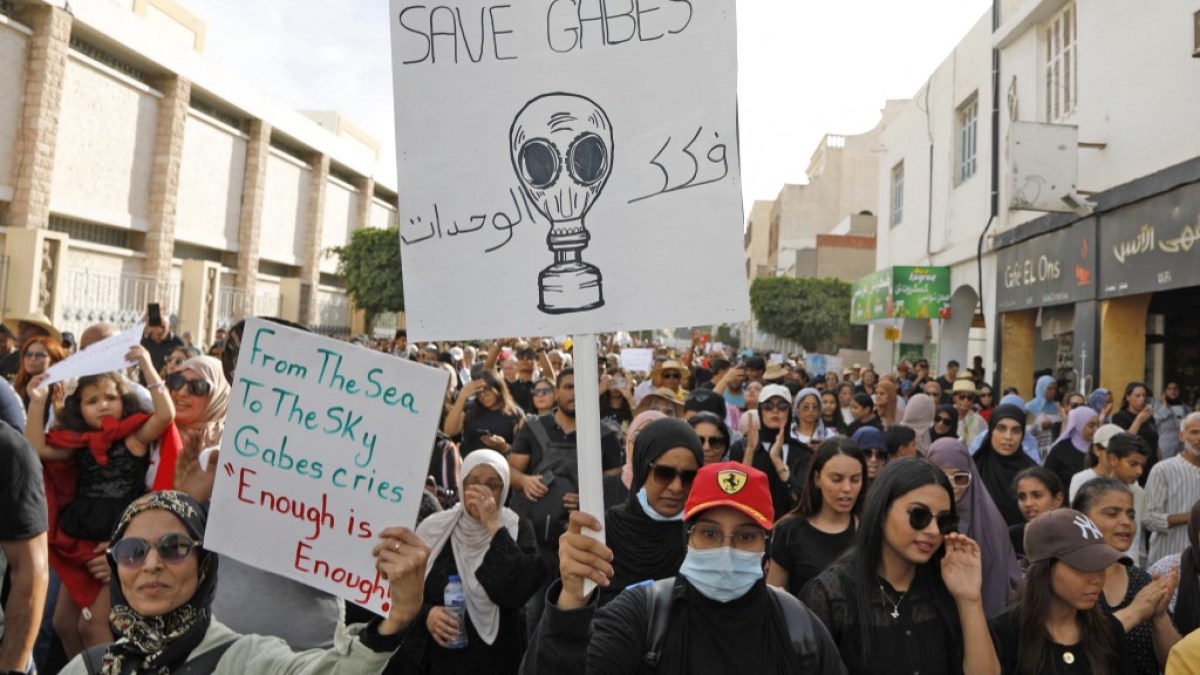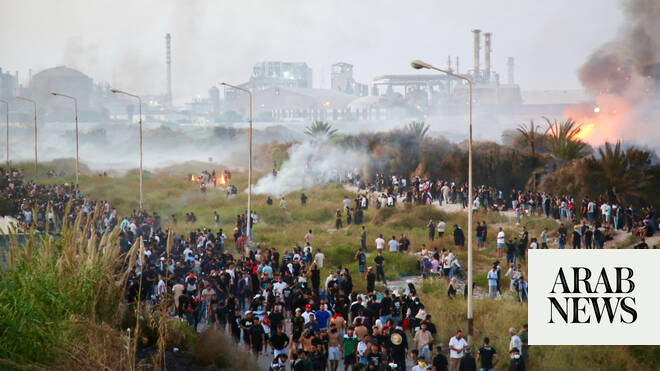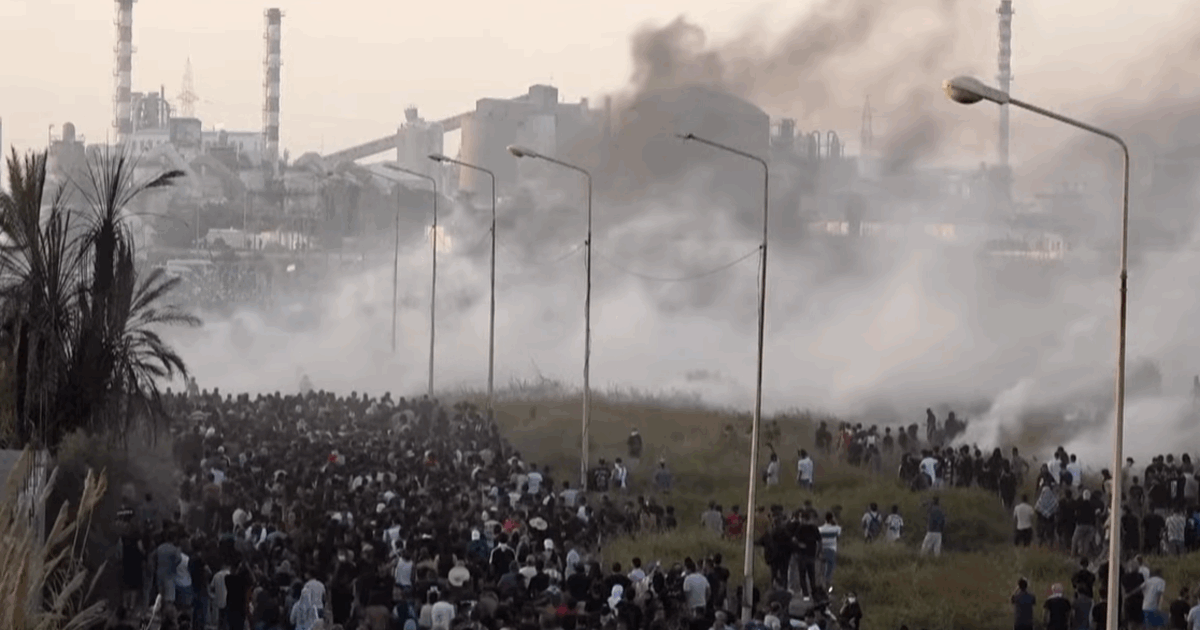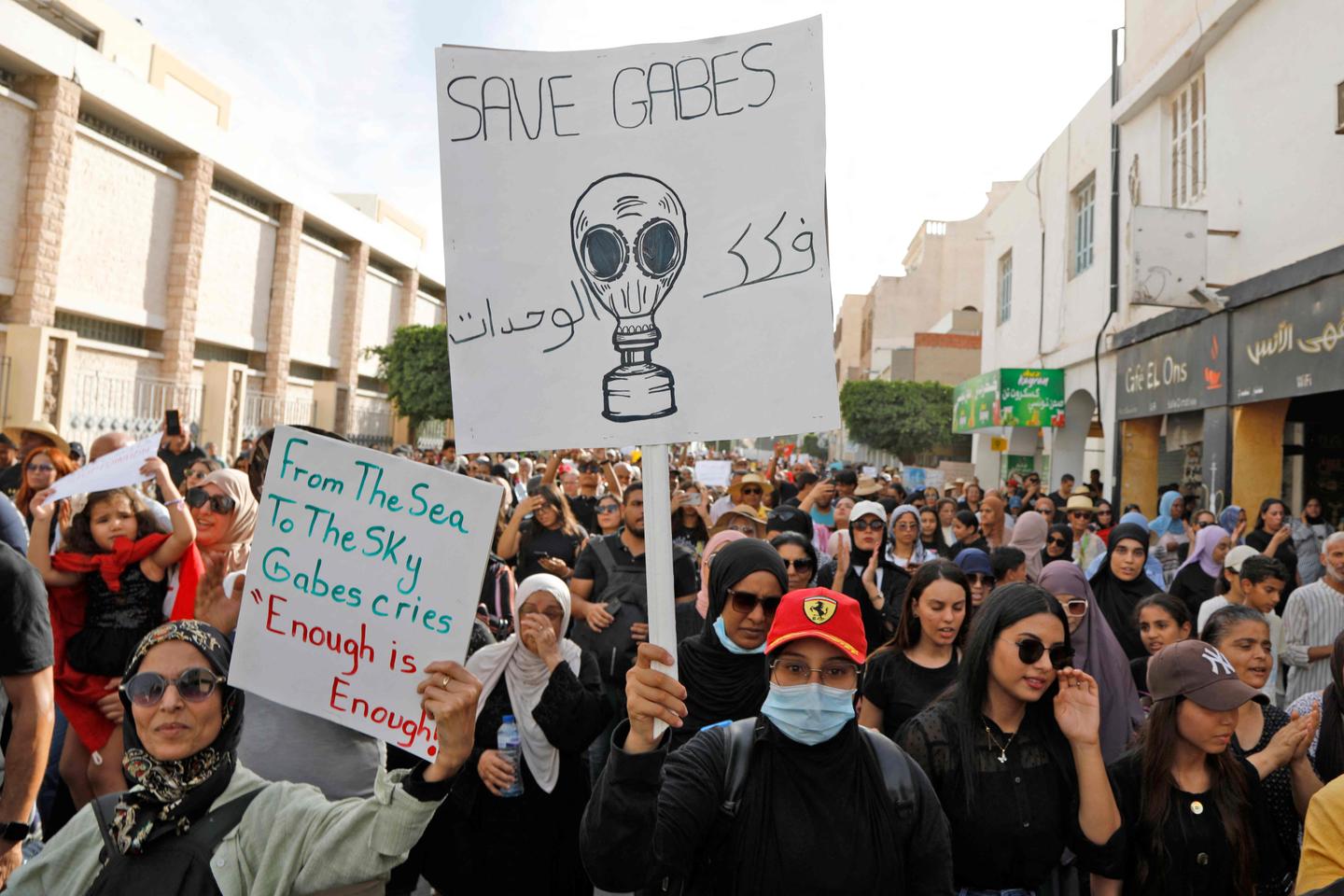
Protesters in Gabes, southeastern Tunisia, demonstrate against pollution caused by factories run by the Tunisian Chemical Group, October 21, 2025. MOHAMED KHALIL / AFP
Gabes remains angry. On Tuesday, October 21, this industrial coastal region in southeastern Tunisia was paralyzed by a general strike called by the regional branch of the Tunisian National Trade Union (UGTT). The strike was widely followed and supported by local civil society groups, highlighting the scale of the protests as the health crisis has worsened week after week.
For several months, cases of poisoning and asphyxiation have been multiplying, particularly among the youngest residents who have been exposed to toxic gas emissions from factories run by the Tunisian Chemical Group, whose operations to transform phosphate into phosphoric acid and mineral fertilizers are ongoing.
Residents, who have condemned the situation as unsustainable, have demanded a radical measure: dismantling the polluting units that have been in place since the 1970s. The protests are spelling a political crisis for Tunisian President Kais Saied.
While the president rushed in late September to condemn the "assassination" of the environment in Gabes by calling five decades of industrial policy a "crime," he has repeatedly defended the need for an ambitious revival of phosphate production, describing it as a "fundamental pillar" of the economy.