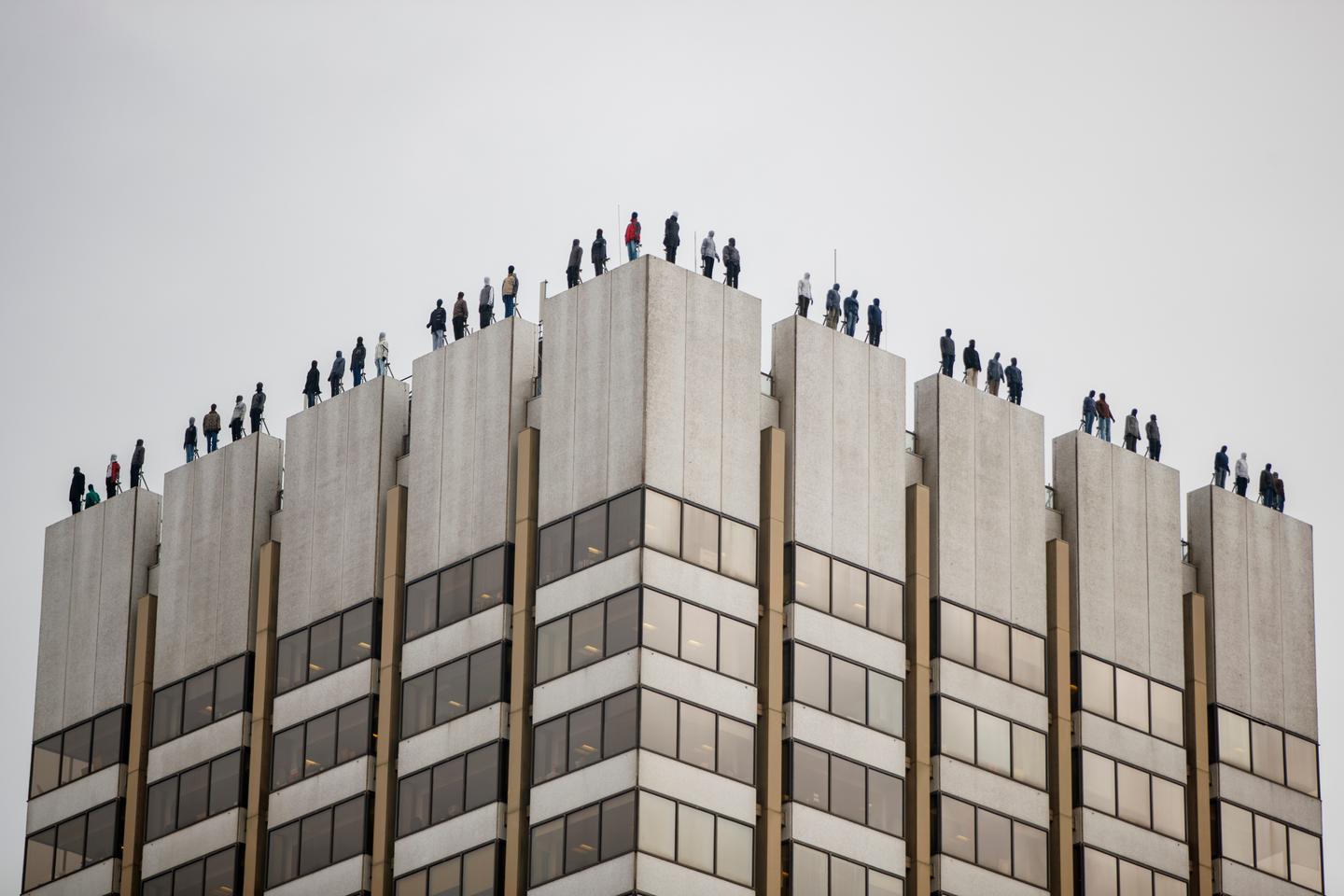
Life-size sculptures of eighty-four men were displayed on the rooftop of the ITV television center in London on March 27, 2018, as part of 'Project 84,' a campaign by CALM (Campaign Against Living Miserably) aimed at sparking discussion about male suicide. TOLGA AKMEN / AFP
This is a worldwide snapshot of mortality. The Global Burden of Disease (GBD) – a network of more than 16,500 researchers and scientists led by the Institute for Health Metrics and Evaluation (IHME) in Seattle, United States – published the results of several years of work analyzing global mortality data for 2023 on Sunday, October 12, in The Lancet. The study provided a vision of a post-Covid-19 world, in which mortality levels and causes are shifting in response to demographic transitions.
The three studies confirmed trends seen in recent years, which have only grown stronger. In 2023, global life expectancy returned to pre-pandemic levels, reaching 76.3 years for women and 71.5 years for men. These numbers are more than twenty years higher than in 1950. Yet geographic inequalities remain: while life expectancy reached 83 years in high-income countries, it was just 62 years in sub-Saharan Africa.
Despite population growth and aging, the age-standardized mortality rate (which allows comparisons between countries with different population structures) decreased by 67% since the 1950s. Overall, all 204 countries and territories studied reported a decline in mortality. During this period, infant deaths saw the greatest reduction across all age groups. This was especially true in East Asia, where the under-five mortality rate fell by 68%, thanks to better nutrition, access to vaccines, and the establishment of stronger healthcare systems.