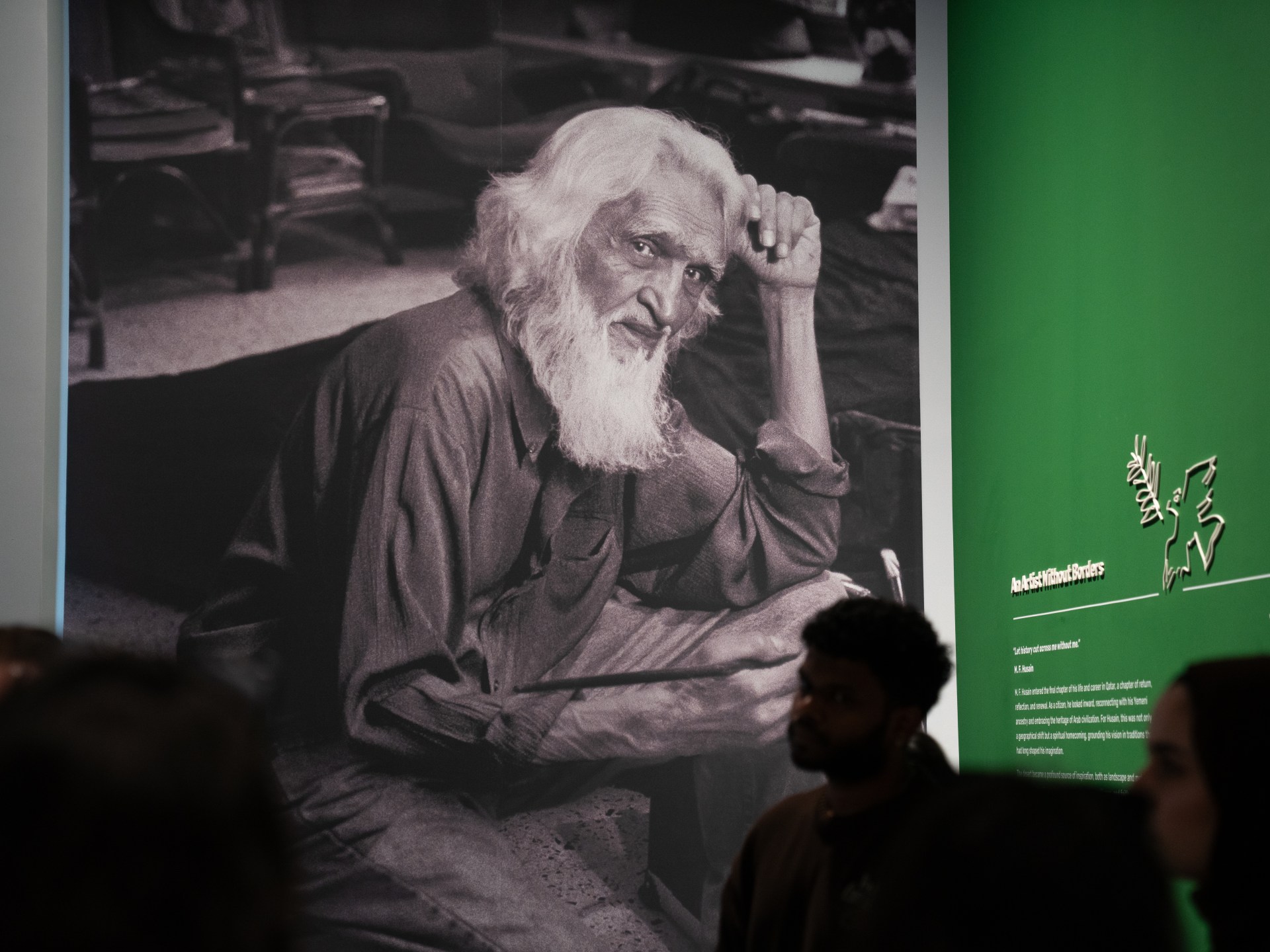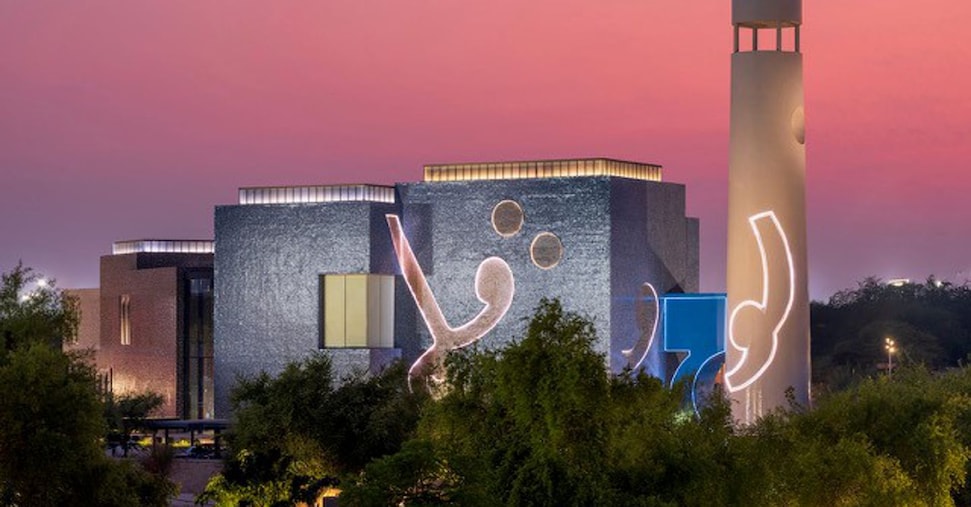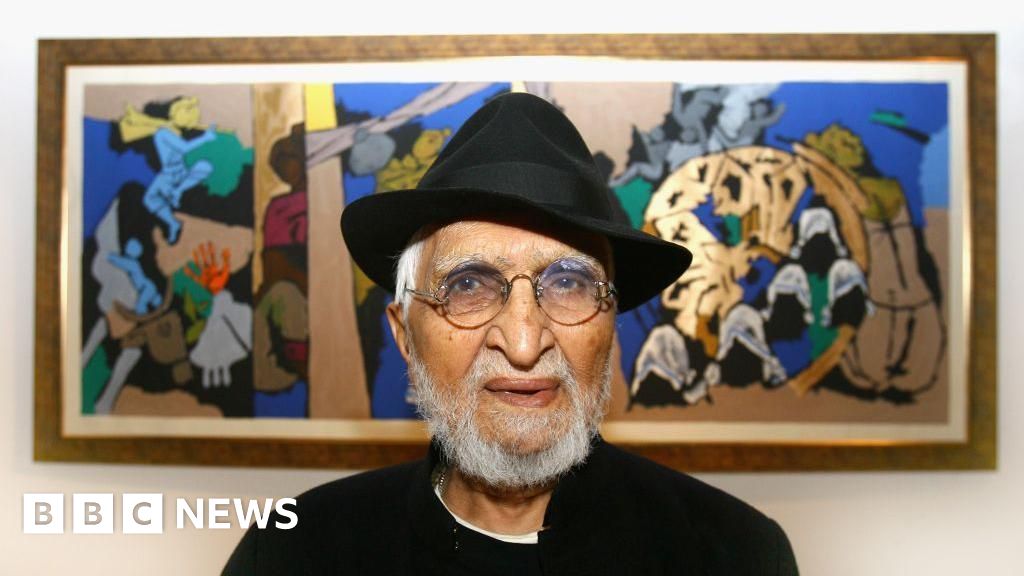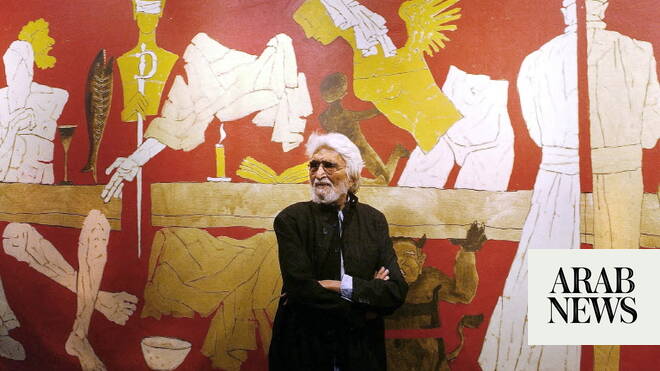
NEW DELHI: A museum dedicated to M. F. Husain will open in Qatar next month, the first such institution honoring the legacy of one of India’s most famous and influential modern artists.
Often called “the Picasso of India,” Husain — full name Maqbool Fida Husain — was born in Pandharpur in Maharashtra in 1915.
Self-taught as an artist, he began developing his skills by learning calligraphy at a madrasah in his early teens. He moved to Mumbai in the 1930s, surviving by painting cinema posters and honing his craft as the Bollywood industry grew.
In 1947, he formed the Progressive Artists’ Group with F. N. Souza, S. H. Raza, K. H. Ara, H. A. Gade, and S. K. Bakre, who sought to give Indian art a new modern identity after independence from British colonial rule.
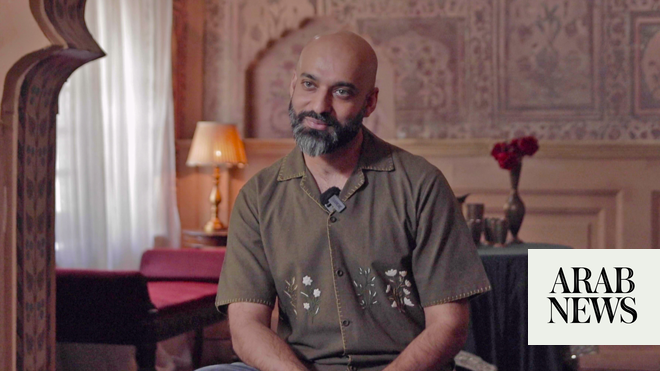
“They have all been the top stars of Indian modern art. All of them very consciously decided to create a new language for art in post-independence India, which is away from ancient art, which is away from the British school of art — a completely new language,” said Sahar Zaman, an art journalist who has documented Husain’s life and work.