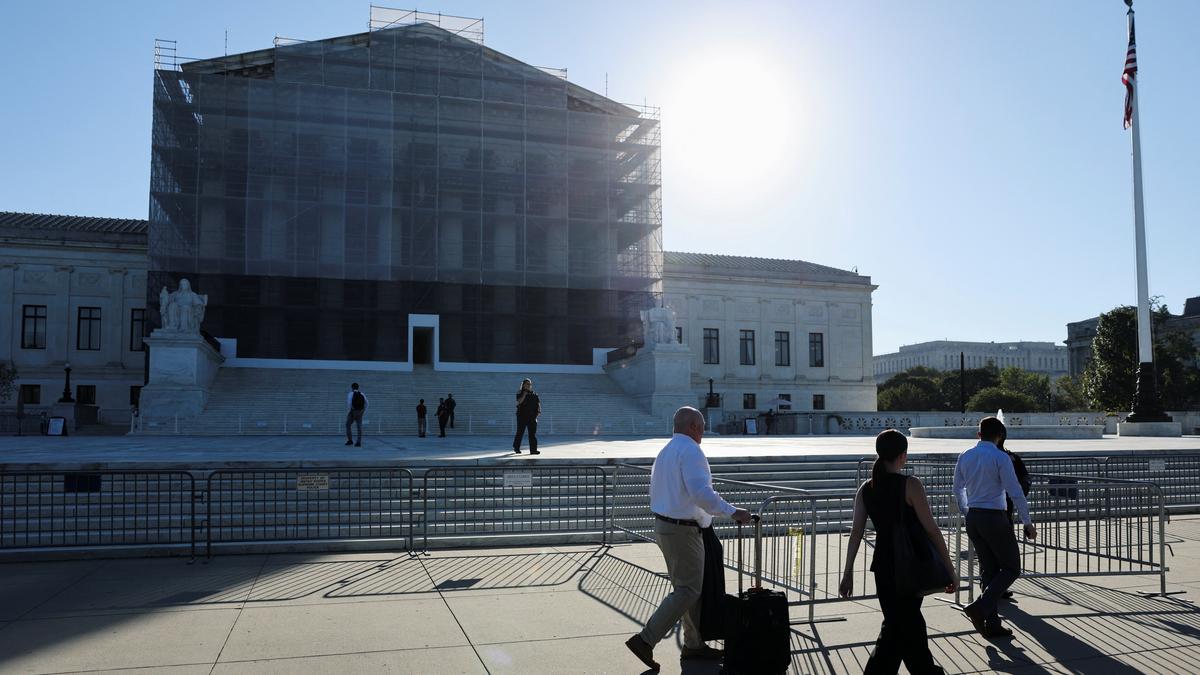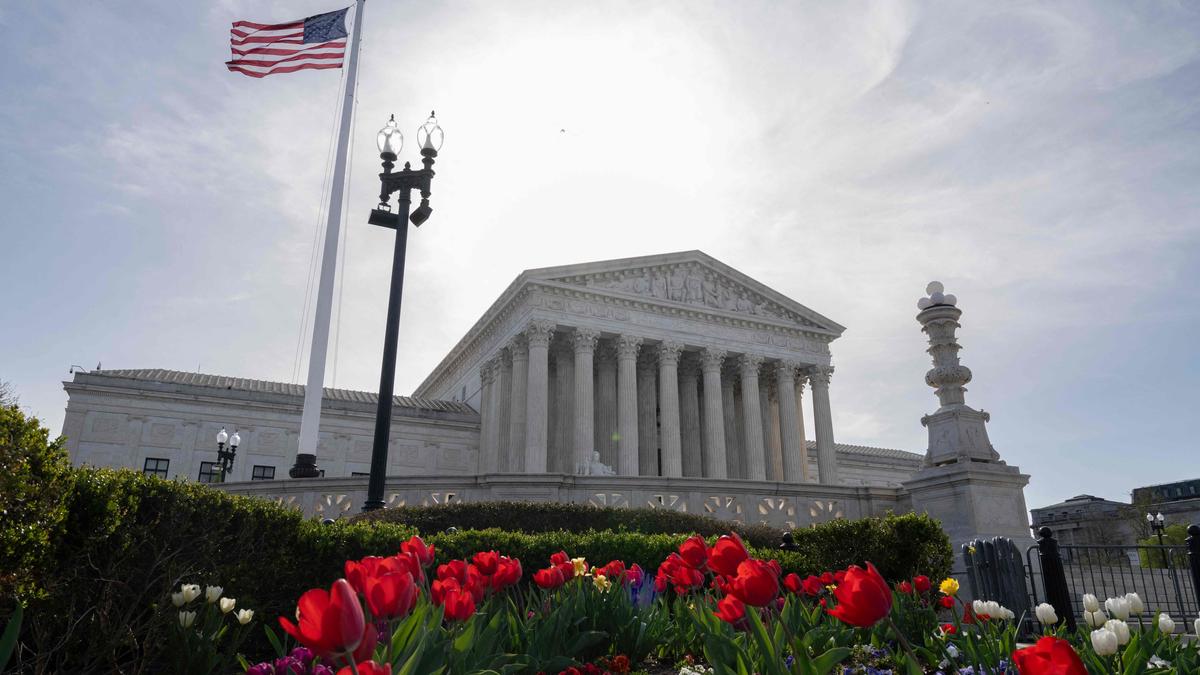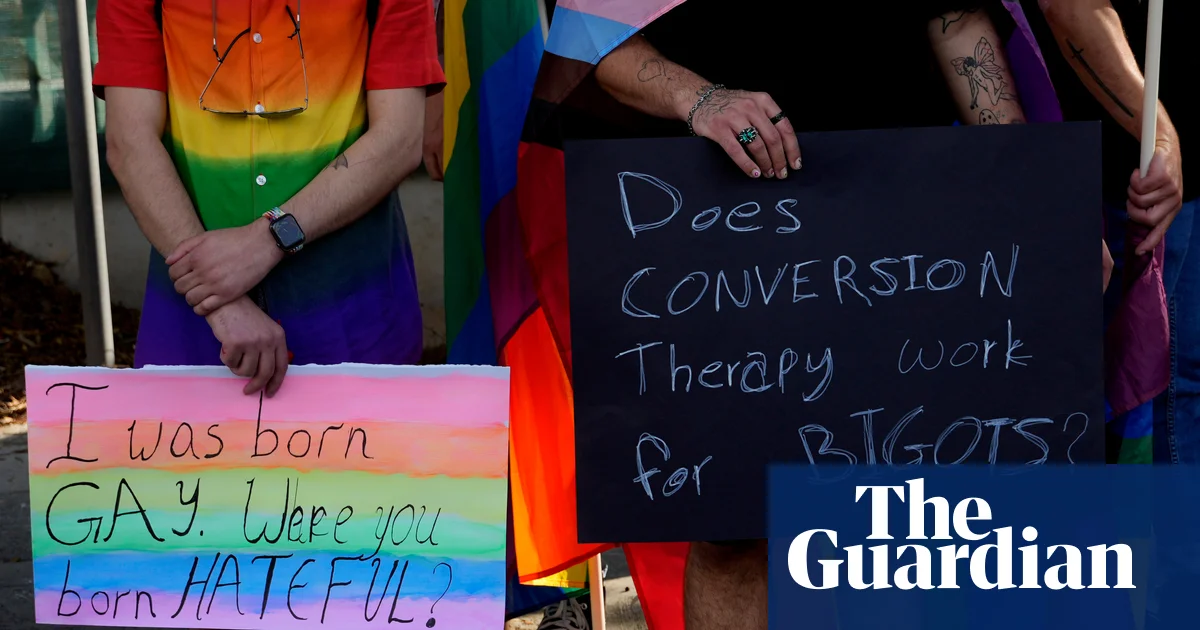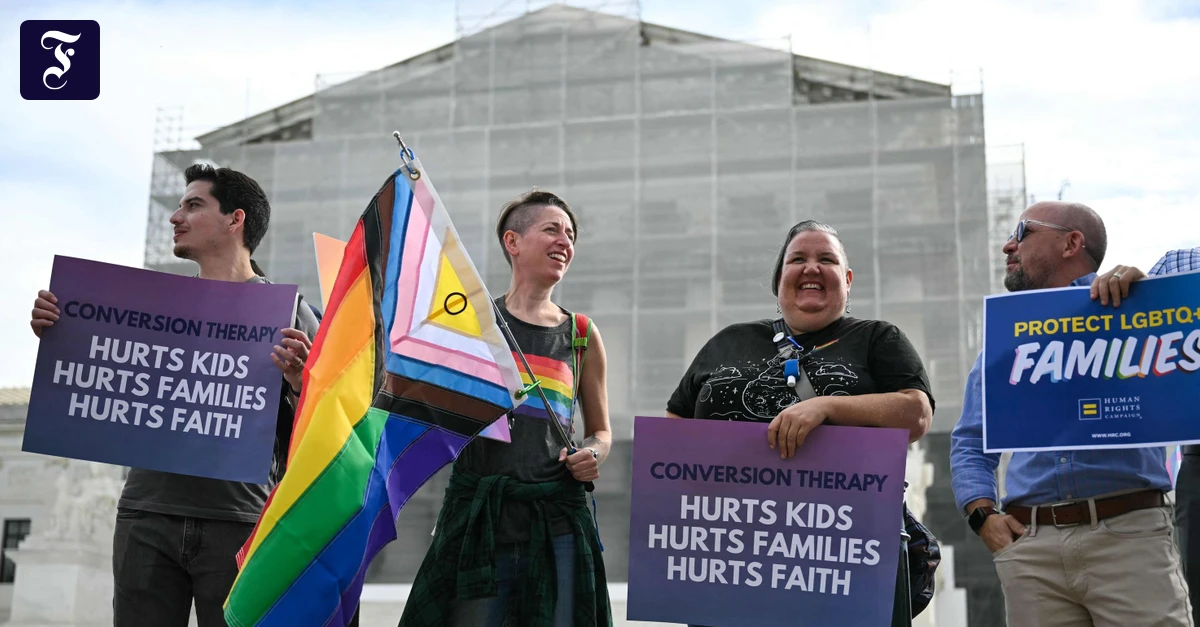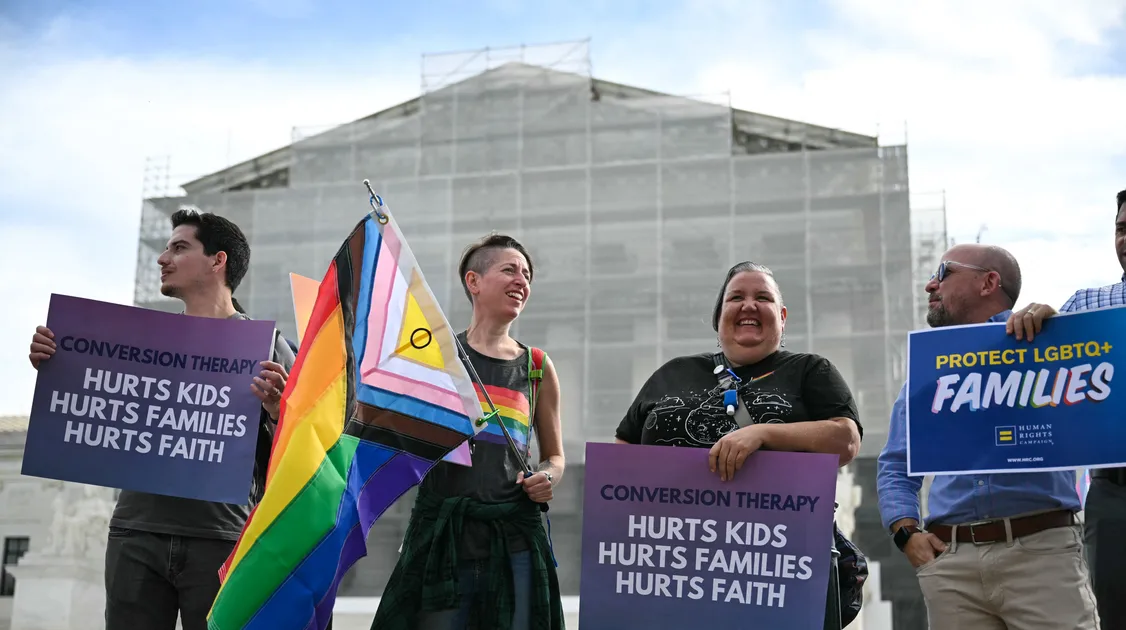
A therapist argues Colorado's ban on "conversion therapy" violates her free speech rights. About half the states have similar restrictions.Show Caption
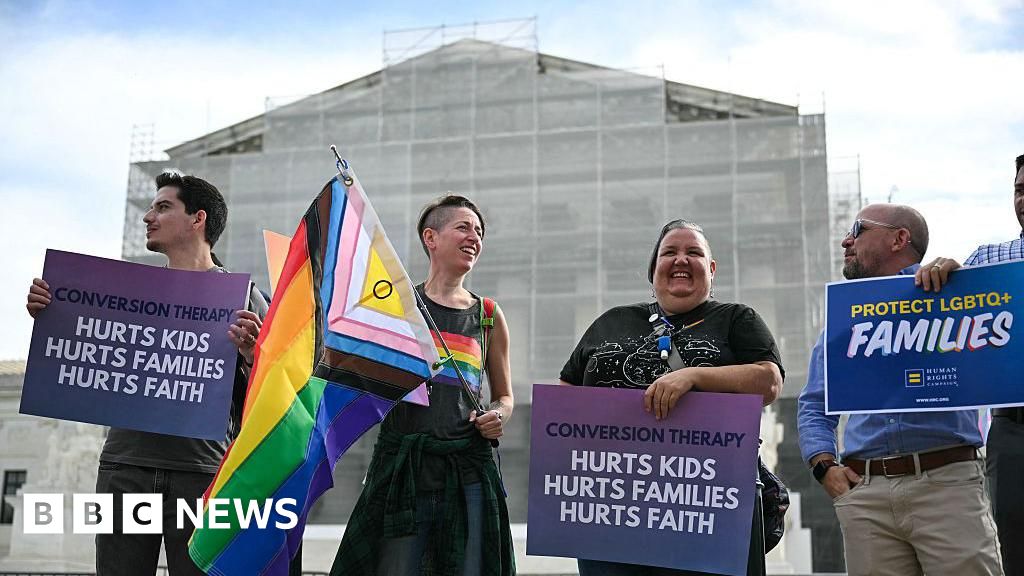
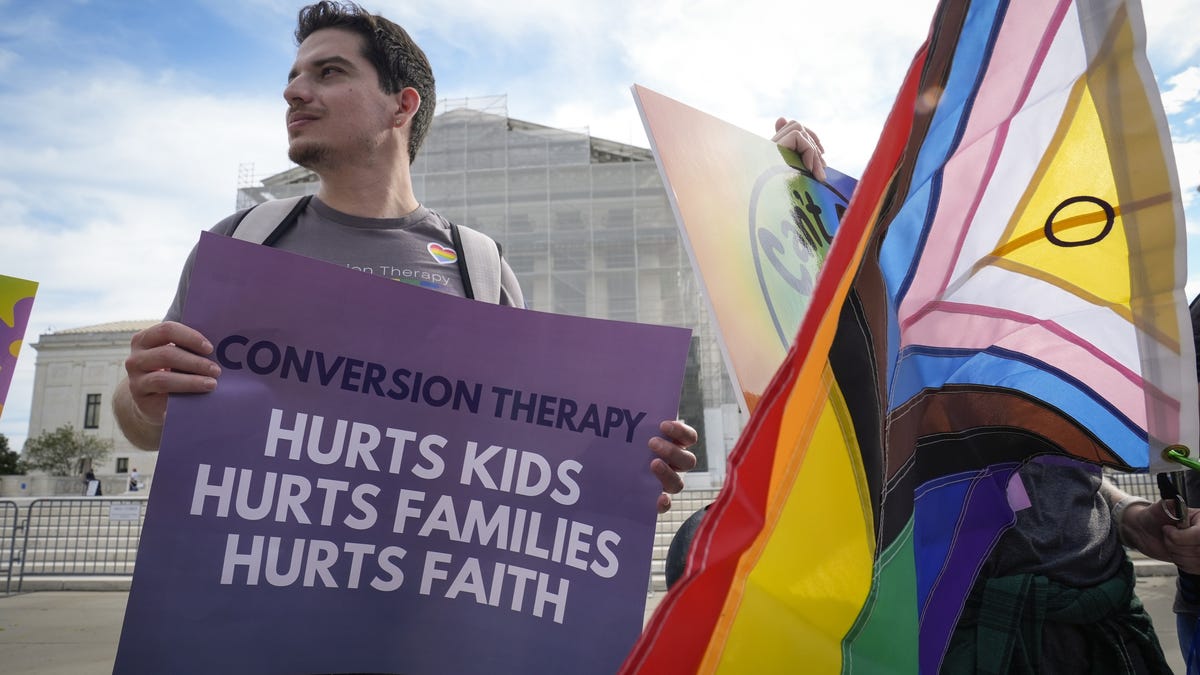
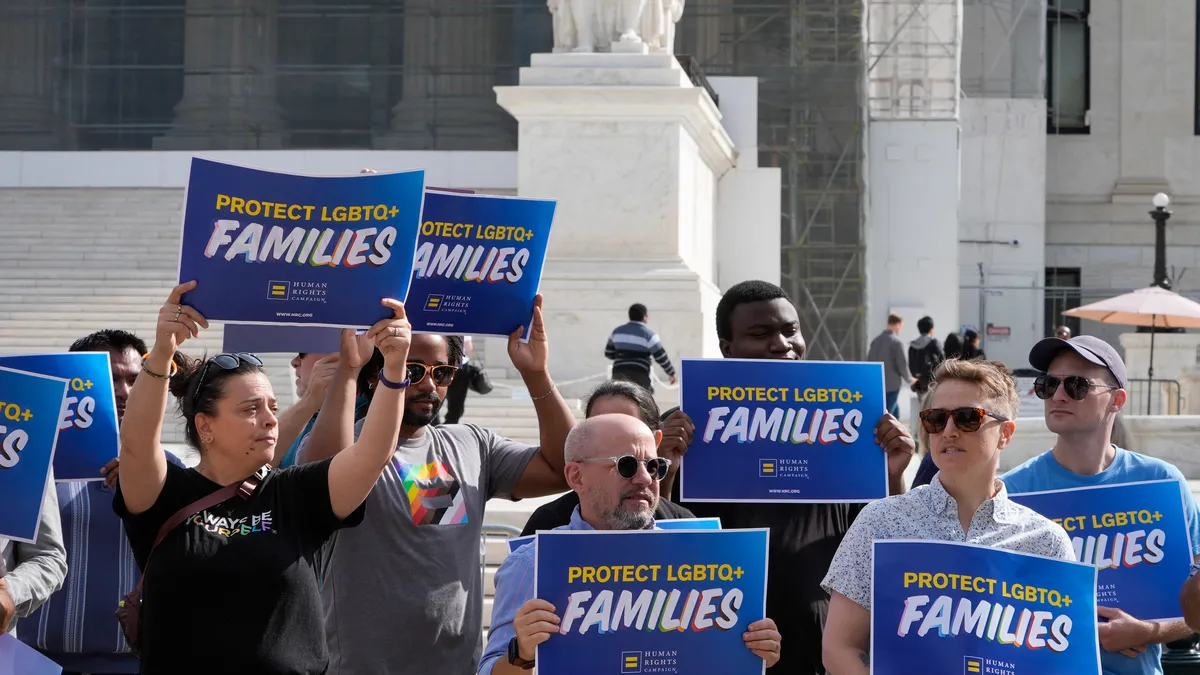
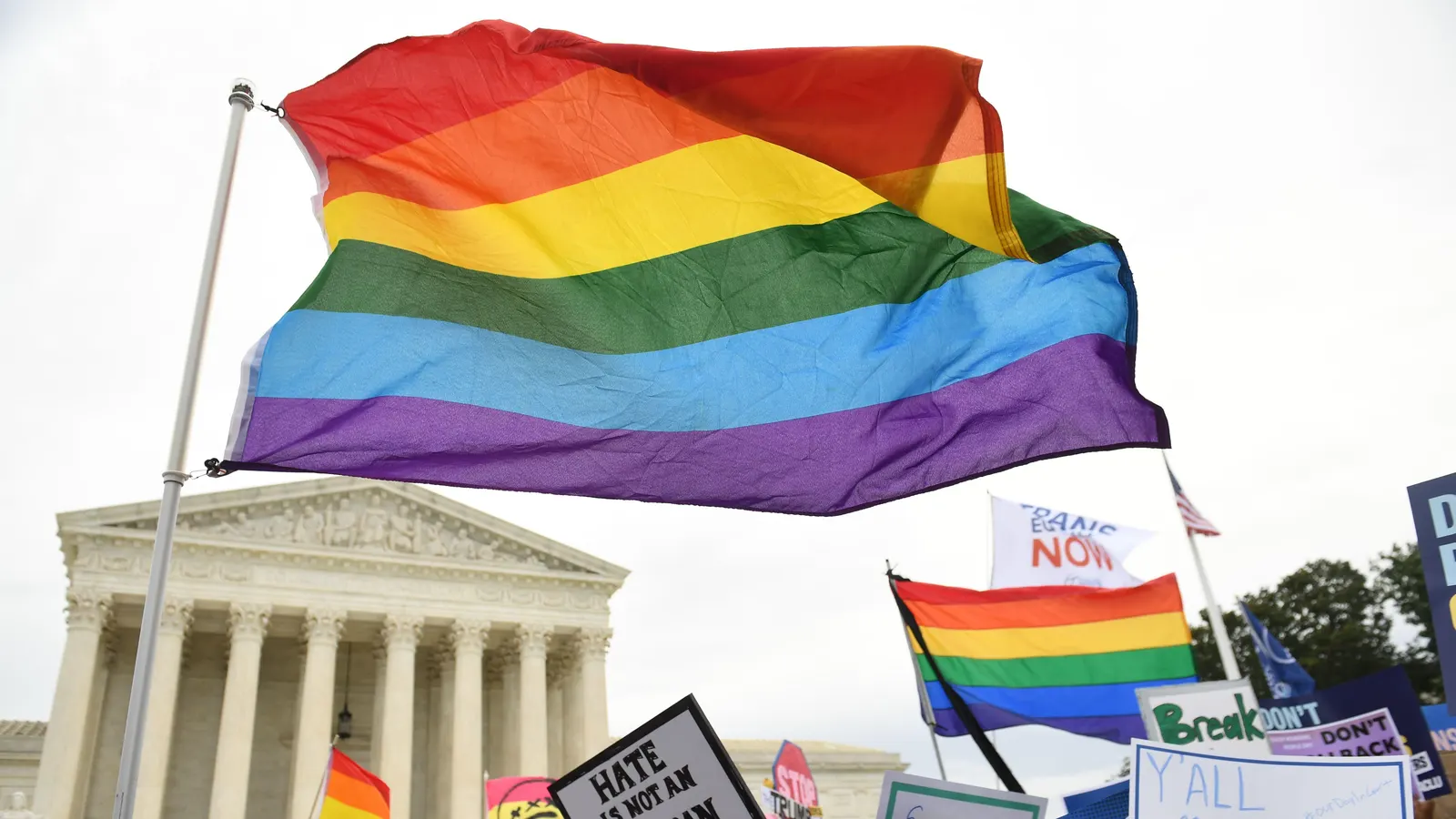
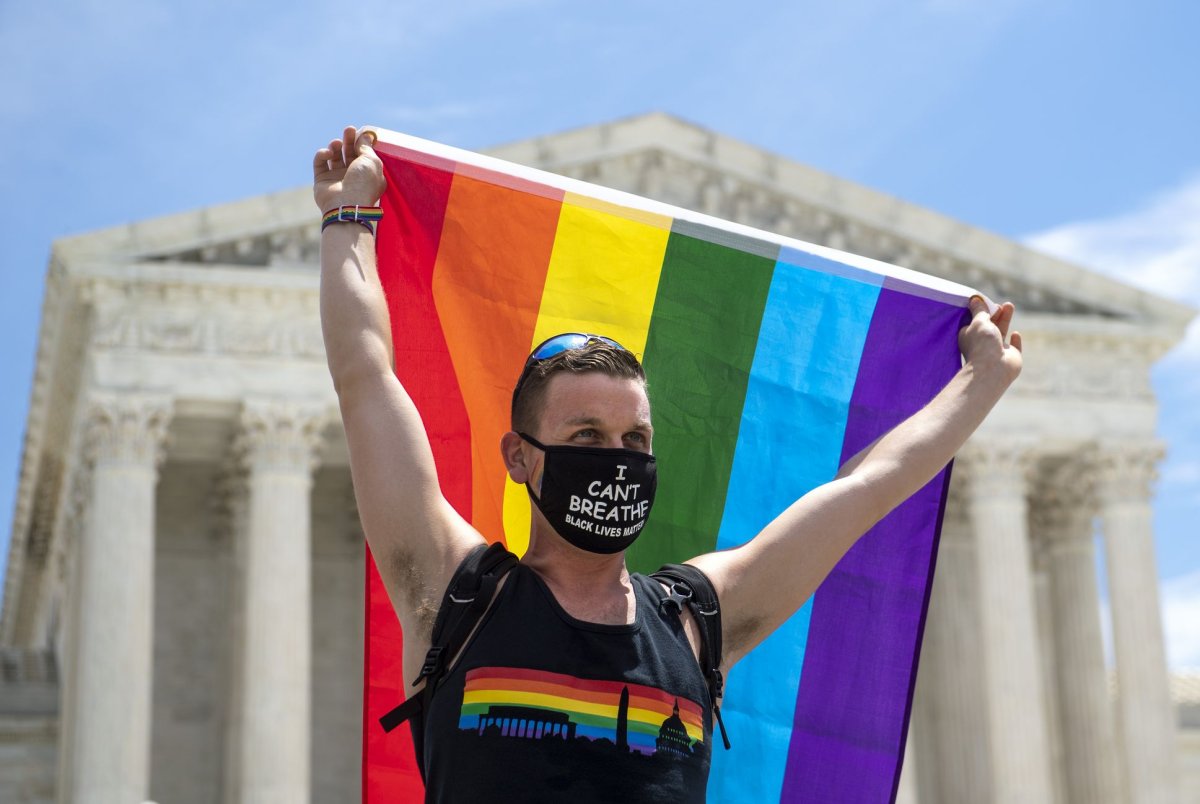
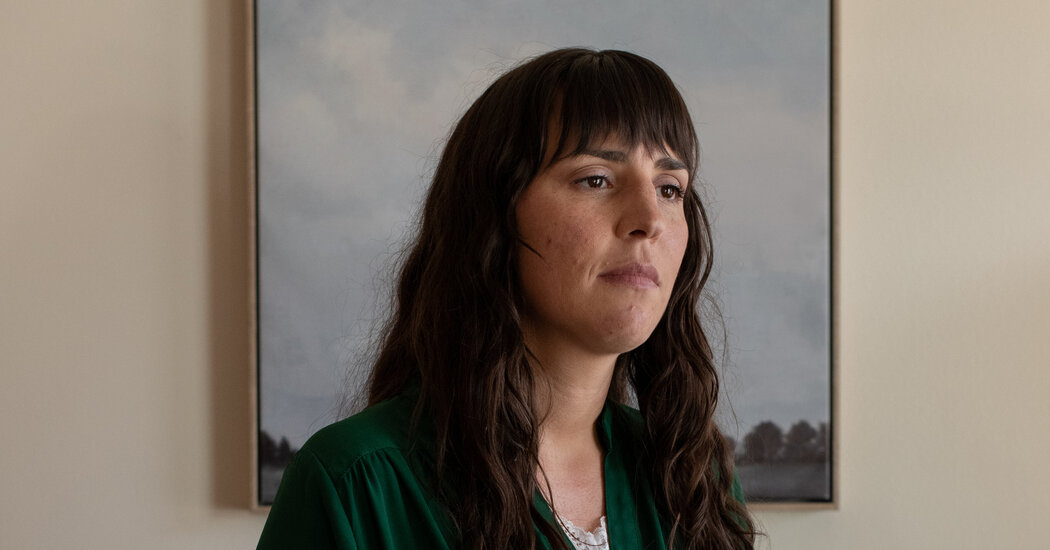
The Supreme Court appeared receptive to a landmark challenge to a Colorado law banning "conversion therapy" for children questioning their sexuality or gender identity.More than half the states have laws banning the therapy, which seeks to use counseling to persuade homosexual patients into accepting a heterosexual identity.A lawyer for counselor Kaley Chiles argued the Colorado law infringes on her free speech rights because Chiles' treatment of patients only involves talking.Colorado's solicitor general, citing studies that show conversion therapy to be harmful, told the justices that the case is about standards of professional care − not Chiles' speech.WASHINGTON − The Supreme Court is diving back into the culture wars, debating whether states can block licensed therapists from attempting to change a young person's sexuality or gender identity.In Oct. 7 oral arguments, the conservative court sounded sympathetic to a Christian counselor's claim that Colorado's ban on "conversion therapy" violates her free speech rights.Colorado officials argued the state's 2019 law − which is similar to restrictions in about half the states − is needed because of “overwhelming evidence” that conversion therapy harms young people, including by increasing the risk of depression and suicide.A lawyer for counselor Kaley Chiles argued the Colorado law infringes on her free speech rights because Chiles' treatment of patients only involves talking. Colorado's solicitor general, citing studies that show conversion therapy to be harmful, told the justices the law is about standards of professional care − not Chiles' speech."Medical professionals should not be given a First Amendment right to harm patients with substandard care," Colorado Attorney General Phil Weiser said on social media after the arguments concluded.The case comes months after the high court ruled in June that states can ban gender affirming care for minors. And the justices will consider later this term whether states can prevent transgender girls and women from playing on female sports teams.These celebrities spoke out on conversion therapyHollywood celebrities have long been outspoken about conversion therapy, a controversial approach that has triggered support and widespread backlash.From Bowen Yang to Miley Cyrus and a "Mean Girls" funnyman, here are some of the big names who have been open about their own experiences with conversion therapy.In 2020, actress and pop superstar Miley Cyrus said she stopped going to her church after her gay friends were sent to conversion therapy."The reason why I left my church is that they weren’t being accepted," Cyrus reportedly told told beauty mogul Hailey Bieber. "They were being sent to conversion therapies.""Saturday Night Live" star and "Wicked" franchise actor Bowen Yang told People in 2021 he was sent to gay conversion therapy by his parents when he was a teenager. "There was a huge chasm of misunderstanding," Yang told the outlet. "Neither side really understood where the other was coming from, and it led to very dangerous situations overall."Beloved "Mean Girls" star Daniel Franzese – who plays Janet Ian's gay best friend in the 2004 comedy – told Page Six in 2022 that he was "brainwashed" into an estrangement with his mother during conversion therapy when he was 21. "I went to one-on-one therapy sessions with a person who was trying to change me straight and make me pray the gay away and alienate all my allies."Trans and non-binary star Indya Moore, who uses she/they pronouns, recounted their experiences with conversion therapy in 2019. "I went to my junior prom and the next day my parents took me to a psychiatrist to cure me. Thankfully, I had a really good shrink, who at the end of our several sessions called my parents in and said, 'You have a choice here: You can try and change him and lose him, or you can accept him and love him,'" Murphy told The Hollywood Reporter in 2020. "I was very blessed."--Jay StahlPolice make gun arrest near Supreme CourtAcross the street from the Supreme Court, where a group of demonstrators rallied in support of Colorado’s conversion therapy ban, U.S. Capitol Police arrested a man on a firearm charge.Police handcuffed the man and put him in a squad car as a crowd of onlookers watched. A sizable police presence responded and officers closed off a portion of First Street Northeast.Capitol Police said in a statement the man was working as private security in the area and has been arrested on a charge of carrying a pistol without a license.--Chris CannTherapist's lawyer says law harms children struggling with gender identityJim Campbell, the lawyer for the therapist challenging Colorado's law, wrapped up his arguments by saying the evidence is on his client's side when it comes to children struggling with gender identity. That issue is in dispute among medical bodies. Major American medical organizations such as the American Medical Association and the American Academy of Pediatrics support gender-affirming medical care for minors.However, some European countries have increased restrictions in recent years. That includes England's National Health Service following the so-called "Cass report," a review that questioned the degree of evidence for certain treatments.Campbell argued that there are statistics to support the conclusion that the vast majority of young people struggling with gender identity before puberty "work their way through it and realign their identity with their sex.""But if one of those children go to a counselor and they specifically say, 'That is the help I want, realigning my identity with their sex,' they cannot receive that help from someone like my client," Campbell said."Once they start down the path of social transition, it will lead to the route of medicalized transition, which the Cass report tells us comes with a lot of harm and devastation," Campbell added.--Aysha BagchiConversion therapy has ‘no record of success,’ lawyer tells justicesJustice Amy Coney Barrett asked for a summary of the alleged harm from conversion therapy and Colorado Solicitor General Shannon Stevenson said 100 years of research found no support for it.Stevenson cited a study of 34,000 people who were 13 to 25 years old who had gone through conversion therapy and found twice the rate of suicide attempts. She cited another study of 27,000 people considering changing their gender identity and found association with suicide attempts.“People have been trying to do conversion therapy for 100 years with no record of success,” Stevenson said. “The harm from it comes not from the aversive practice, it comes from telling someone there is something innate about yourself you can change, and then you spend all kinds of time an effort to do that and you fail.”--Bart JansenColorado seeks 'narrow' carve-out for First Amendment protections for professionalsJustice Ketanji Brown Jackson gave Colorado an opportunity to say how the court could uphold the state’s ban while being consistent with a previous Supreme Court ruling about professional speech.In that 2018 case, the court said speech from professionals still has First Amendment protections.Shannon Stevenson, Colorado’s solicitor general, said the state is focused on the “very narrow context” when a healthcare provider has a fiduciary responsibility to act in a patient’s best interest. Jackson reiterated that Colorado is pushing a “very narrow carve-out for professional speech.”--Maureen GroppeKagan concerned Colorado law could violate free speechJustice Elena Kagan, one of the court's three liberals, expressed some concern over whether the Colorado ban improperly regulates speech. She asked Colorado Solicitor General Shannon Stevenson to assume the case is being evaluated as a free speech case, rather than as a case about a doctor's treatment.Kagan noted that the Supreme Court has interpreted the First Amendment to provide protections against laws that target speech based on the viewpoint being expressed."If a doctor says, 'I know you identify as gay, and I'm going to help you accept that,' and another doctor says, 'I know you identify as gay, and I'm going to help you to change that,' and one of those is permissible, and the other is not, that seems like viewpoint discrimination," Kagan said.Stevenson agreed with Kagan's reasoning but disagreed with the premise. She said Colorado's law is targeting medical treatment, and the law is driven by an assessment that the medical treatment is harmful."That's the driving force behind regulating the particular practice," Stevenson said.--Aysha BagchiBarrett asked how high court should resolve treatment disputeJustice Amy Coney Barrett asked how the justices should rule if they find a dispute between how Colorado and Tennessee, for example, regulate conversion therapy differently.But Colorado Solicitor General Shannon Stevenson said there is no dispute about the standard of care because no medical experts had stepped forward in the case to support conversion therapy.“The state can show we’re regulating a treatment and we’re regulating consistent with the standard of care,” Stevenson said. “There is a confirmation, a security that the court can have that there is no other motive going on to suppress viewpoints or expression.”Barrett said there could be a dispute about treatment.“I think you could have that,” Barrett said. “In my hypothetical, I’m saying there might be a dispute in the medical community.”But Stevenson said if there were multiple treatments possible, the choice could be litigated between competing experts, like in a malpractice case. Stevenson said there was no dispute.If Chiles “could put on an expert to show that conversion therapy is inside the standard of care, I think we wouldn’t be here,” Stevenson said.--Bart JansenAlito cites 'plain meaning' of Colorado lawJustice Samuel Alito raised the example of a young male telling a therapist he’s attracted to other men and wants to lessen that attraction. Can the therapist help, Alito asked Colorado’s attorney.Shannon Stevenson said the therapist can’t help if the adolescent said he wants to “become straight.” But she can help him cope with his feelings about it.Alito said that explanation does not make sense under “the plain meaning” of Colorado’s law.--Maureen GroppeJackson compares Colorado law with Tennessee ban on transgender care for minorsJustice Ketanji Brown Jackson questioned DOJ lawyer Hashim Mooppan about whether the Colorado law banning conversion therapy is similar to a Tennessee ban on transgender-affirming medical care for minors. Earlier this year, the Supreme Court ruled that the Tennessee ban is constitutional."The regulations work in basically the same way, and the question of scrutiny applies in both contexts," Jackson said. "So it just seems odd to me that we might have a different result here.""I'm just, from a very, very broad perspective, concerned about making sure that we have equivalence with respect to these things," Jackson added.Mooppan said the difference comes down to talk therapy involving speech, which has First Amendment protections."Well, from a very broad perspective, there shouldn't be equivalence, because obviously we have a First Amendment," Mooppan said.--Aysha BagchiColorado lawyer calls conversion therapy ‘ineffective, harmful’Colorado Solicitor General Shannon Stevenson said courts have long upheld the government’s power to regulate healthcare, particularly against “ineffective, harmful treatment” at stake in the conversion therapy case.“Colorado’s law lies at the bulls-eye center of this protection,” Stevenson said. “This treatment does not work and carries great risk of harm.”Stevenson said Chiles provided no expert, no studies and no medical health professional endorsing conversion therapy. Stevenson said the treatment isn't protected by the First Amendment just because the therapy was talking.“A healthcare provider cannot be free to violate the standard of care just because they are using words,” Stevenson said. “A state cannot be required to let its vulnerable young people to waste their time and money on an ineffective, harmful treatment because that treatment is delivered through words.”--Bart JansenThomas asks about state’s exception for non-licensed counselorsJustice Clarence Thomas asked Colorado’s lawyer about the law’s exception for non-licensed therapists. Why is the counseling different if it’s provided by a minister− who is not covered by the law, he asked.Shannon Stevenson, Colorado’s solicitor general, said patients have a different expectation when they’re seeing a therapist licensed by the state.“You’re expecting information that is complying with the standard of care,” she said.--Maureen GroppeDOJ: Malpractice laws are different from Colorado’s conversion therapy banHashim Mooppan, the attorney for the Justice Department, said malpractice laws function differently than the kind of regulation Colorado has imposed on therapists.Under the First Amendment, he said, it’s very important to let someone speak first before challenging what they’ve said, rather than categorically banning certain speech.--Maureen GroppeBarrett asks whether Supreme Court should resolve case itselfJustice Amy Coney Barrett asked a Justice Department lawyer whether the high court should resolve the case itself or send it back to the 10th U.S. Circuit Court of Appeals for more review.Hashim Mooppan, the principal deputy solicitor general, said the Supreme Court should resolve the case itself because the evidence is clear that the Colorado law “can’t satisfy” the court’s review.“There is ongoing irreparable harm to” Chiles, Mooppan said.--Bart JansenJustice Department lawyer urges justices to scrutinize Colorado lawHashim Mooppan, a lawyer at the Justice Department, argued in an opening statement for the U.S. government that the Colorado law is restricting speech based on the content of the speech and the viewpoint of the speaker. Mooppan said that means the Colorado law should face a high constitutional hurdle.His argument echoes the argument the DOJ made in a brief it submitted to the Supreme Court ahead of oral arguments."Colorado is muzzling one side of an ongoing debate in the mental-health community about how to discuss questions of gender and sexuality with children," the Justice Department said. "Under the First Amendment, the State bears a heavy burden to justify that content-based restriction on protected speech."--Aysha BagchiDOJ points to past consensus that homosexuality was a mental illnessOne problem with Colorado’s position, an attorney for the Justice Department argued, is that the medical community has changed its position on homosexuality.As recently as the 1970s, it was the professional consensus that being gay was a mental illness, said Hashim Mooppan, principal deputy solicitor general.Under Colorado’s logic, Mooppan said, states in the 1970s could have made it illegal to counsel someone that it was OK to be gay.The American Psychiatric Association declassified homosexuality as a mental illness in 1973.--Maureen GroppeJustice Ketanji Brown Jackson asks how case fits under First AmendmentJustice Ketanji Brown Jackson asked how Chiles, who simply talks to clients, was different from medical professionals who might prescribe medicine and whom the state regulates.“It’s just a little puzzling to me that she would stand in a different position than a medical professional who has exactly the same goals and exactly the same interests and would be prescribing medication for that rather than her talking with the client,” Jackson said.Jim Campbell, who represents Chiles, said one-on-one conversation counts as speech protected under the First Amendment.“This is an ongoing, active dialogue,” Campbell said. “That absolutely has to be protected by the First Amendment.”--Bart JansenSotomayor probes what proof of harm Colorado must showJustice Sonia Sotomayor questioned whether Colorado has to prove that talk therapy is harmful.The state, she said, wouldn’t have to produce a study to back up the fact that anorexics shouldn’t be encouraged to restrict their food.Jim Campbell, the attorney for the therapist, said that’s a different situation. While encouraging an anorexic to eat less is clearly harmful, he said, there is “debated science” about how best to help people with gender dysphoria, he said.--Maureen GroppeSotomayor considers pathway to avoid free speech rulingJustice Sonia Sotomayor said the state of Colorado has disavowed prosecuting Chiles, and that may mean Chiles isn't injured in the type of way that legally allows her to sue. If that were the case, the Supreme Court could decide to dismiss the case without ruling on whether Colorado's law is constitutional.Sotomayor highlighted that Chiles' therapy doesn't involve encouraging a client to vomit or to undergo electric shock treatment in order to change sexual orientation or gender identity. The justice characterized those tactics as the typical types of conversion treatments that, under the Colorado law, are banned."The state is actively investigating our client," Jim Campbell, Chiles' lawyer, responded. He suggested that shows Chiles could be prosecuted, and that the language of Colorado's ban applies to the type of therapy Chiles performs.--Aysha BagchiBarrett asks if therapist is vulnerable to malpractice lawsuitJustice Amy Coney Barrett asked Chiles’ lawyer whether she would be vulnerable to a malpractice lawsuit.“She would have the protection of the rigorous elements of malpractice,” Campbell said. “She would be able to show that she is not violating the standard of care,” he added. “She would be able to show that there is no harm and no causation.”Barrett said that could lead to a battle of experts over the appropriate standard of care for Chiles’ patients. Campbell said a malpractice lawsuit would generally protect Chiles’ First Amendment right to free speech, which is what she’s arguing for in the Supreme Court case.“The elements of malpractice are generally sufficient to protect free speech,” Campbell said.--Bart JansenFreedom of speech and religious liberty top of mind for opponents of Colorado lawSeveral people who waited in line to hear oral arguments in person opposed Colorado’s ban and similar measures in others states.Kevin Watchman, 23, said Colorado’s conversion therapy ban is one sided and infringes on religious freedom. “As a Christian, this is concerning for me,” he said.Nate Oyloe, who filed an amicus brief in support of Chiles, said the case is about freedom of speech and religious liberty. “The church should have the freedom to speak what they believe to be true,” he said.Oyloe said he struggled with his sexuality as a teenager and was helped by conversion therapy.“I wanted my sexuality to be in agreement with my faith,” he said. “Thirty years later I’m married and I have three kids − all through the help of qualified mental health caregivers.”--Christopher CannChief Justice Roberts asks about treatments that go beyond talkChief Justice John Roberts asked the therapist’s lawyer if he would still have a challenge if the treatment involved something in addition to speech, such as administering medication.The attorney, Jim Campbell, responded that the analysis changes when speech is incidental – not central – to the treatment. And it depends how closely the two are connected.“Here, we’re just in First Amendment land where there is full, robust protection,” he said.--Maureen GroppeTherapist’s lawyer says Colorado is censoring speech it opposesColorado is trying to ban “voluntary conversations censoring widely held views on debated moral, religious and scientific questions,” the lawyer representing counselor Kaley Chiles said in his opening argument.States can’t transform counselors into “mouthpieces for the government,” attorney Jim Campbell said.And he told the justices that Colorado hasn’t proven the type of talk therapy that Chiles wants to engage in is harmful.--Maureen GroppeClash of visions over what's right for young patientsColorado argues that states have long had the ability to protect patients by regulating health care professionals. State officials also say the evidence shows trying to change someone’s sexual orientation or gender identity doesn’t work and can lead to depression, anxiety, loss of faith and suicidal thoughts.Kaley Chiles, the counselor challenging the ban said she’s engaging in voluntary “conversations” with clients and there’s no evidence that her approach is harmful.Chiles says that current Colorado law allows her to support an adolescent who wants to transition to another gender but bars her from helping them to accept their assigned sex at birth.--Maureen GroppeSupporters of 'conversion therapy' ban rally at Supreme CourtOutside the Supreme Court, groups of LGBTQ+ advocates demonstrated against conversion therapy.Some held signs that said the practice “hurts kids, hurts family, hurts faith.”Mathew Shurka, 37, said the outcome of the case is “life and death.”The founder of Born Perfect − an organization that advocates for conversion therapy bans − said he was subjected to conversion therapy when he was a teenager and that it led him to contemplate suicide.He said he founded the group to ensure no other LGBTQ+ children experience what he did.“The stakes couldn’t be higher for kids,” he said.Colorado law signed by nation’s first openly gay elected governorThe state regulation being challenged was signed into law in 2019 by Gov. Jared Polis, the country's first openly gay elected governor.“In just 27 years, we’ve had a remarkable transformation from what was derogatorily called the ‘hate state’ to a place where the rights of all Coloradans are respected,” Polis said, according to NPR.Colorado Attorney General Phil Weiser, who is defending the law, is among the candidates running in next year’s election to succeed Polis.Past decisions on speech and health care could influence conversion therapy rulingPrevious high court decisions about free speech in the health care context could come up in the conversion therapy debate.In 2018, the court said a California law requiring anti-abortion pregnancy centers to inform women about publicly funded abortion and contraception services had First Amendment issues.“Speech is not unprotected merely because it is uttered by ‘professionals,’” Justice Clarence Thomas wrote in National Institute of Family and Life Advocates v. Becerra.But the court acknowledged that states can regulate professional conduct even it if “incidentally” involves speech.Thomas pointed to the court’s 1992 decision upholding a Pennsylvania law requiring doctors to provide certain information to patients before they could perform an abortion.--Maureen GroppeCourt sidestepped issue two years agoIn 2023, the Supreme Court rejected a similar challenge to Washington state’s law brought by a Christian marriage and family counselor.Three conservative justices − Clarence Thomas, Samuel Alito and Brett Kavanaugh − said they would have granted that appeal. It takes four justices to agree to hear a case.Thomas said the Washington law was "is viewpoint-based and content-based discrimination in its purest form."Who is defending Colorado's `conversion therapy' ban?Shannon W. Stevenson, Colorado's chief appellate lawyer, is defending the state's ban.She was appointed solicitor general in 2023 by Colorado Attorney General Phil Weiser, who is running for governor.Who is arguing against Colorado's `conversion therapy' ban?Jim Campbell, the chief legal counsel with the Alliance Defending Freedom, is representing Kaley Chiles, the Colorado counselor challenging the state's conversion therapy ban.Alliance Defending Freedom is a conservative legal organization that has appeared frequently at the court in recent years in cases involving high-profile social issues. Those included a successful 2023 case brought by a Colorado web designer who said having to create websites for same-sex weddings would violate her free speech rights.Is the Trump administration involved in the case?Although the case is about a state – not federal – law, President Donald Trump's Justice Department has gotten involved. At the department’s request, Justice Department attorney Hashim M. Mooppan will get time during oral arguments to support the counselor’s challenge.The Justice Department has already told the justices that Colorado is “muzzling one side of an ongoing debate in the mental-health community about how to discuss questions of gender and sexuality with children.”