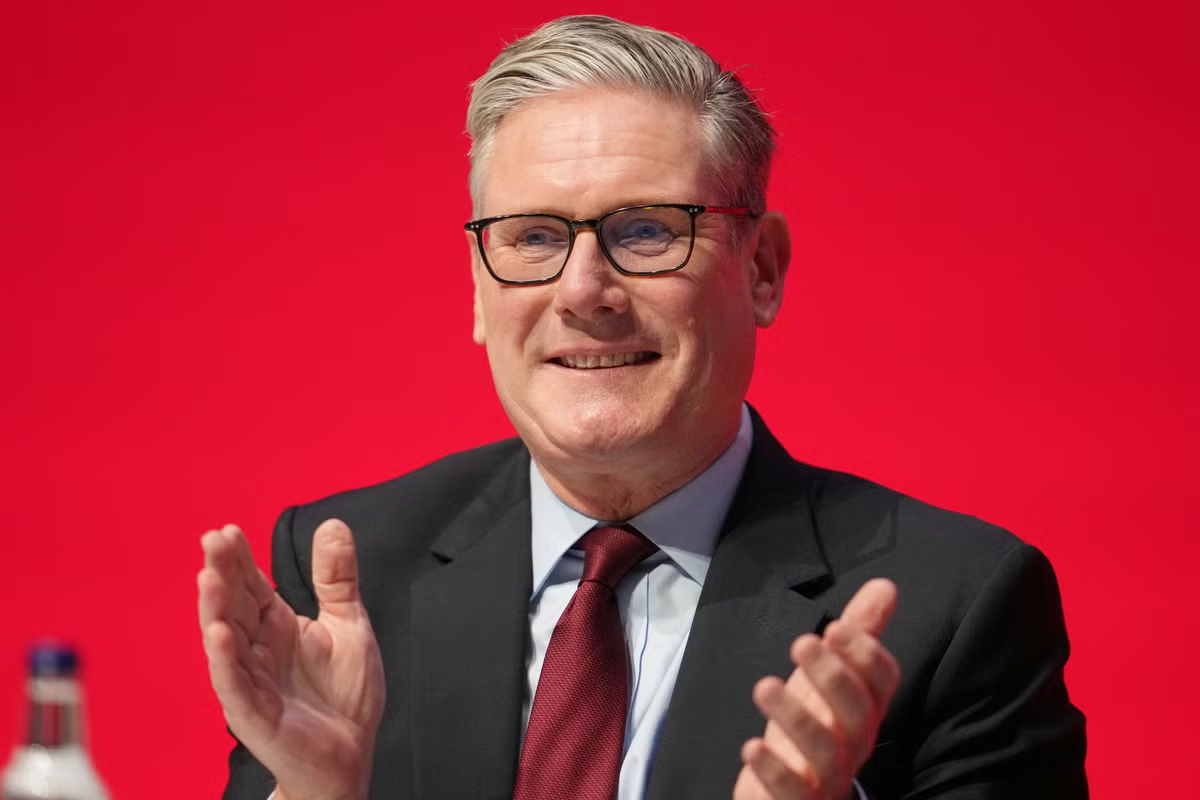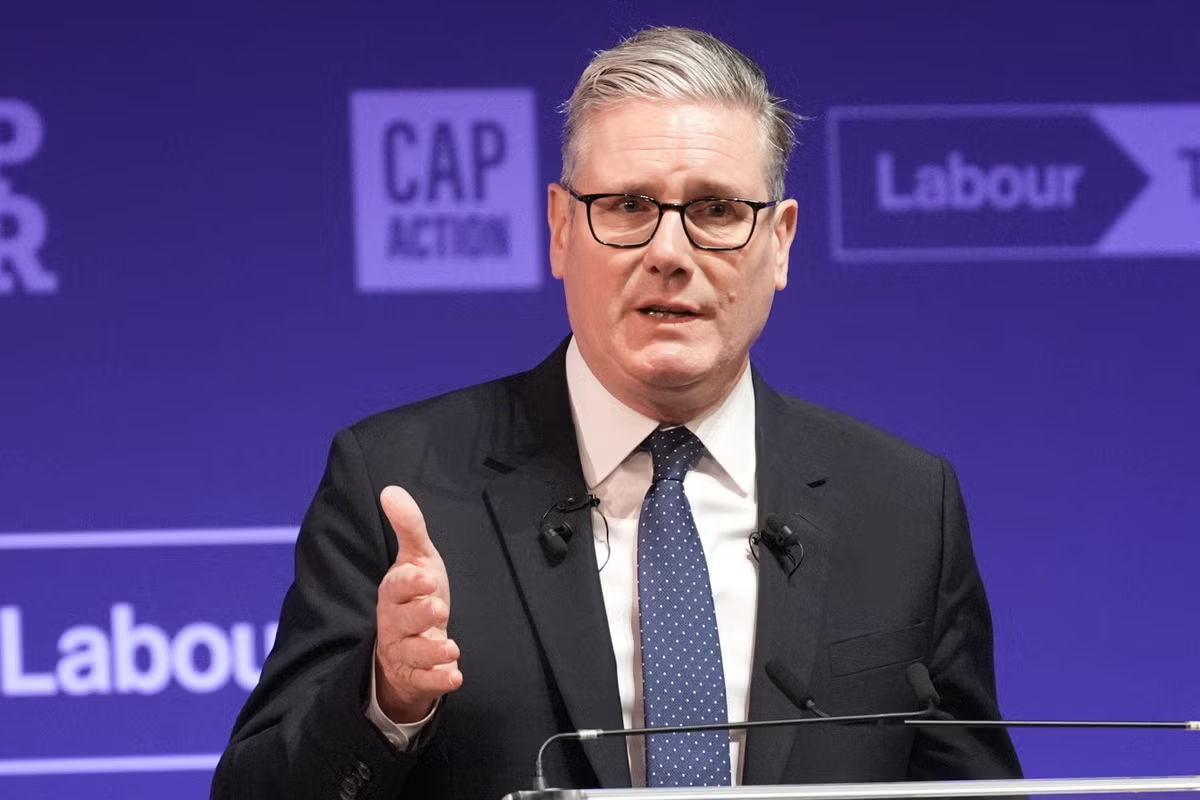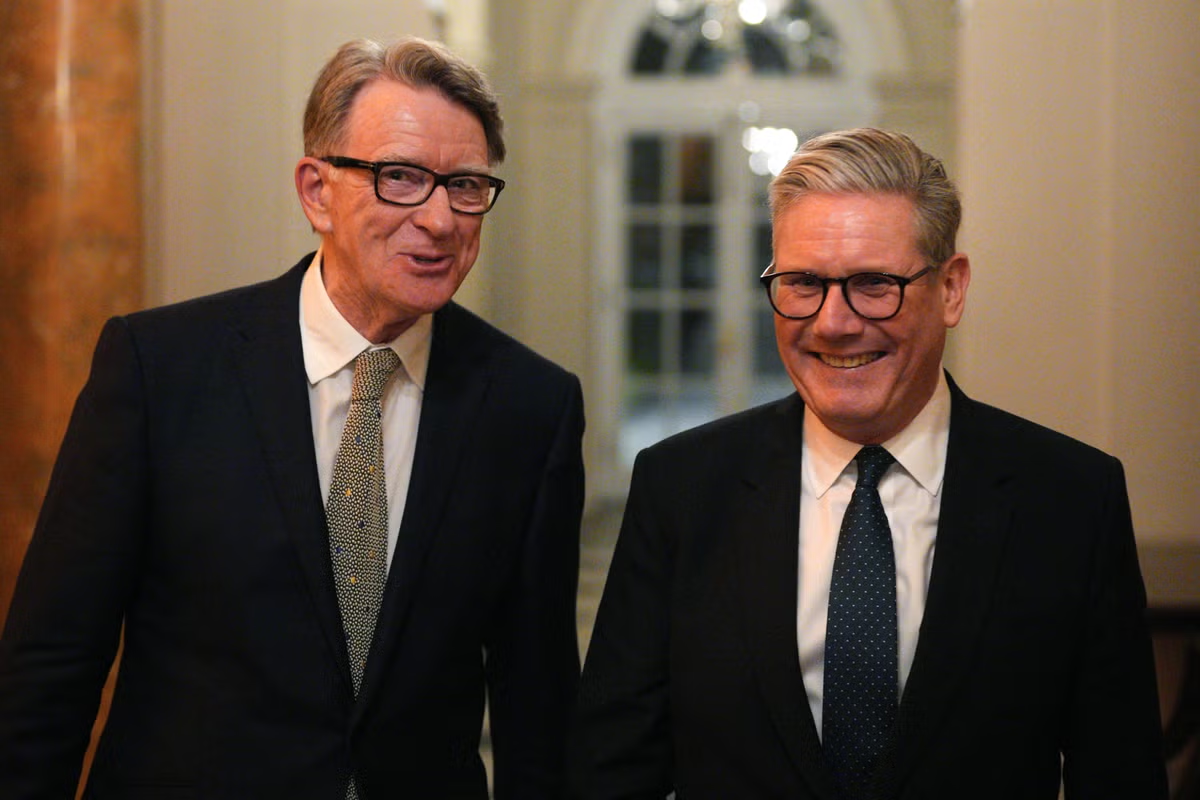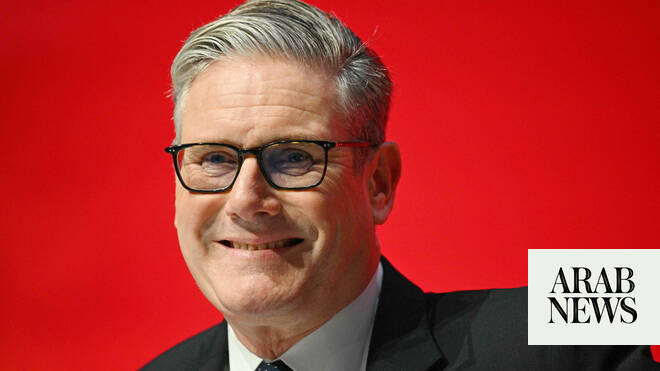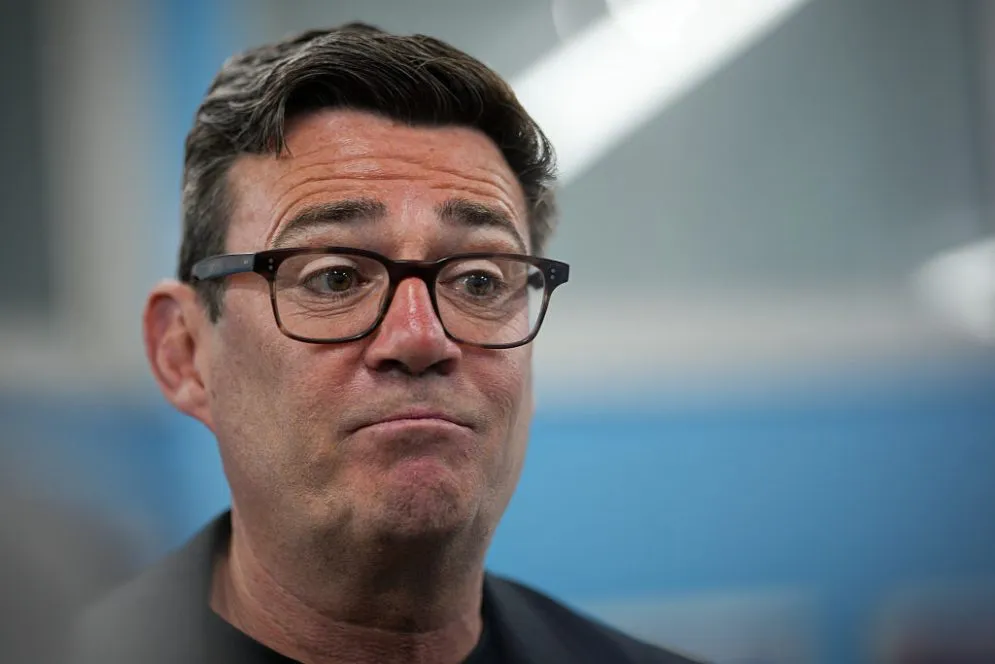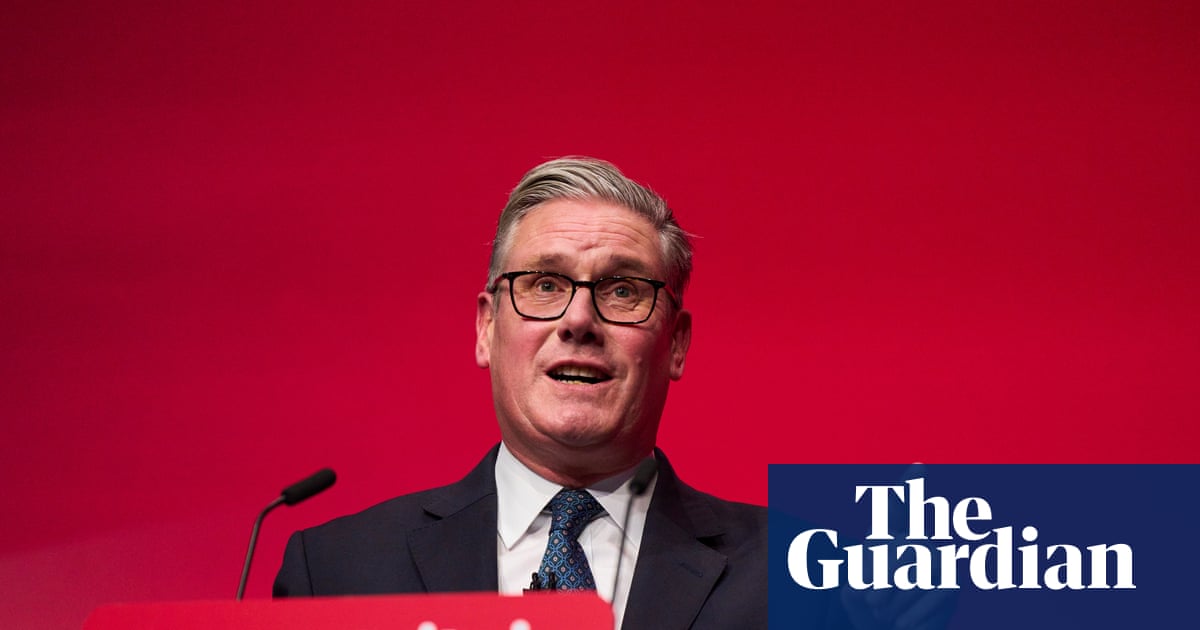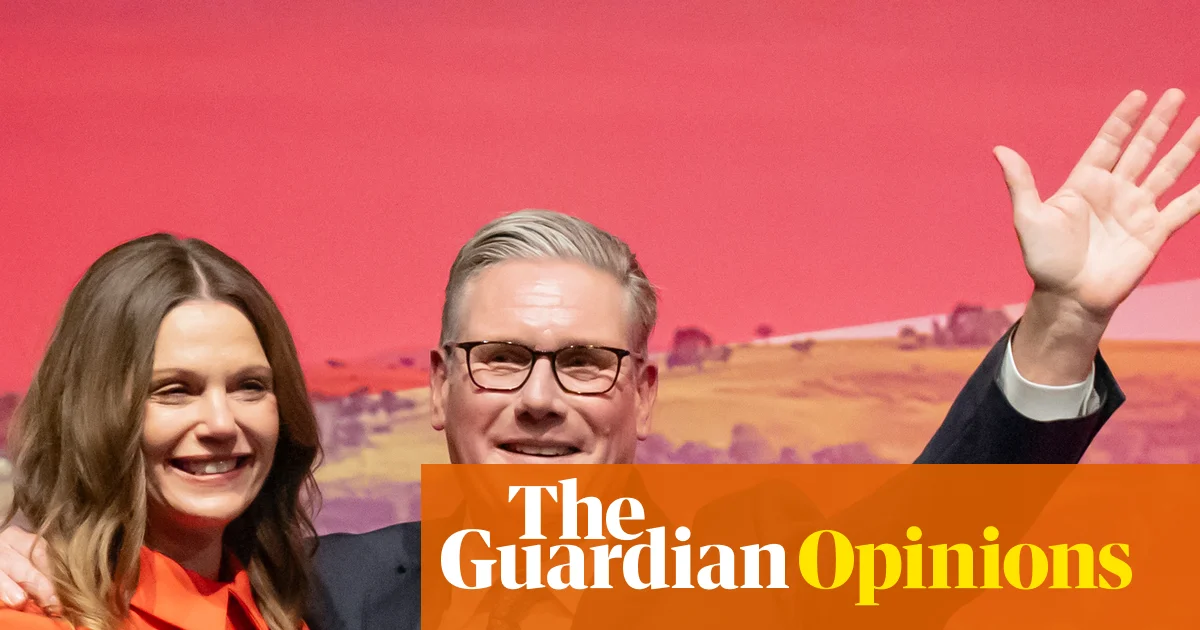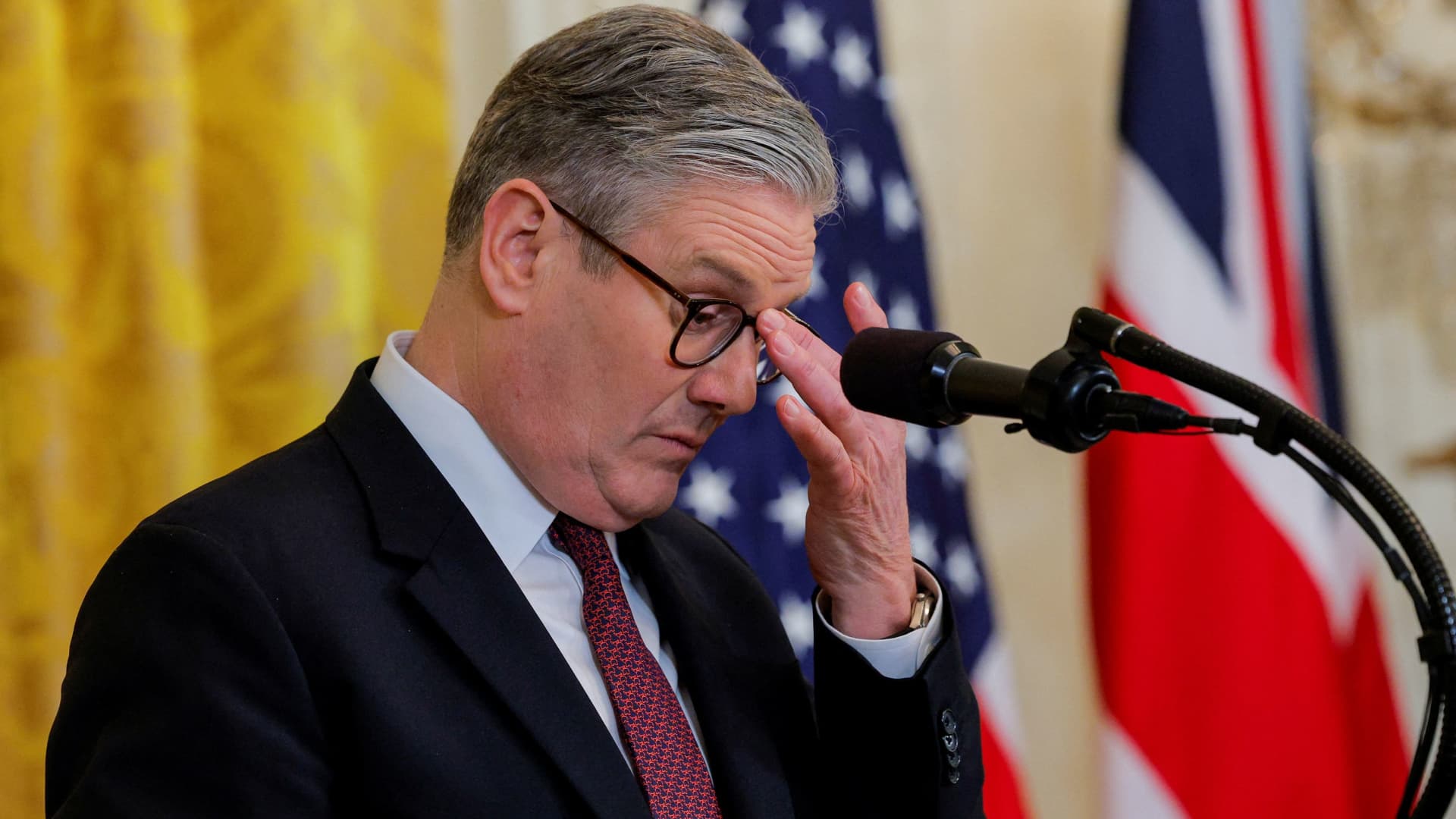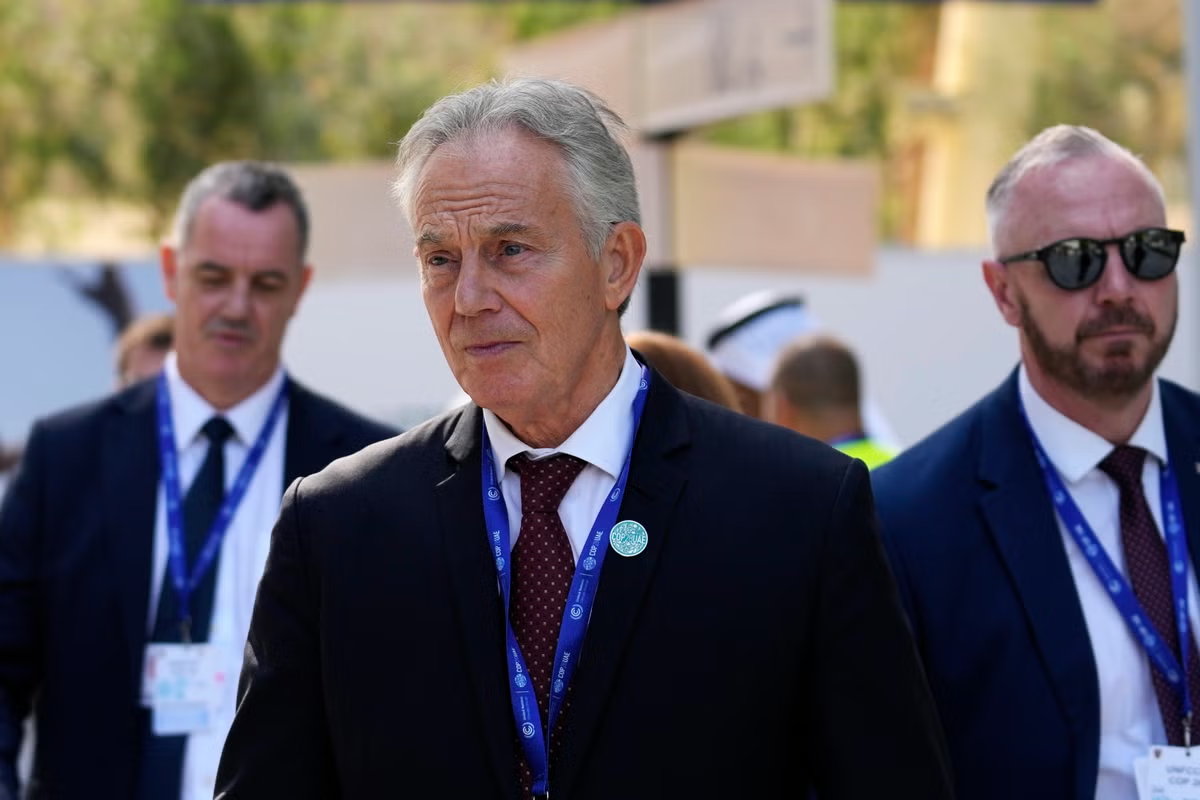
The Labour faithful have left Liverpool on the sugar high of a stirring conference speech by Keir Starmer. From taking the fight to Farage, interweaving personal experience with self-deprecating jokes, to a quick-fire list of achievements in office and new ideas sprayed like artillery back at detractors, it was a slicker performance than previous plodders. This should not be surprising, given that Starmer now has as his chief communications guru Tim Allan – who, with Alastair Campbell, overhauled Labour’s shouty speech style to reach middle England and set the party on a path out of the wilderness.Allan, returning from a lucrative career in the private sector, is, as one Downing Street joker puts it, “Tony’s political love child”. He is also one of a small group of Blairites familiar enough to talk about his old boss casually as “Mr Tony”. He adds to the penumbra of staffers, counsellors and policy wonks who all have roots and contemporary connections to Tony Blair’s New Labour era from 1997–2007 – either having worked in government or more recently in the ever-expanding Tony Blair Institute for Global Change (TBI).As soon as Starmer left the safe harbour of opposition for the pitfalls of government, he began to flounder. Underprepared for national challenges on everything from the rise of Reform UK in the red wall, to redefining immigration and asylum rules and rebooting UK growth amid global conflict and trade wars, he was feeling the strain. Whereas Tony Blair made governing with a huge majority look like a breeze – fun, even – the pressure quickly began to show on Starmer.When I encountered Blair and Starmer alongside each other at a centre-left gathering in Canada two years ago, the dynamic was fascinating. Starmer scanned his notes assiduously on big topics as we spoke, like a man overpreparing for a big exam. Afterwards, on a balcony overlooking old Montreal, he was unrecognised by most of the international VIPs and looked visibly tense even after a glass of wine. Blair, by contrast, swept in with a flotilla of aides – joking with old acquaintances and posing for selfies. He is one of the few leaders whose retinue and glamour factor have increased since leaving office.The Blair machine reassembledStarmer and Blair are not often seen together. Many of the Blair gang, including Allan, didn’t know him at all. Sometimes the “in crowd” risks disaster by being cliquish, but they are all seasoned operators who know the levers to pull.In the end, Allan was brought into the Starmer fold to take over the main communications role by another Blair veteran, Jonathan Powell, who is now No 10’s national security adviser. The appointment of Blair pal Lord Mandelson was, many say, helped along by Starmer’s chief of staff Morgan McSweeney. While McSweeney did not hold a senior role under Blair, he was very much part of the party apparatus in its Blair-era phase, with one of his first jobs in politics being tasked with feeding Peter Mandelson’s “Excalibur” computer – which held campaign intelligence for the 1997 election.Mandelson’s Washington appointment backfired when he was dismissed over revelations of emails to the late sex offender Jeffrey Epstein. But Sir Keir still insisted he had confidence in McSweeney, even when reports surfaced that he had personally pushed for Mandelson despite concerns over the links to Epstein. Meanwhile, Liz Lloyd, a former deputy chief of staff to Blair, was until recently in a senior delivery role in No 10 but was ousted after reported tension with other staffers.Blair believes he can play a key role in achieving peace between Israel and Palestine (GPO)The Blair influence over this government remains undeniable – and growing. As Starmer seeks to shore up his internal position (it has been firmly underlined that Andy Burnham, the Manchester mayor who has called out the “culture of fear” in No 10, will not be helped into any safe seat that opens up), many more ex-Blair machine figures now buzz around key policy areas – including the fraught matter of how to end the war in Gaza.An expert in statecraftIf “Mr Tony” wants to be involved in statecraft, or his proxies wield influence and research to prove a point, it tends to happen. Gone are the days when Blair, tainted by Iraq and disliked by more Calvinist Labour types for his appetite for making money from his global connections, was kept at arm’s length. It is, as one of his old ministers puts it, “like having a rare vintage car in the garage: a lot of people want to see it out for a spin, not the (sir) Kia in the drive.”Blair’s influence is now traceable in many attempts to revive Labour’s sagging electoral chances in the “Save Starmer” movement. Policies like digital ID cards, which started under Blair’s tenure, have suddenly resurfaced despite not featuring in the manifesto. When I bumped into Liam Byrne, the affable Birmingham MP, and asked if he was a fan (others, including Burnham, have many doubts), he joked: “Well, I would be, because I was minister for that under Tony – at the Home Office.”That line of descent from Blair to heirs shaping how the country runs today is visible in the health secretary Wes Streeting’s NHS reforms. His mentor was Alan Milburn, who served in several senior roles in Blair’s governments, including secretary of state for health. Milburn now leads as a non-executive at the Department of Health and has urged Streeting to move faster on tech-enabled reforms, like this week’s plan to replace hospital visits with “digital doctor” appointments, using AI-supported diagnostics and monitoring for chronic conditions. More controversially, he has encouraged Streeting to bring back league tables of health trust performance, which many trust CEOs believe measure the wrong things and damage morale.Blair has emerged as a pivotal figure in the Gaza plan supported by Donald Trump (Getty)Most significantly, Blair has emerged as a pivotal figure in the Gaza plan supported by Donald Trump. Blair gained Trump’s trust and positioned himself as a potential interim consul – a power broker between Israel, where he has deep ties to the Netanyahu administration, and Qatar, which many believe could act as a backchannel to Hamas and allow senior fighters a route out of Gaza in return for a ceasefire.As loudly as critics cite Blair’s misjudgements in Iraq and the fiasco over WMDs, his vast self-belief enables him to shrug off such criticisms. The real “lessons,” he told me, would take decades to figure out, rather than emerging from the heated blame games of the early 2000s.As a George Bush-appointed envoy to the region after leaving office in 2007, Blair long supported economic revival plans for Gaza as the route out of a deadly cycle of Palestinian intifadas and Israeli clampdowns. Finally, they look like they could be part of a solution – but even that riles tempers and entwines Blair in UK policy in the Middle East.David Lammy, who left the role of foreign secretary in the latest reshuffle, said he knew nothing about the final shape of the Blair-Trump plan until it emerged. It also means the UK could be seen as aligning with Trump’s desire for US Dubai-style real estate opportunities in the region. Blair greeted the transitional Trump plan for peace as “intelligent”, a word he will know the US president relishes hearing attached to his name.Blair met with Palestinian President Mahmud Abbas in July, but some within Labour believe he missed chances to engage with Hamas in the past (AFP/Getty)Business secretary Peter Kyle, a special adviser in the Blair years, told me in an interview at the Liverpool conference this week that Starmer benefits from having an “elder statesman figure people around the world know and trust” involved in resolving a crisis that has divided public opinion. The war has forced Starmer’s recognition of Palestinian statehood, he added: “And we should be proud of that – and Tony Blair.”It’s not a view wholeheartedly shared in Labour. “Blair is not trusted by the Palestinian side, because he failed to engage with Hamas when he had the chance as an envoy, and before it became totally radicalised,” says one former ambassador in the region.Friends in techUnderlying much of the scepticism about Labour’s most famous pensioner is an ongoing tussle over how the centre-left should engage with the vast power of tech titans and AI. That is intertwined with the backing of the Tony Blair Institute by Larry Ellison, the founder of Oracle, whose foundation donated about $33.8m (£25m) to TBI.As one of the world’s richest men and a techno-visionary who predicted the rise of AI, Ellison’s funding helps support TBI initiatives in digital infrastructure and vaccination databases in African countries – projects involving vast government-held personal data. Ellison is also a driving force behind ideas like digital ID cards, unifying data in ways AI models can consume. Blair, too, believes aggressively harnessing technology is the only way public services like the NHS can survive cost and demographic pressures. Beyond policy alignment, Blair and Ellison are also close personal friends.Labour’s plans in this area make Blair and his TBI policy teams – including health policy chief Charlotte Refsum, a polished KPMG graduate providing a steady stream of information for Wes Streeting – influential. They bring an understanding of the US tech scene and the potential of AI as a driver of growth and productivity gains.In this new phase of Labour, Blair seems to be everywhere (AFP/Getty)The thornier issue is that big-name AI apostles are also competitors. Oracle seeks major NHS data contracts, as does Palantir, run by another controversial tech visionary, Peter Thiel. The Institute strongly denies its commercial and policy work are in any way linked. A TBI spokesperson told the New Statesman recently: “We don’t advocate for technology solutions because we work with Oracle. We work with Oracle and other technology companies because we believe technology holds the key to the future.”Back to the futureIn the complex, intertwined, and always ambitious world of “Mr Tony”, this makes total pragmatic sense. It is, however, undeniable that in this new phase of Labour, Blair is everywhere. Remembering the halcyon days when the New Labour project showed voters it was a more reliable choice than state-centred remedies on the left or fiercer disruptions from the right, the belief is that they can do it once again.“Burnham is to be kept firmly in the cellar,” as one minister put it to me over a late-night pint. “And oops… we’ve lost the key.” The direction of travel is clear. Labour is going back to the future – with the leader turned guru who never quite leaves the stage. Anne McElvoy is executive editor at Politico and host of the podcast Politics at Sam and Anne’s
He Who Blairs: How Tony took over Keir Starmer’s government by stealth
From policy to personnel, the former prime minister’s influence is everywhere, says Anne McElvoy. But is it something to be welcomed or be wary about – and what could it mean going forward?
1,788 words~8 min read