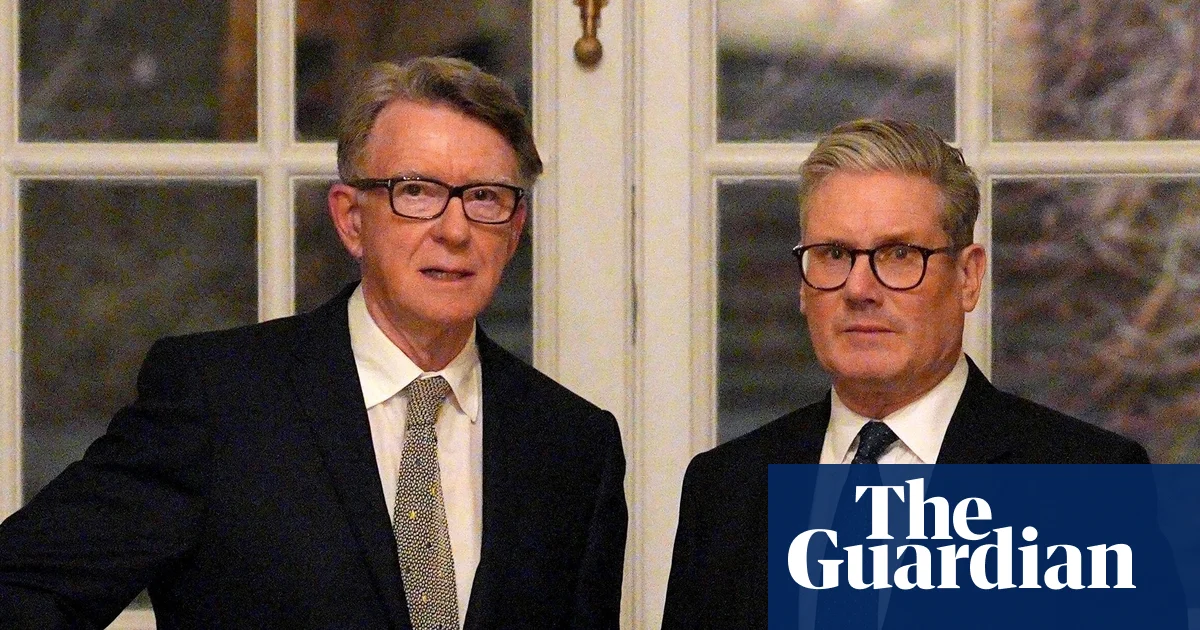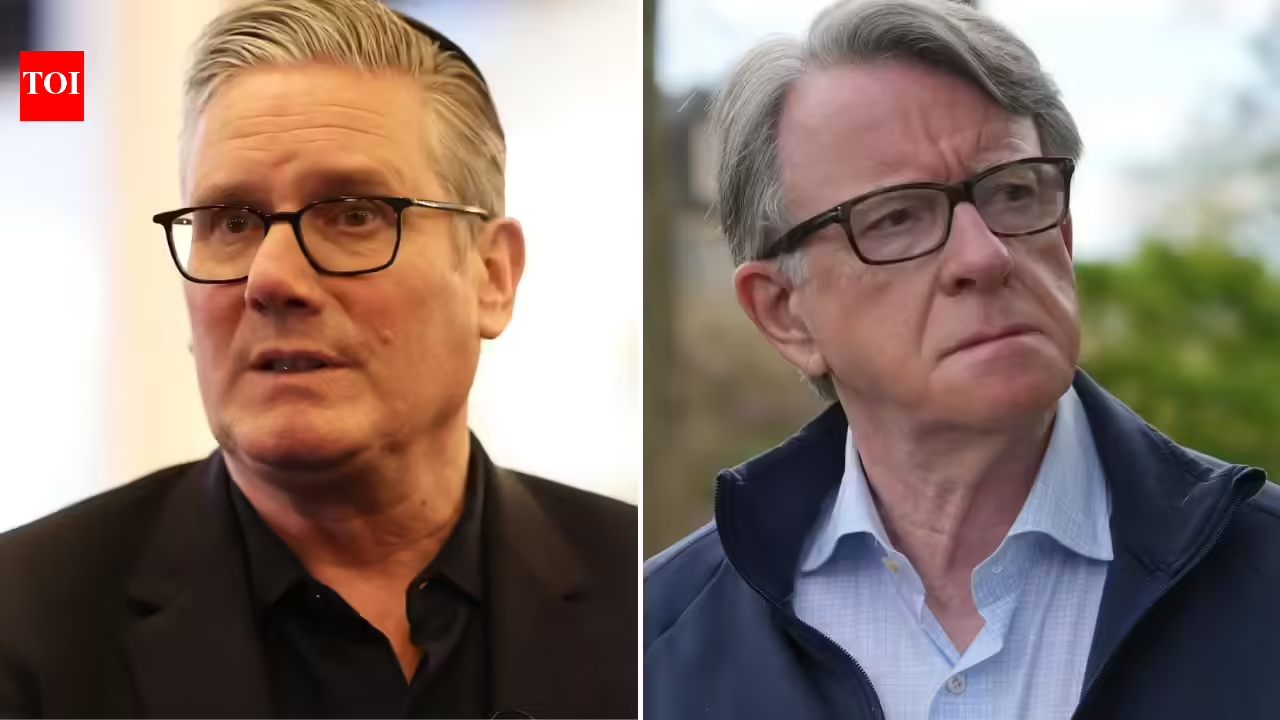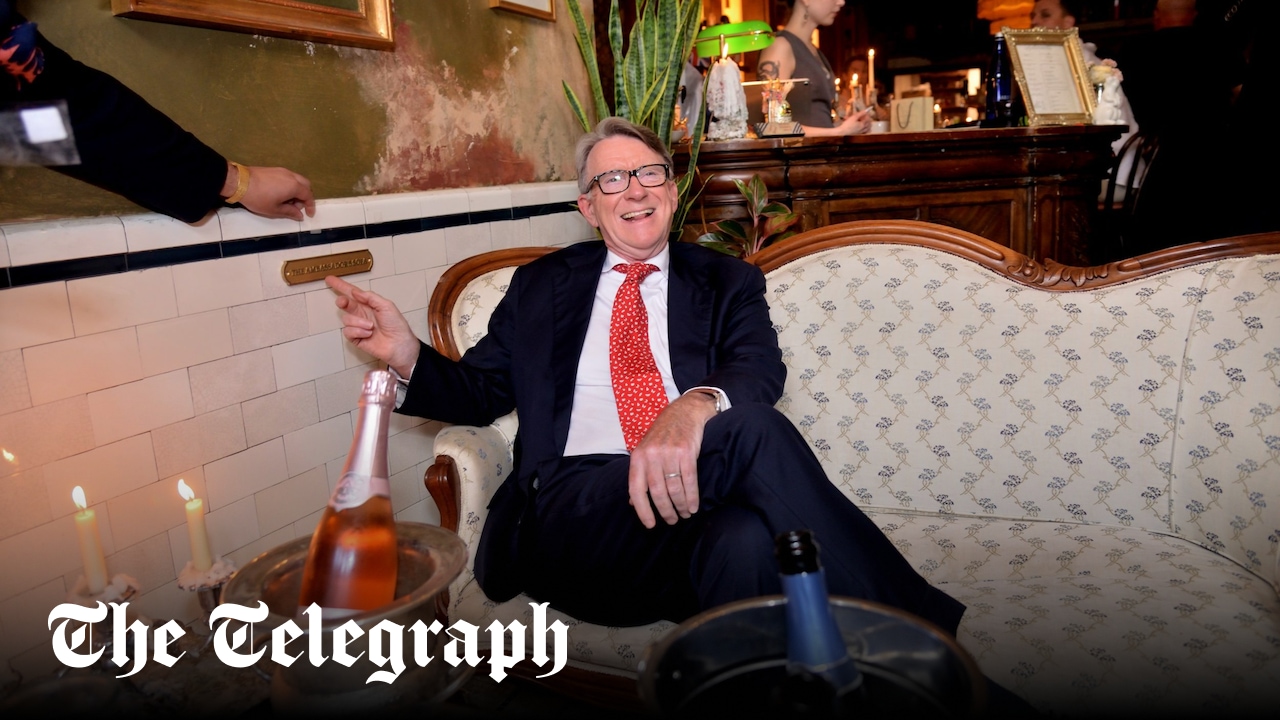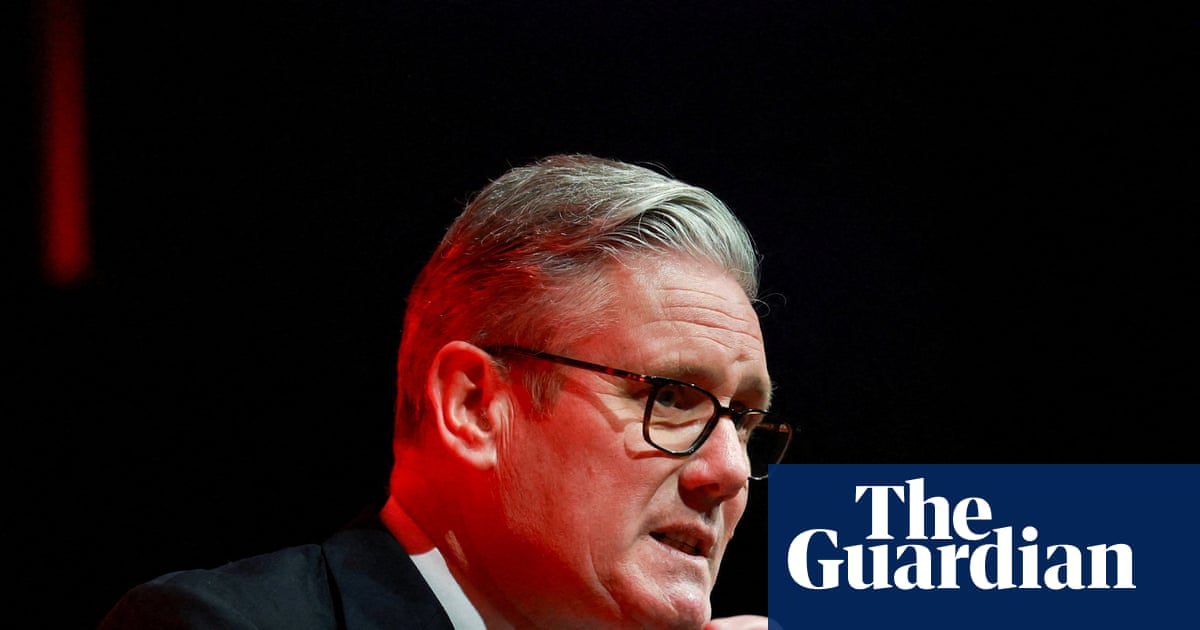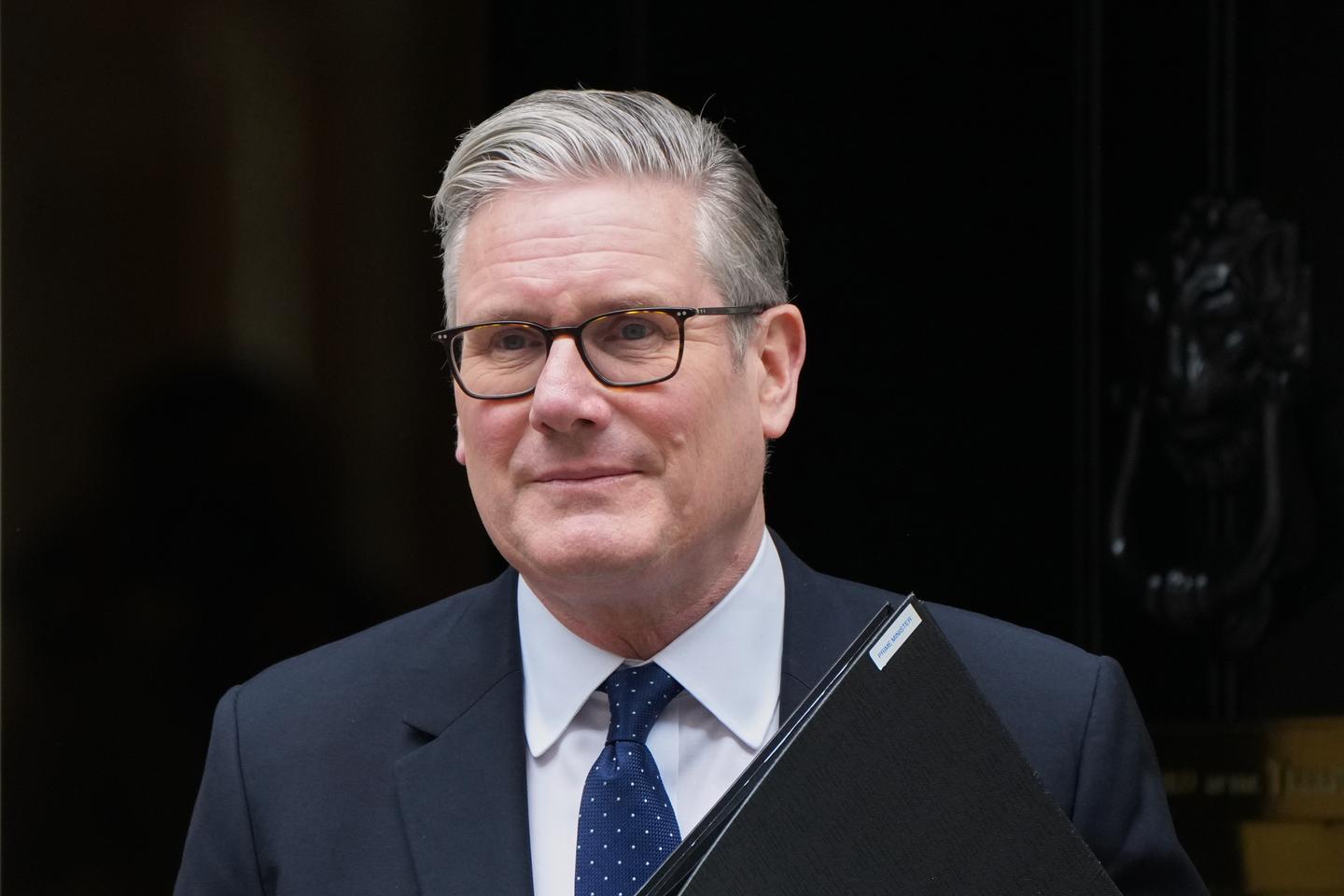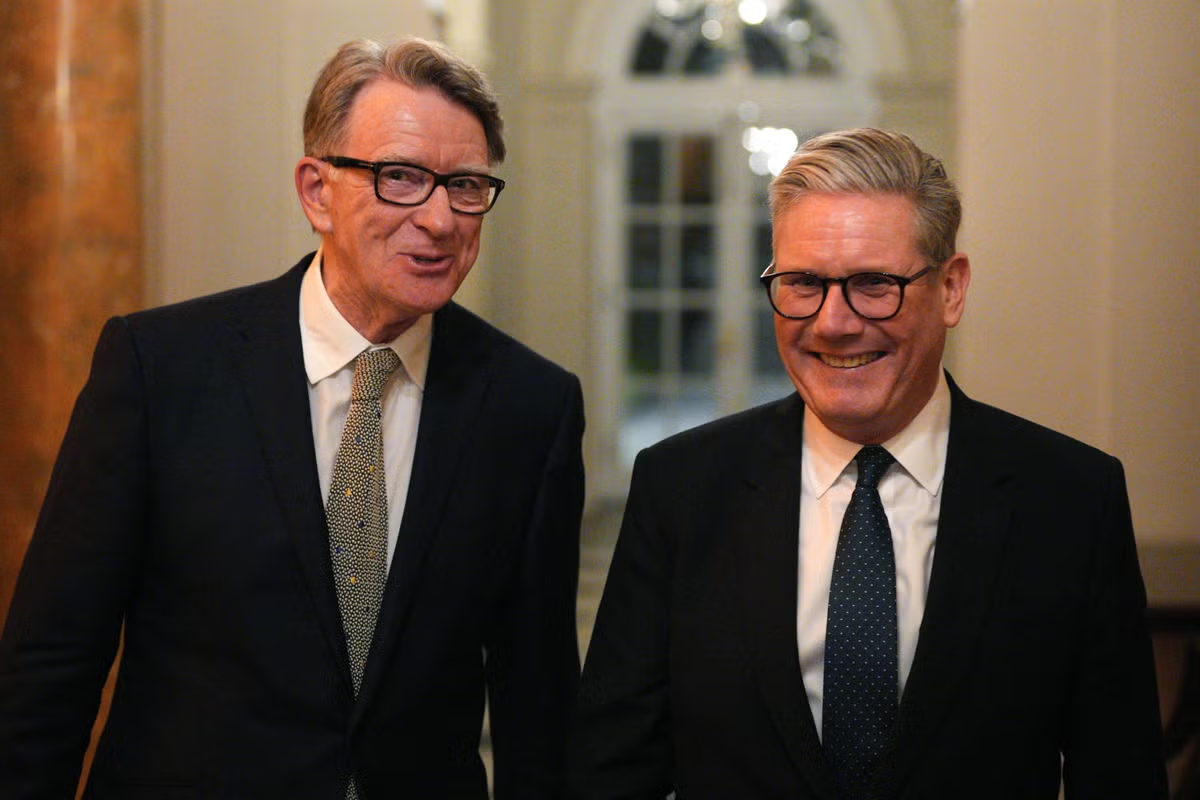
It was exactly a year ago this weekend when Lord Mandelson stepped out to host his first weekend of celebrations as the new British ambassador to America. In full fig, he appeared in dapper form, pressing the flesh and air-greeting old friends with his gleaming cat-who-got-the-cream grin as he greeted Washington’s elite around the White House Correspondents’ Dinner.Keir Starmer had bequeathed the plum job to the veteran Labour fixer in December 2024, and he had taken it up a few months later. We now know that on the eve of the announcement, the PM texted Mandelson: “You’ll be brilliant in challenging circumstances. And after many years of our discussions, we get to work together side by side. I really look forward to that.”It is clear now that Starmer saw in Mandelson a politically savvy ally who could dazzle the Trump team and leverage the relationship to win trade favours. Mandelson was a former EU trade commissioner and had set up a lucrative advisory business dealing with China and previously Russia.Appointing Peter Mandelson is keir Starmer’s biggest mistake – but it’s also his most revealing (AFP/Getty)However, what was portrayed as an unorthodox “genius” move to deal with an unconventional president has now turned into Starmer’s biggest mistake. Revelations about failing vetting and a deep friendship with the paedophile sex-trafficker Jeffrey Epstein have prompted one minister to describe Starmer’s blind spot as being akin to being a blind man in a snow blizzard.Few now doubt the perilous position Starmer’s premiership is in. But if Epstein was Starmer’s biggest mistake, it is arguably his most revealing one too. As the curtain comes crashing down, Starmer stands exposed as the man he really is, as the one he wants you to believe he is.Fallout from the affair since the opening of the Epstein files has left many with searching questions about the prime minister’s character, modus operandi, and ethical outlook. As a man who regularly pitches his tent on the moral high ground, he has crafted a reputation as a steady, serious figure with a moral compass at his core; an able technocrat who could get the country back on its feet and stop the chaos and sleaze of the recent Tory years.However, Starmer’s enthusiasm for picking Mandelson to be his man in Washington is the latest bombshell to shatter that illusion, leaving many to wonder whether it was all a facade from the start. Instead of a fair-minded, steady hand, we now see ruthlessness and turmoil running through his premiership like a stick of rock. The brutal firing of Olly Robbins, the former head of the Foreign Office, who many say was just doing what was asked of him, is just more proof of how Keir Starmer gets through staff at a head-spinning pace. The body count of his premiership is nothing short of astounding. In one year and nine months, Starmer has rinsed through four communications directors, five policy heads, three cabinet secretaries, and three chiefs of staff.When Dominic Cummings finally turned on Boris, he dubbed him like an out-of-control “trolley” – capturing the chaotic way he careered all over the shop. We are now seeing similar scenes from Starmer, who is emerging as a man with a lack of focus and haphazard priorities. In a cutting assessment in the Labour-friendly New Statesman this week, the prime minister was slammed for not only not doing the job, but also for being someone who is not able to do the job. One minister fears Starmer had “a rush of blood to the head” in the way he handled Robbins. It has added to a growing feeling that this was a glimpse of the real Keir, who until now was hidden behind Morgan McSweeney, his most loyal aid employed to instil discipline or do his boss’s most ruthless bidding, depending on where you stand.It has certainly added to Keir’s worst habit of scapegoating others to save his own skin. Whereas once loyal colleagues may have conveniently turned a blind eye to this problematic trait, they are now actively distancing themselves from Starmer, deeply frustrated. As one cabinet minister said, Starmer cannot “get out of the sinkhole” of this latest affair.It all casts an unforgiving light on the way the PM deals with adversity and his treatment of others. Many report that even when he is in No 10, he feels absent, tending to retreat to his office to read papers alone and running a tight diary with little room for any casual conversations.It’s not clear to me that he even likes the job. He is most comfortable mingling with other European leaders, but, as one former aide puts it in these circumstances, “he gets a clear brief of what to say and as a former senior lawyer, he can handle a brief”.For all-out critics, Starmer is a cynical, wavering figure who makes politically odd choices because he simply does not know what he wants.He often missteps when he goes off script, and his allies are now worried that his statement in the House this week that “no pressure whatsoever” was applied to expedite the Mandelson appointment will not stand up to scrutiny as more officials cast doubt on that claim in hearings.Apart from the technical failings to deal with the probe, Starmer’s ease in appointing Mandelson, even when he knew he had continued to see Epstein after his conviction for sex trafficking, has raised some serious red flags about his moral compass, too.Publicly, Starmer has vaunted his record on tackling violence against women and girls which he has described as “a national emergency ignored for too long”. However, as one female MP texted: “For all the apologising to the victims, they did not seem to cross his mind when he chose Epstein’s friend for the job.”Oddly, considering this relationship has cost him, dealings between Starmer and Mandelson have never even been that close. A former colleague of “Mandy” says “conversations” with Starmer would often end up with Mandelson angling for a future ministerial job and Starmer ducking a commitment. He had ample reason to know of Mandelson’s China and Russia connections via his business Global Counsel and anyway, Mandelson is not a man who fails to boast of his high-life contacts.The election of Donald Trump for a second term moved the dial. Starmer already had Dame Karen Pierce, a top-notch career diplomat known as the “Trump whisperer”, in place, whose tenure could have been extended. But according to a No 10 source at the time, Starmer “was a bit scared of Karen, because she has her own networks and people are loyal to her personally”, so instead he plumped for Peter Mandelson, the former boss of his most loyal lieutenant, McSweeney.It demonstrated aspects of Starmer’s character which often play out in key situations – a mix of his ruthlessness, in that he will use people’s expertise for a while and then discard them when a change of tack is required. It also happened with Sue Gray, the civil servant he initially trusted to organise the delivery of his priorities. She was dropped after less than a year in post, and her tenure sparked stories about tensions and briefings among Starmer’s tight-knit team.Allies of Gray, who ended up in the Lords along with Liz Lloyd, who was also swiftly removed from No 10, pointed to Starmer’s lack of clarity about what he wants and how he just gets on better with men at the heart of his operation. For a progressive figure, his “boys club” has made a lot of women angry, with his Mandelson blind spot confirming their worst fears.Starmer’s wife Victoria was pipped to have a more prominent role, warming the more calculated Keir – but that has come to nothing (Getty)Others say the Mr Nice Guy act was never more than exactly that – an act. His ruthless edge reaches back to his time when he first became leader. Initially, having served in a senior position under Jeremy Corbyn, he positioned himself as a unifier but then systematically distanced himself from the Corbyn wing of the party. Then, after losing a key by-election in Hartlepool in the local elections in 2021, he chose to “punish” Angela Rayner and remove her as chair of the Labour Party, but after a bitter fightback from Rayner (who should never be underestimated), she was given a frontbench shadow cabinet role, even if it didn’t have the same internal power base.That was largely greeted as a signal that Starmer was unsparing and serious about gaining power, but such ruthlessness demands charm. Blair had it in spades; Starmer doesn’t. Similarly, unlike Blair, he has no clear sense of direction, with flip-flopping and U-turns on everything from winter fuel payments to welfare reform and green investment. “He never bangs the table and insists, ‘Get me this done, or tell me the alternative,’” sighs one weary official who has dealt with him.For all-out critics, Starmer is a cynical, wavering figure who makes politically odd choices because he simply does not know what he wants. A slightly kinder view is that he just finds the job hard. He also dislikes the effects on his family life and is a leader who appears cross, or just someone who doesn’t want to be there.Behind the scenes, friends credit his wife, Victoria, or “Vic” as she is known, for revealing a warmer side to Starmer. She is often praised for “livening him up”. “They hold hands and not just for the cameras. I wish my husband looked at me like that,” jokes one female MP.But active plans for Vic to have a more visible role came to nothing, all leading to the damaging perception that Starmer treats his role like a day job. That lack of connection is why his own ratings have always struggled with voters, even when Labour won a landslide.Starmer blamed a lot of people for errors which are fundamentally his own. A man ruthless enough to pursue power, which delivered him the top job, has let it slip between his fingersOne person who worked for him says: “I thought of Keir like an onion – you peel away these layers of a stiff person and think you’ll get to the heart of it. But he doesn’t let many people in. He wants people to sort things for him but doesn’t create a team feeling.” He is also deeply suspicious of rivals, refusing to let Andy Burnham, Greater Manchester’s mayor, contest a local seat to return to the front line. It all hints at an innate lack of confidence, which, if present, would allow him to keep enemies close.But a year on from Mandelson’s first big engagement as our former US ambassador, and the damage is too deep and the personal faith in Starmer too shallow for anyone to think he will “still be there by the end of the year” as his closest cabinet ally, Europe minister Nick Thomas-Symonds, told me a couple of weeks ago.Few in cabinet would now take that bet, despite the difficulty of appointing a PM without a mandate. But Starmer blamed a lot of people for errors which are fundamentally his own. A man ruthless enough to pursue power, which delivered him the top job, has let it slip between his fingers. And the judgement on the nation’s doorstep is likely to be brutal.As the saying goes: “It’s not the things you expect that get you, but the things you don’t.” Who could have predicted straight-and-steady Starmer would be brought down by such unrelenting Starmer drama? But then maybe that’s because we had no idea who he was in the first place.
A ruthless operator with none of the Blair charm – are we seeing the real Starmer?
The prime minister’s Mandelson blind spot points to a wider truth about him: his steady, calm persona was never quite the full picture. Brutal sackings, drift, and a failure to read people, risks and consequences suggest a leader very different from the one voters thought they had chosen, writes Anne McElvoy
1,937 words~9 min read