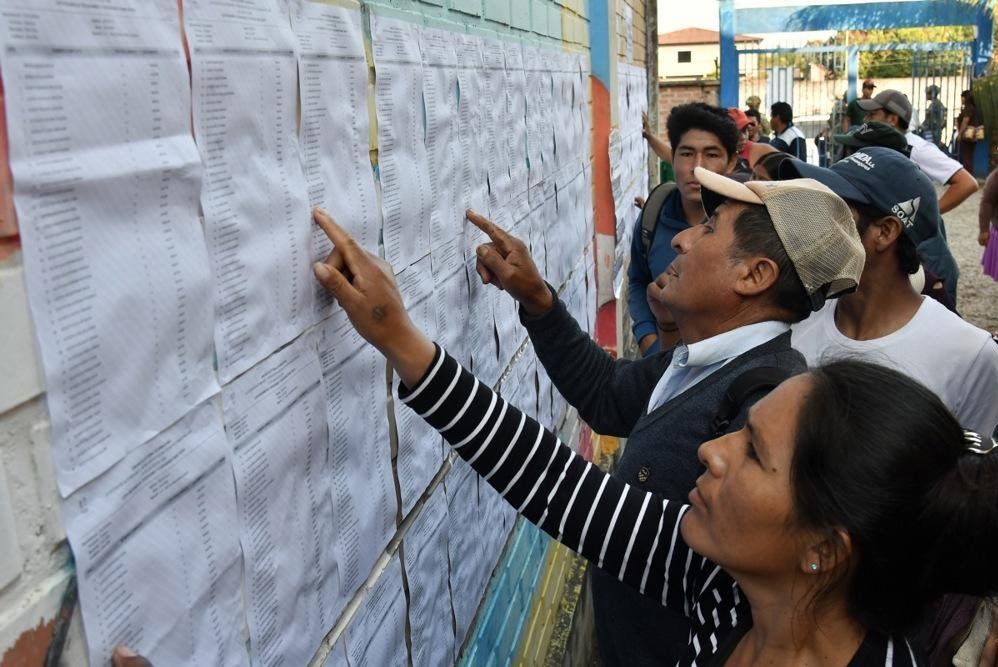
Citizens check for their polling station at a voting center in Entre Rios, Bolivia, on August 17 to elect a new government and parliament for the next five years. A presidential runoff is scheduled for October 19. File Photo by Jorge Abrego/EPA
Sept. 29 (UPI) -- Starting in October, Latin America will enter a decisive period with an intense calendar of presidential elections in a climate marked by polarization, institutional fatigue and economic pressure.
In that context, right-wing and center-right candidates who promote order, fiscal discipline and pro-investment policies appear to be gaining traction and could prevail or lead in first-round votes.
Still, the region remains volatile and cyclical -- where the right governs without solving security or economic problems, voters may shift back to the center or left in the next cycle.
"The outcome of these elections will not only define the direction of each country's economic and social policy, but also the region's democratic stability and, most importantly, its international alignment, because the region is at a crossroads: whether it ultimately turns toward China or maintains its historic commitments with the United States," said Guido Larson, an international analyst at the Universidad del Desarrollo in Chile.