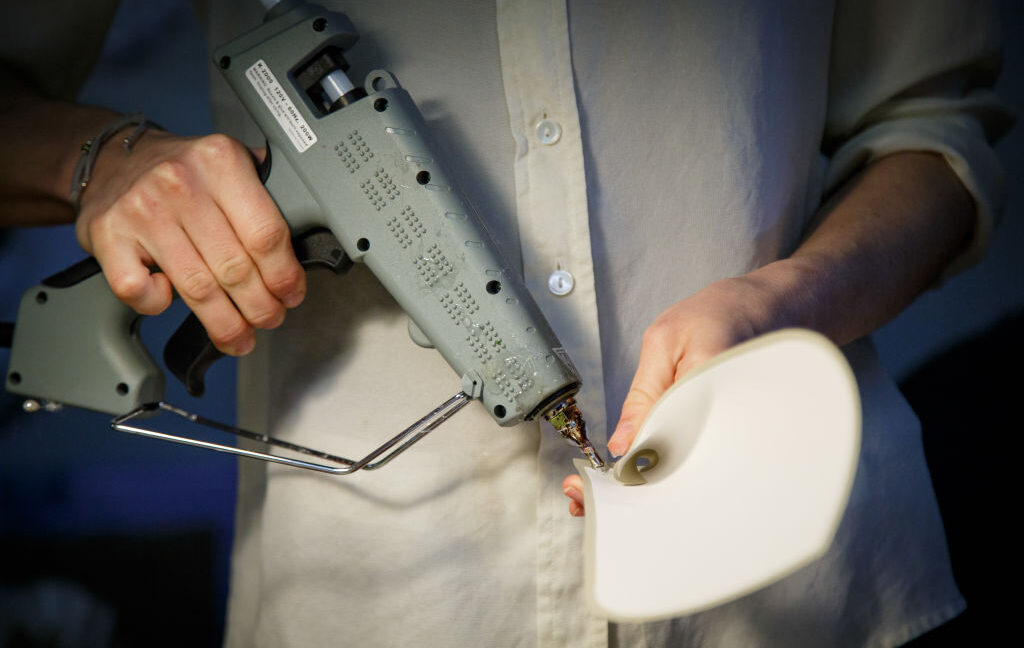
After examining a few candidate formulations, the team found the right material. “We used a biocompatible thermoplastic called polycaprolactone and hydroxyapatite as base materials,” Lee said. Polycaprolactone was chosen because it is an FDA-approved material that degrades in the body within a few months after implantation. The hydroxyapatite, on the other hand, supports bone-tissue regeneration. Lee’s team experimented with various proportions of these two ingredients and finally nailed the formulation that checked all the boxes: It extruded at a relatively harmless 60° Celsius, the mix was mechanically sound, it adhered to the bone well, and it degraded over time.
Once the bone-healing bullets were ready, the team tested them on rabbits. Rabbits with broken femurs treated with Lee’s healing gun recovered faster than those treated with bone cement, which is the closest commercially available alternative. But there is still a lot to do before the healing gun can be tested on humans.
Skill issues
While the experiment on rabbits revealed new bone tissues forming around the implants created with the healing gun, their slow degradation of the implanted material prevented the full restoration of bone tissues. Another improvement Lee plans involves adding antibiotics to the formulation. The implant, he said, will release the drugs over time to prevent infections.