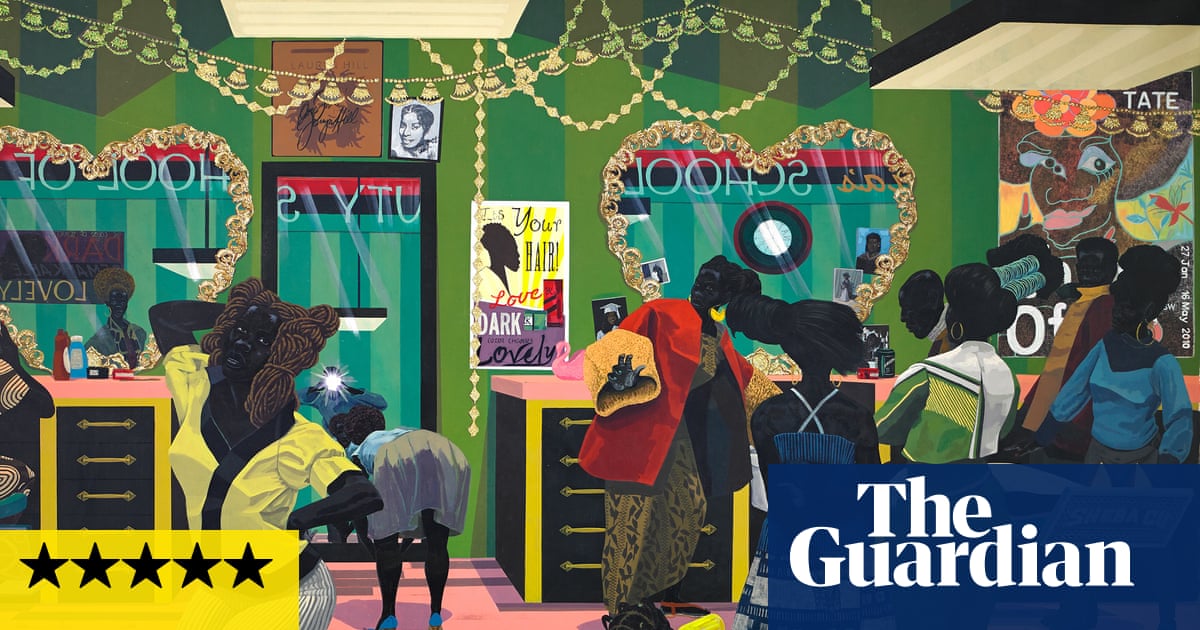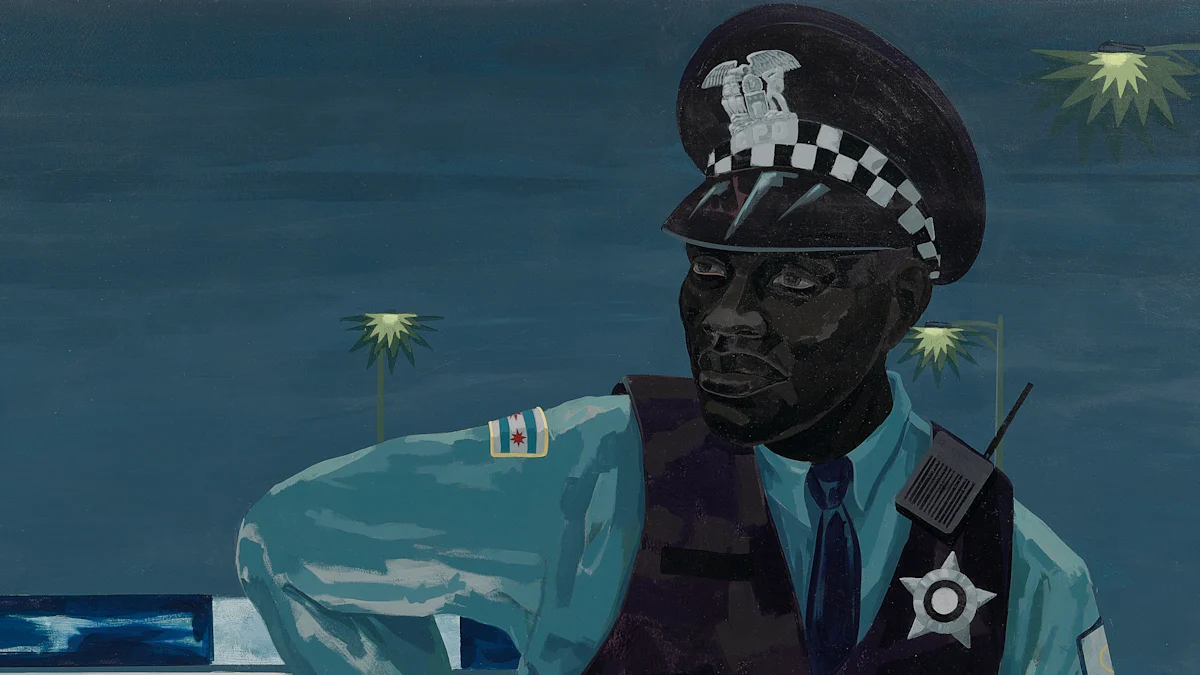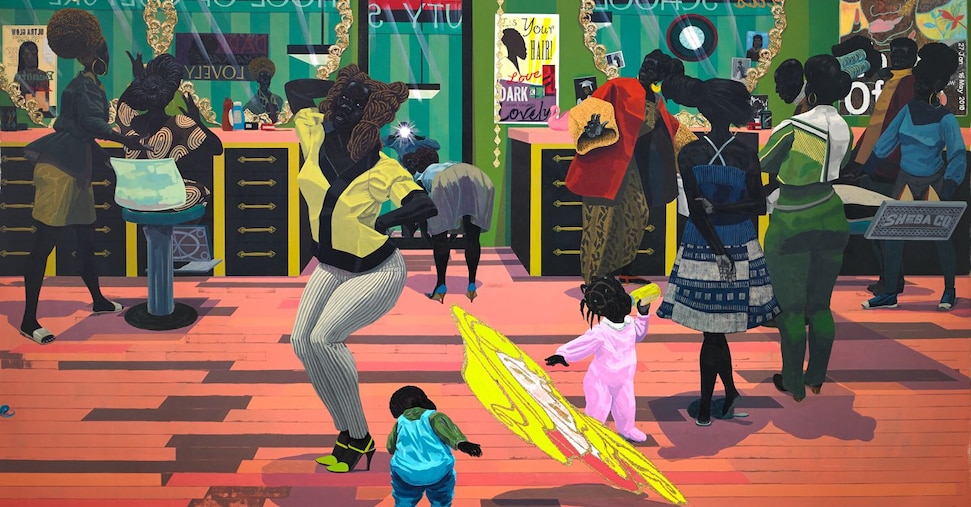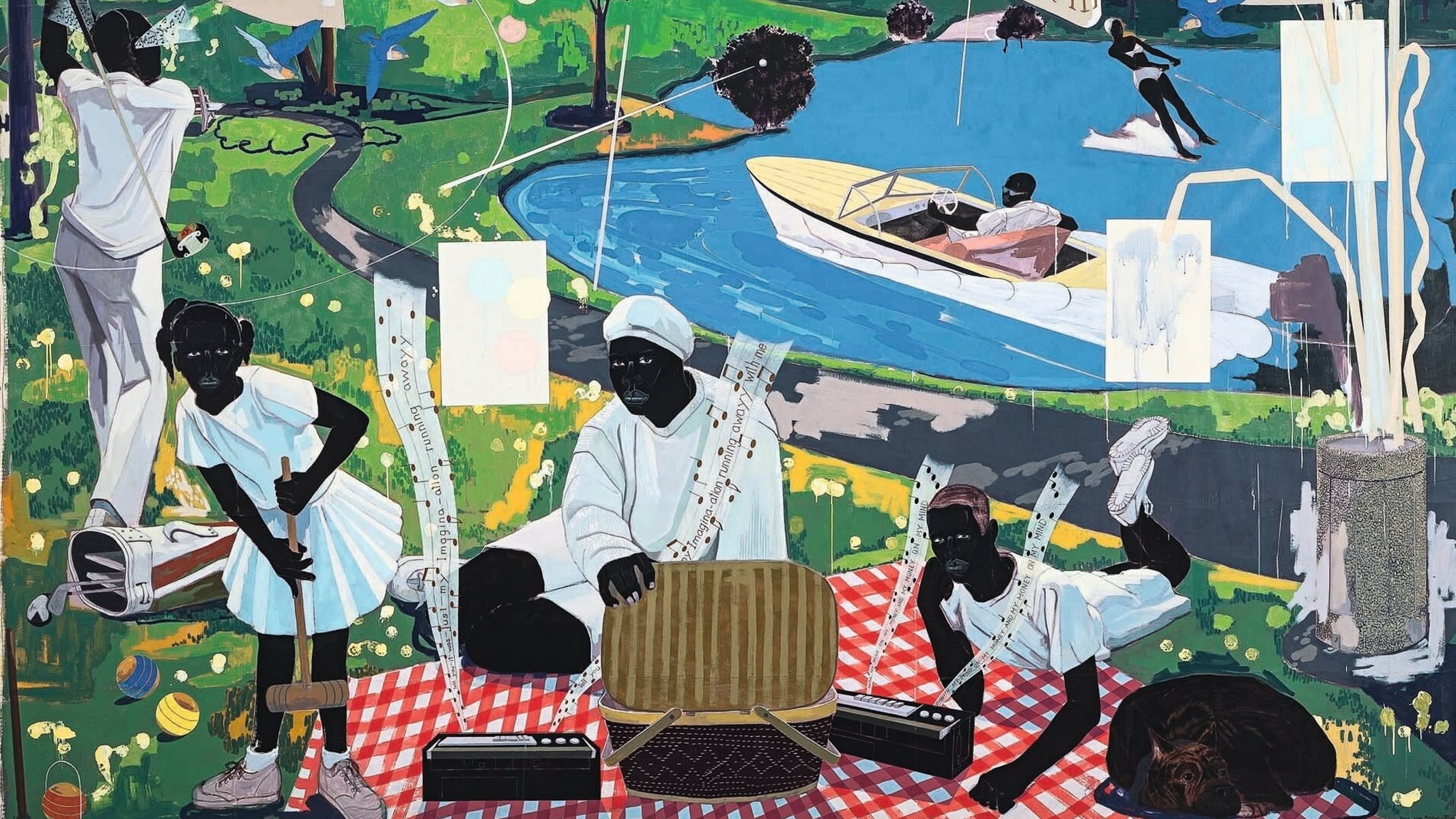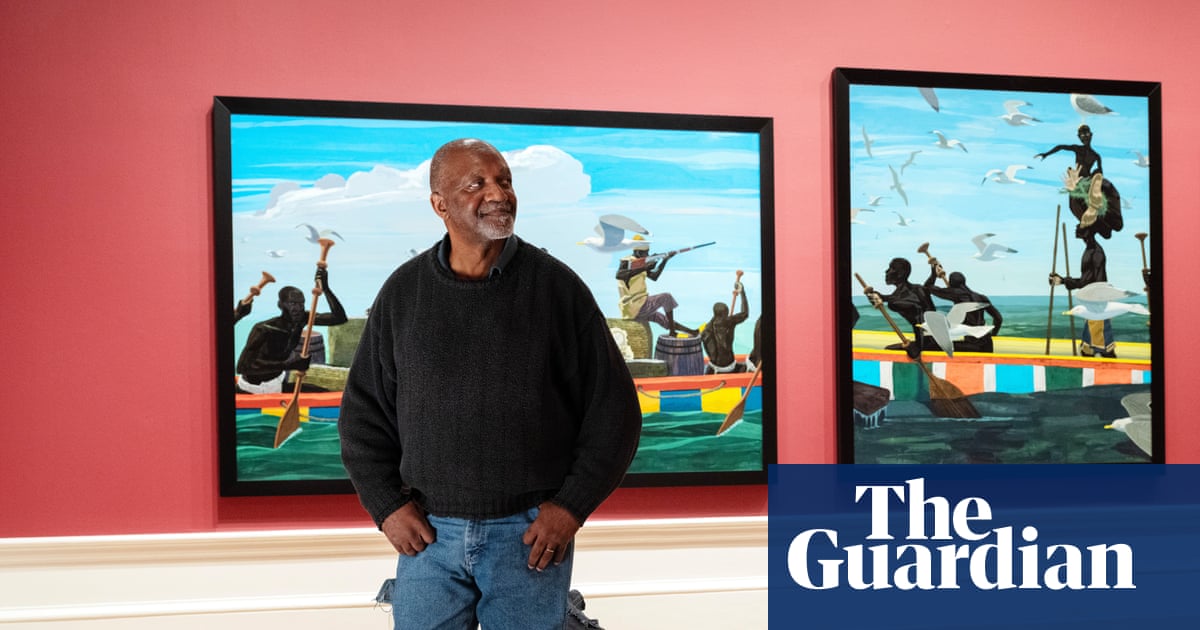
He is arguably America’s greatest living painter, elevating everyday black life to the level of epic, jaw-dropping masterpieces. Now, for his biggest European show, the artist talks us through his disturbing new works
H
istory weighs on Kerry James Marshall, though not all that heavily. When he talks about the hefty subjects of his art – from slavery to civil rights – he does so with a disarming, disquieting lightness. Maybe that’s because at almost 70 years old, and at the peak of his popularity, he’s seen it all.
Marshall grew up in Birmingham, Alabama, just a few blocks away from where the 16th Street Baptist Church bombing, a white supremacist attack that killed four young black girls, took place in 1963. When his family moved to Los Angeles, they ended up right in the middle of the 1965 Watts riots, a six-day uprising fuelled by growing racial tension in the poorest part of the city.
All of this has undoubtedly fed into his journey to becoming arguably the US’s greatest living painter. Today, seated in the galleries of the Royal Academy in London, where his jaw-dropping, large-scale, colourful paintings are going on display for a major show, he reels off a list of traumatic, shocking events from his youth. Beatings, murders, injuries, robberies, “and that’s not even half of it,” he says with a smile, chuckling.