I
n 1875 Arthur Lasenby Liberty, the son of a draper, secured a £2,000 loan to lease a building on Regent Street. It was here that he opened his shop, selling luxury fabrics and ornaments from Japan and the East. Within a decade, Liberty began importing undyed fabrics and hand-printing them in Britain, experimenting with design and responding to the latest trends, such as art deco and Arts and Crafts. So it was that the Liberty print was born.
Liberty’s distinctive fabrics gained wider popularity when Oscar Wilde, a great fan of the company and its artistic designs, travelled to America with a suitcase full of them. As the business grew, a larger shop was needed. So a site on Great Marlborough Street was chosen in 1922, and work began on the new store using recycled timbers from old naval battleships for the beams and flooring. In 1924 the building was completed and the Regent Street shop was relocated to its fancy new department store, where it still stands today.
Liberty’s famous store on Great Marlborough Street in London
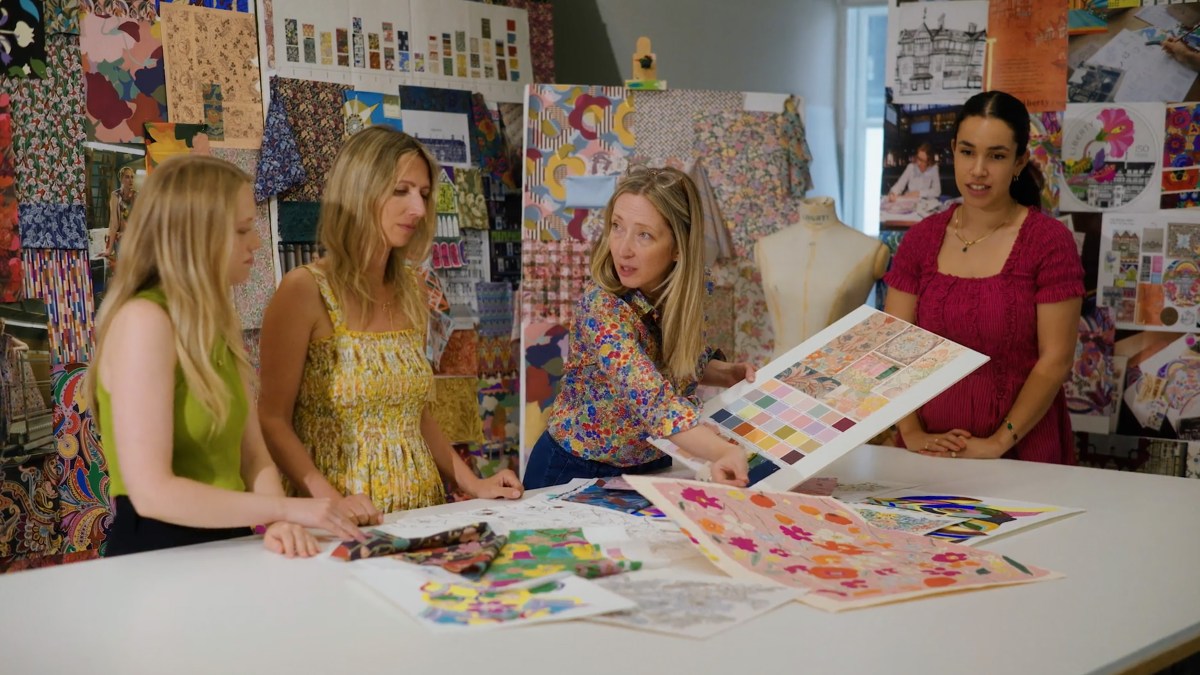
Although Liberty sells everything from homewares to fashion, it is still its fabrics for which it is most famous. These days the in-house designers operate from a studio next to the department store and spend approximately three months creating a new collection, researching designs in the extensive Liberty archives, hand-drawing new work and shipping these off to be printed in Liberty’s Italian mill, near Lake Como. Watch the video to learn more about their meticulous design processes.