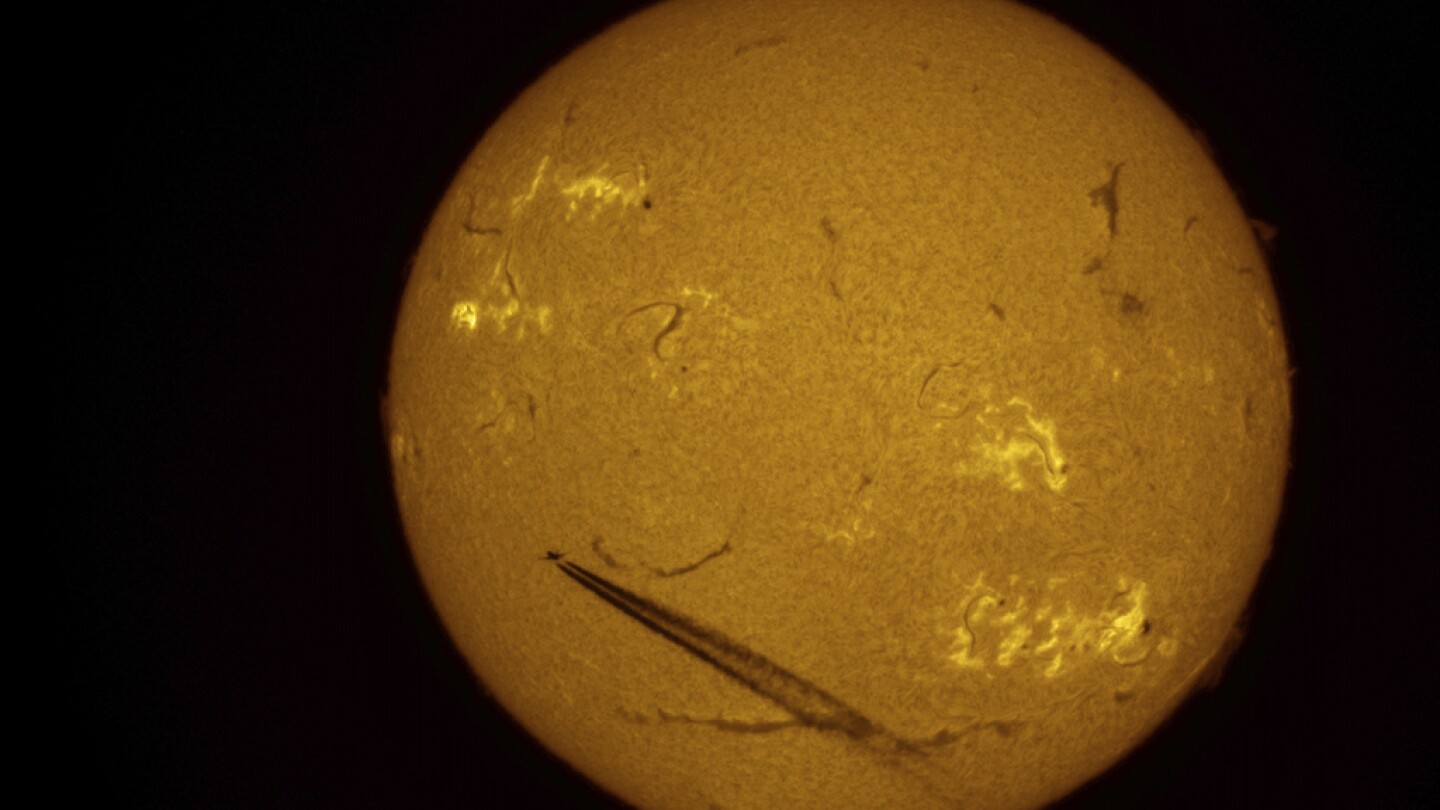
In this photo taken by a solar telescope an airliner is silhouetted against the sun that shows activity zones, over St. Petersburg, Russia, Tuesday, Sept. 2, 2025. (AP Photo/Dmitri Lovetsky)
ST. PETERSBURG, Russia (AP) — Dmitri Lovetsky is based in St. Petersburg, Russia. He began to work for The Associated Press in 1997 and became a staff photographer in 2002.
READ MORE FROM OUR ‘ONES’ SERIES
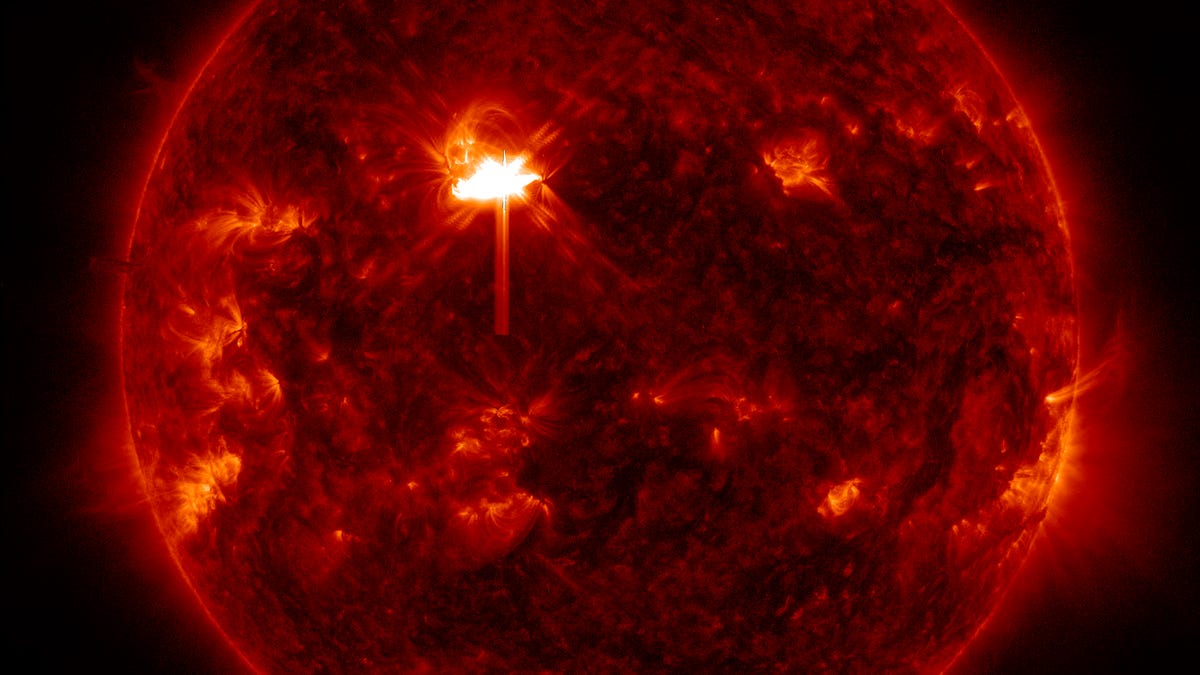
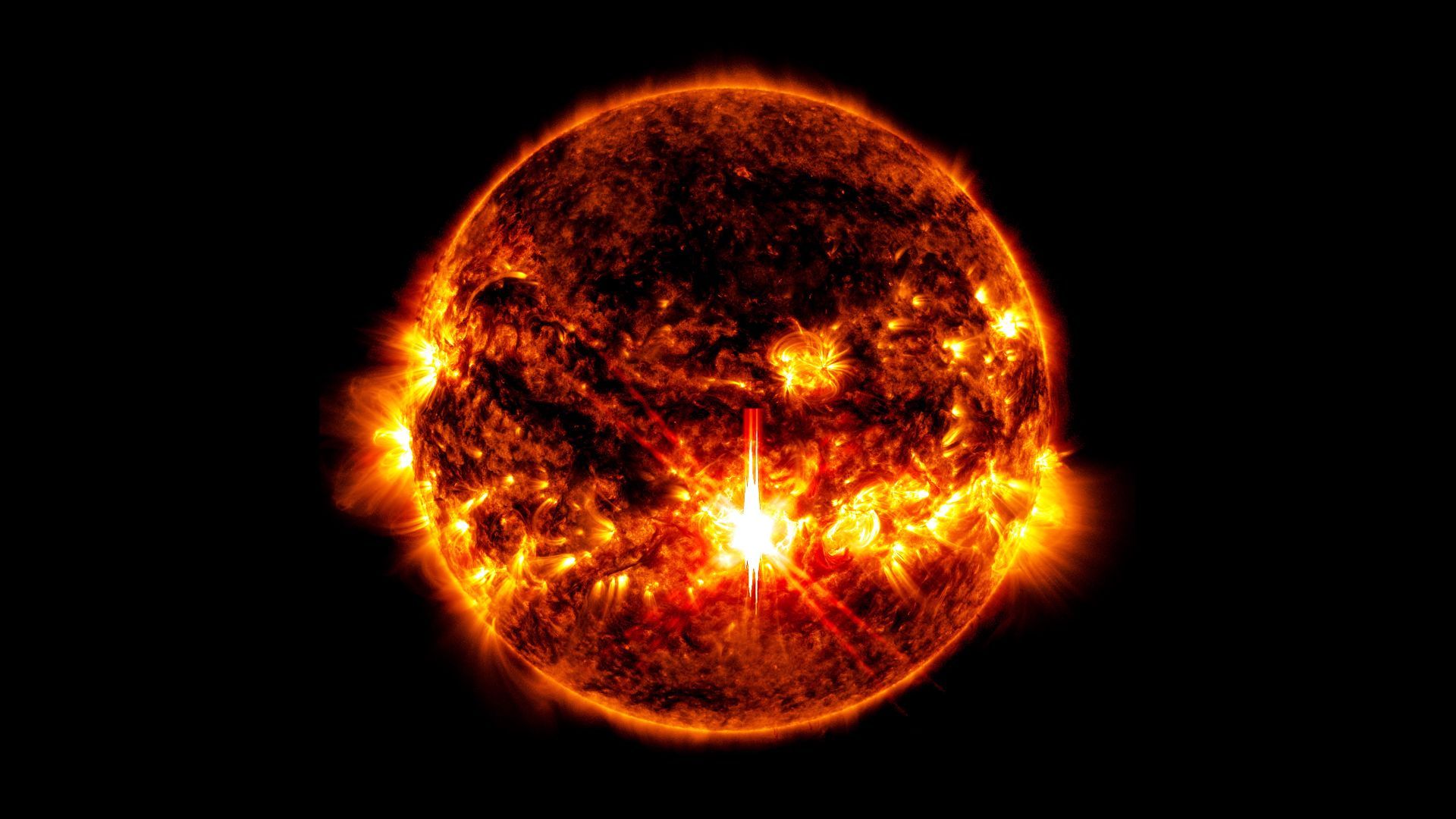
I like to shoot the sun in different situations. I usually use dark filters to reduce the brightness of the sun. But I always wanted the sun to not just look like a circle with a few spots, but to show other elements of solar activity, which sometimes look very impressive - shows the power of the star that allows us all to inhabit Earth. I find it interesting to photograph solar flares, which cause emissions of solar energy that, when reaching the Earth, cause magnetic storms and affects people’s lives. This year marks the peak of periodic solar activity, and I couldn’t miss the opportunity to capture these events.
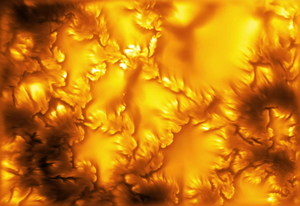
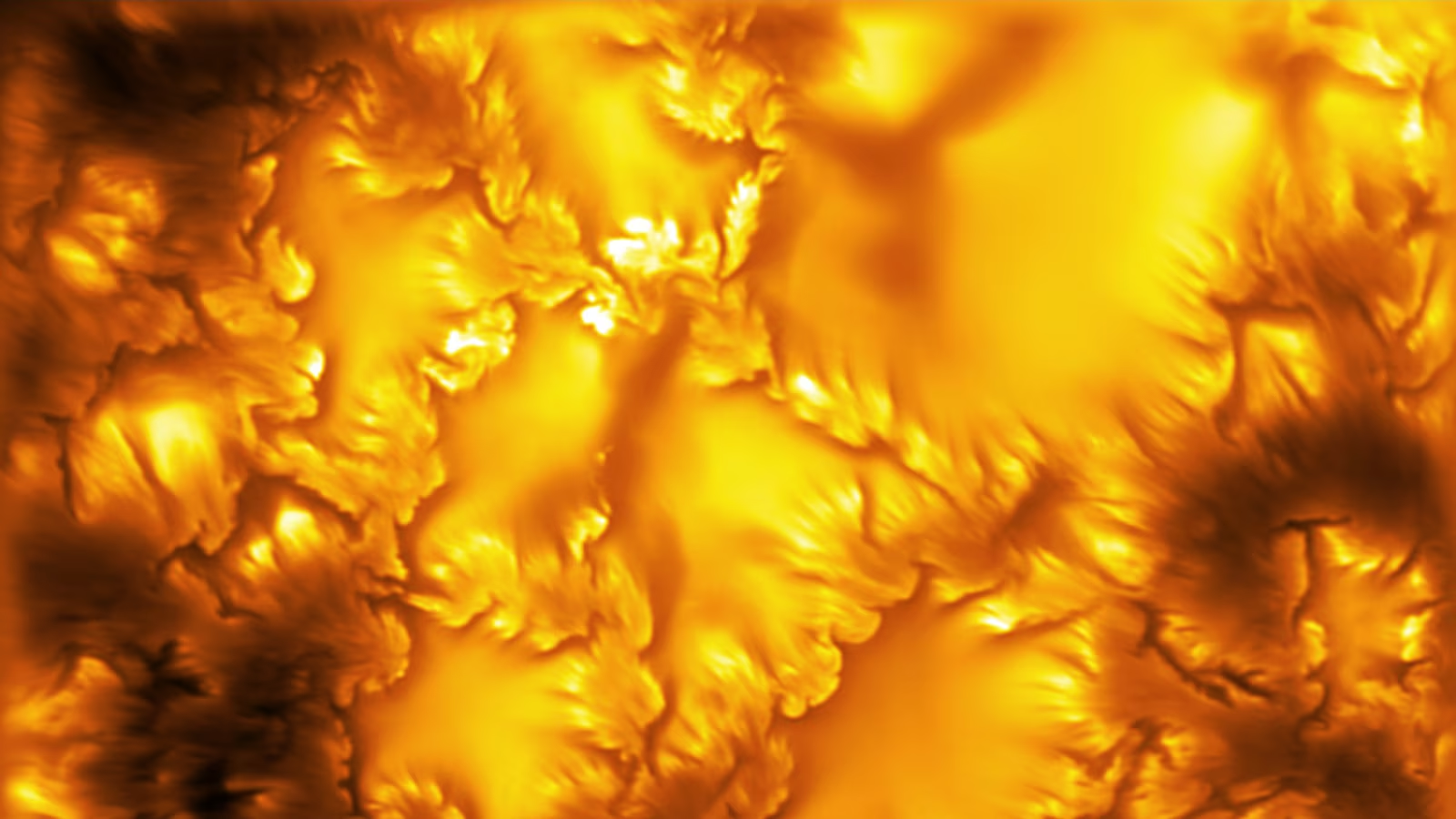
Several years ago, I began to use a filter that allows one to see the details of the sun’s surface and bursts of solar activity. This is the so-called Hydrogen-alpha (H-alpha) filter, an optical filter designed to transmit a narrow bandwidth of light centered on the H-alpha wavelength. This year I bought a Sky Watcher Heliostar 76mm h-alpha solar telescope which shows the details of solar activity beautifully.