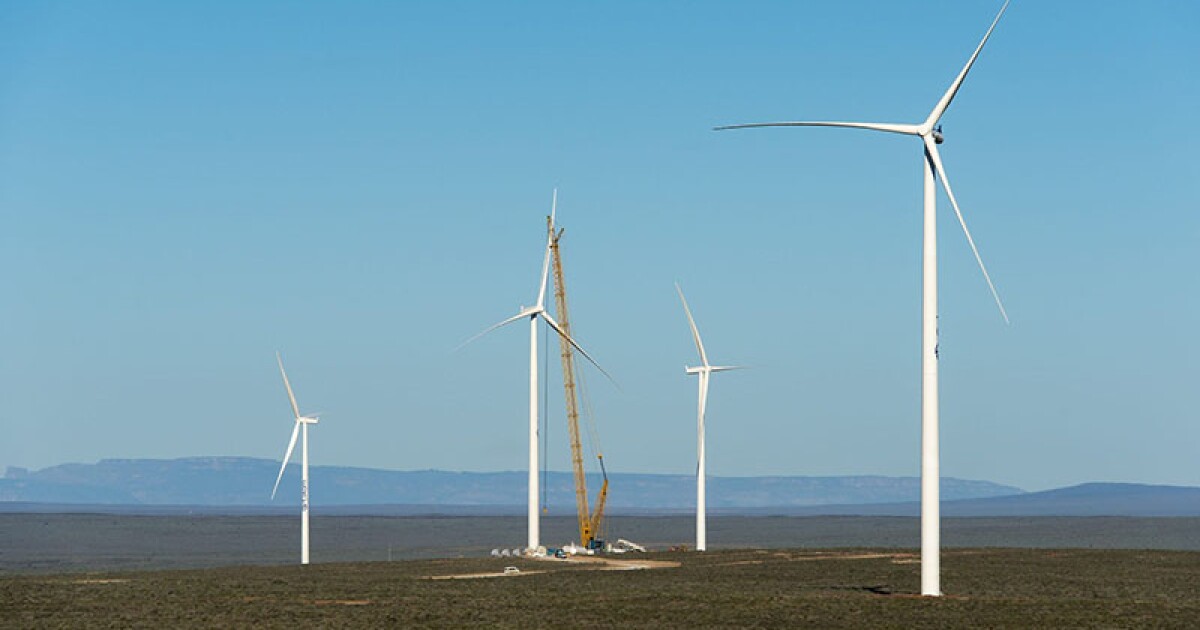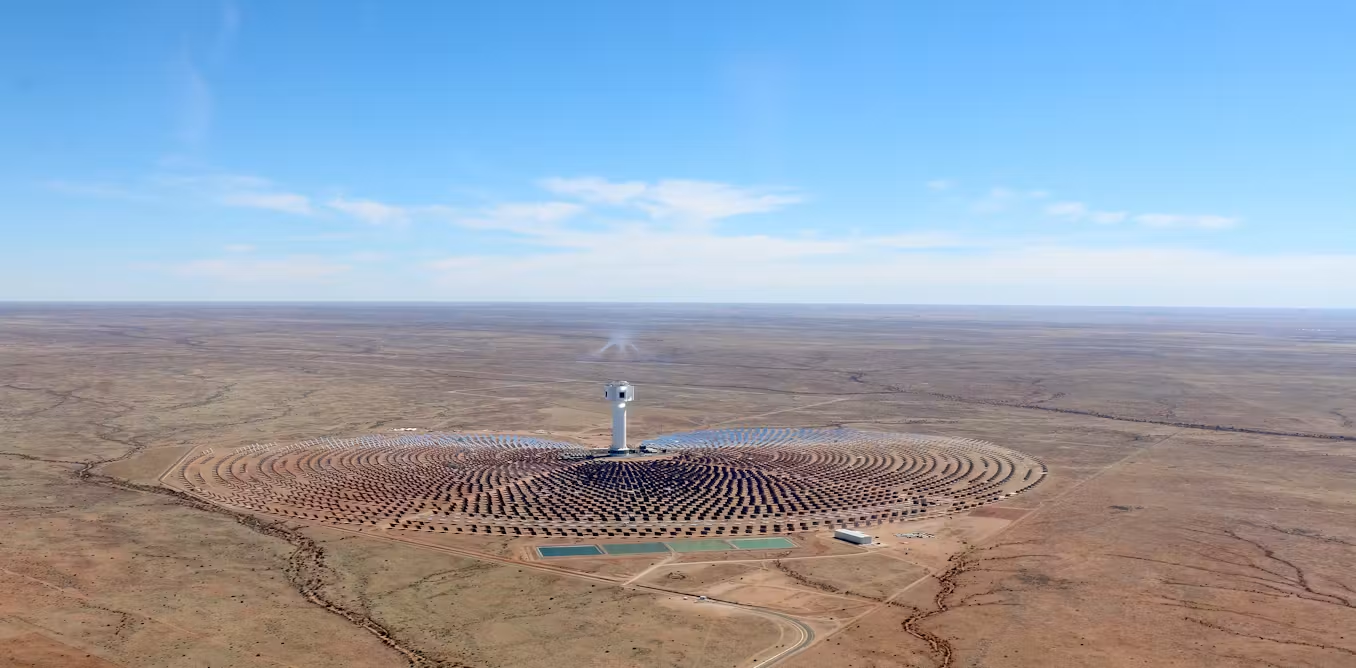
South African policies have successfully encouraged independent power producers and residential homes to build out nearly 14 gigawatts of wind and solar capacity across the country, but the country's biggest energy transition challenge lies ahead: backstopping state-owned utility Eskom's recently announced plans to retire some 23 GW of coal plants by 2040 and build out a further 32 GW of renewables capacity.
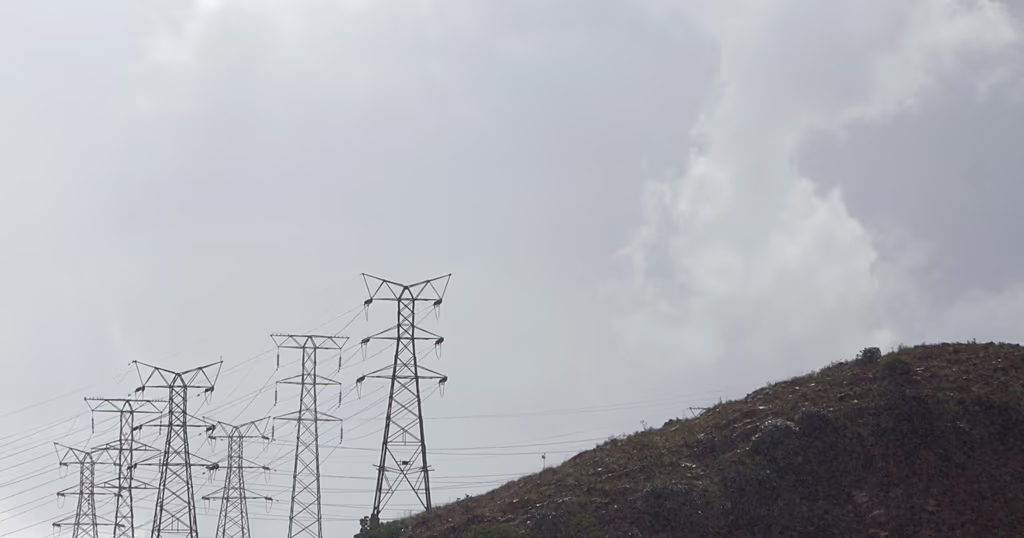
A successful clean energy transition in Africa’s biggest economy is impossible without radical restructuring at Eskom, South Africa’s largest greenhouse gas emitter. Eskom is a pillar of South Africa’s coal economy, contributing some 40.7% of the country's emissions in 2022 and supplying 85% of its electricity last year. But the enormous utility is poorly equipped to lead such a radical transformation from the perspectives of in-house expertise to corporate culture to financial resources, experts argue.
South African renewables are already expanding at a good clip, with some 6 GW of utility-scale capacity delivered over the past 15 years under the government's Renewable Energy Independent Power Producer Procurement Program (REIPPP), which was launched in 2011. These volumes have been augmented in recent years by almost 7 GW of estimated rooftop solar capacity that has been erected in response to chronic power cuts and tax incentives. More capacity is on its way, with REIPPP soon to deliver "more than" 10 GW, Anton Eberhard of the University of Cape Town told Energy Intelligence.