Can the vast and sparsely populated African country translate its renewable power potential into national development?
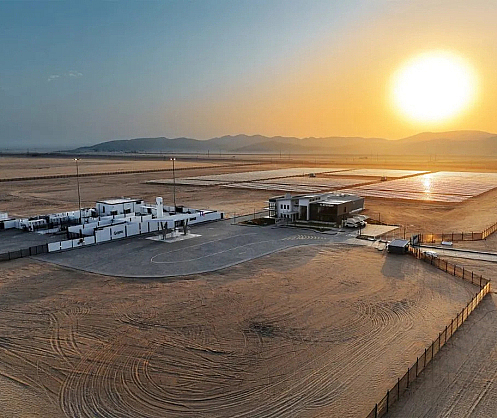
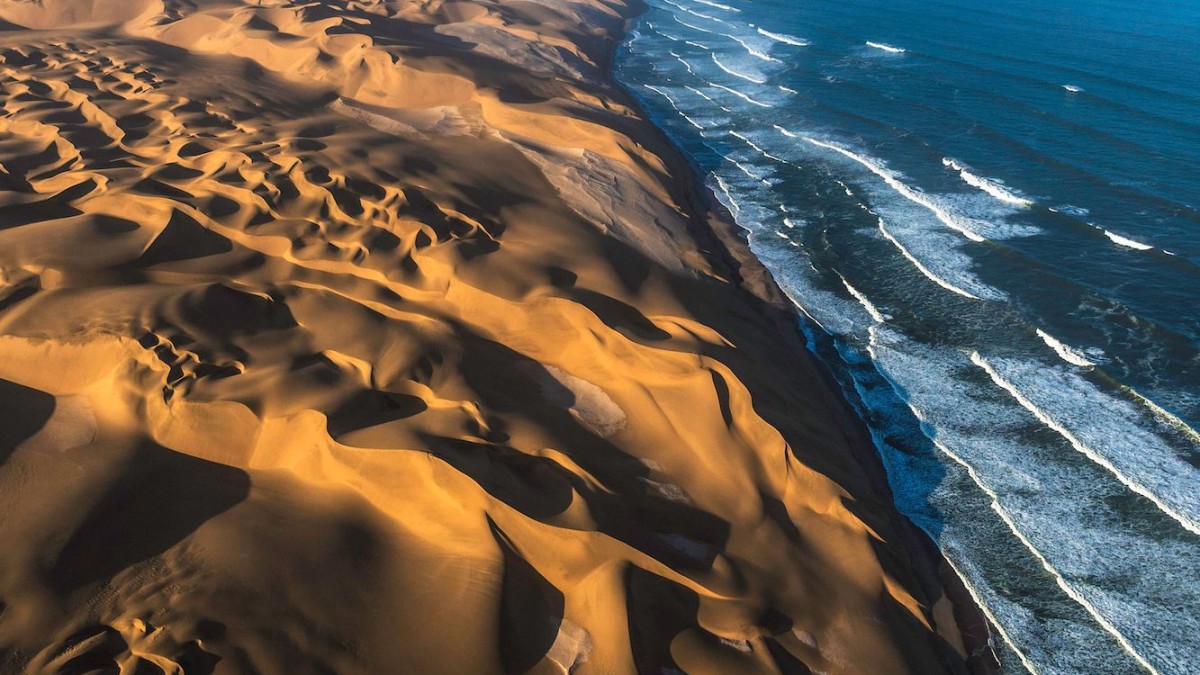
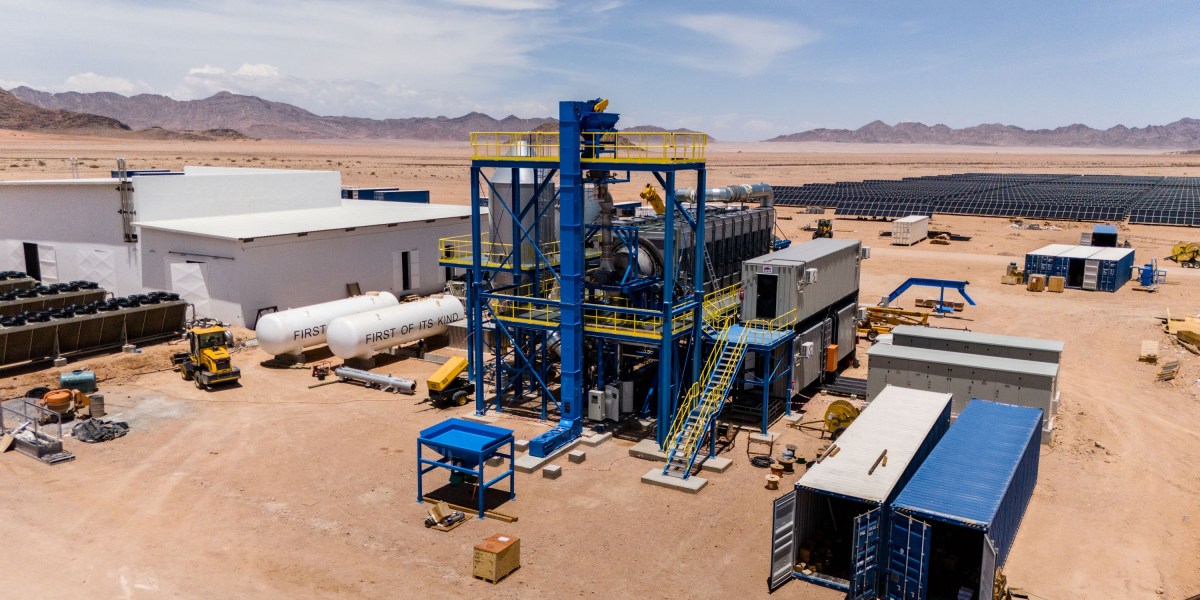
On an afternoon in March in the middle of the world’s oldest desert, Johannes Michels looks out at an array of solar panels, the size of 40 football fields, that stretches toward a ridge of jagged peaks between the ochre-colored sand and a cloudless blue sky. Inside a building to Michels’s left sits a 12-megawatt electrolyzer—a machine resembling two giant AA batteries that is designed to split water into its two component parts, H₂ and O. Behind him is the desert factory’s key piece of proprietary tech: a rotating kiln in which the hydrogen gas from that water is mixed with iron ore to create a pure form of iron, the main ingredient in steel.
Factories have used fossil fuels to process iron ore for three centuries, and the climate has paid a heavy price: According to the International Energy Agency (IEA), the steel industry today accounts for 8% of carbon dioxide emissions. Purifying the ore involves extracting iron that is bound to oxygen, and “removing the bond between the iron and oxygen requires a massive amount of energy,” says Michels, the 39-year-old CEO of HyIron, the startup behind the project.