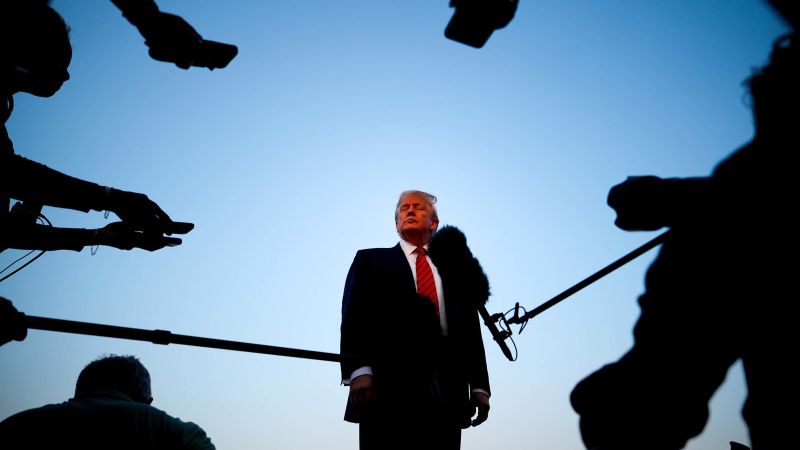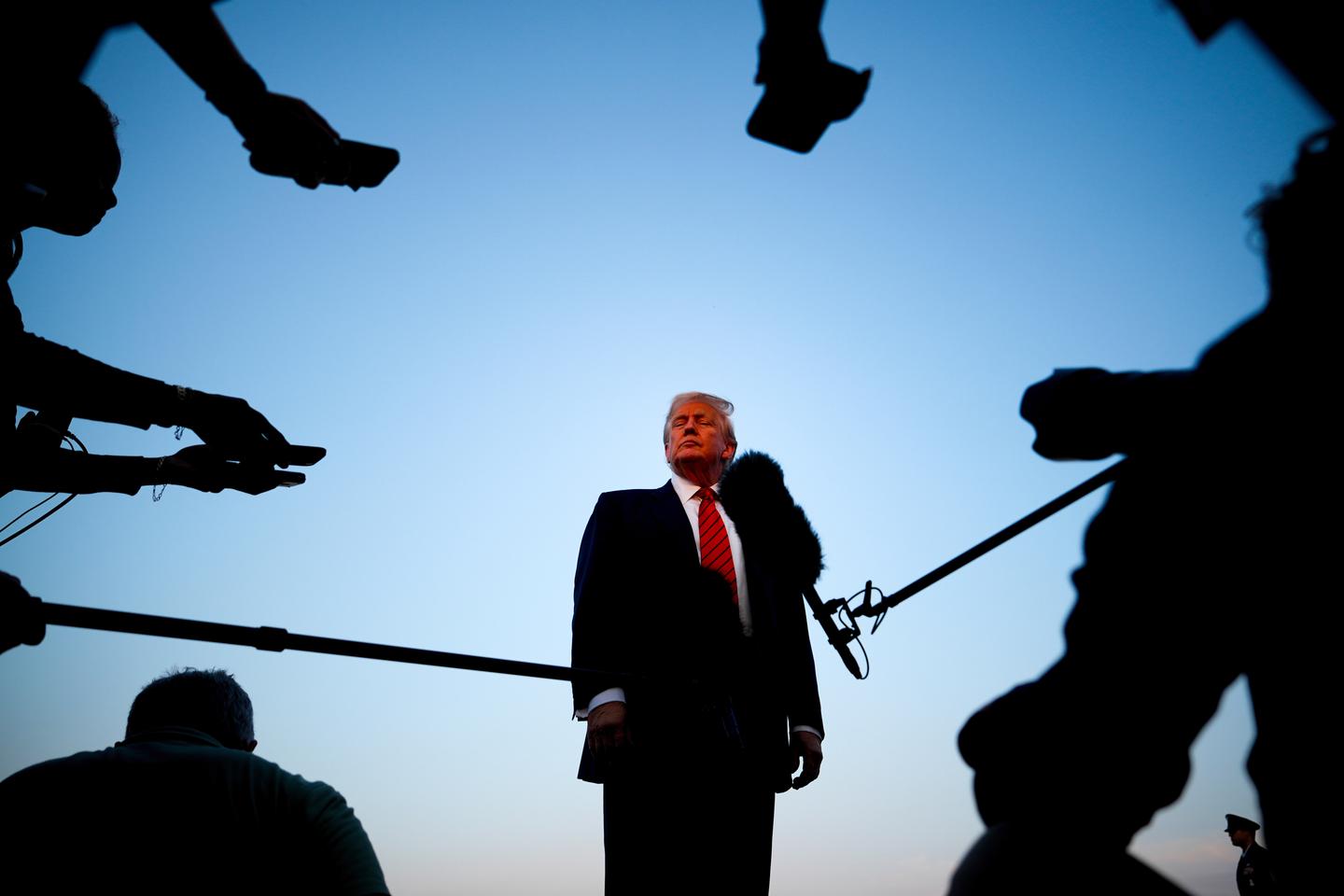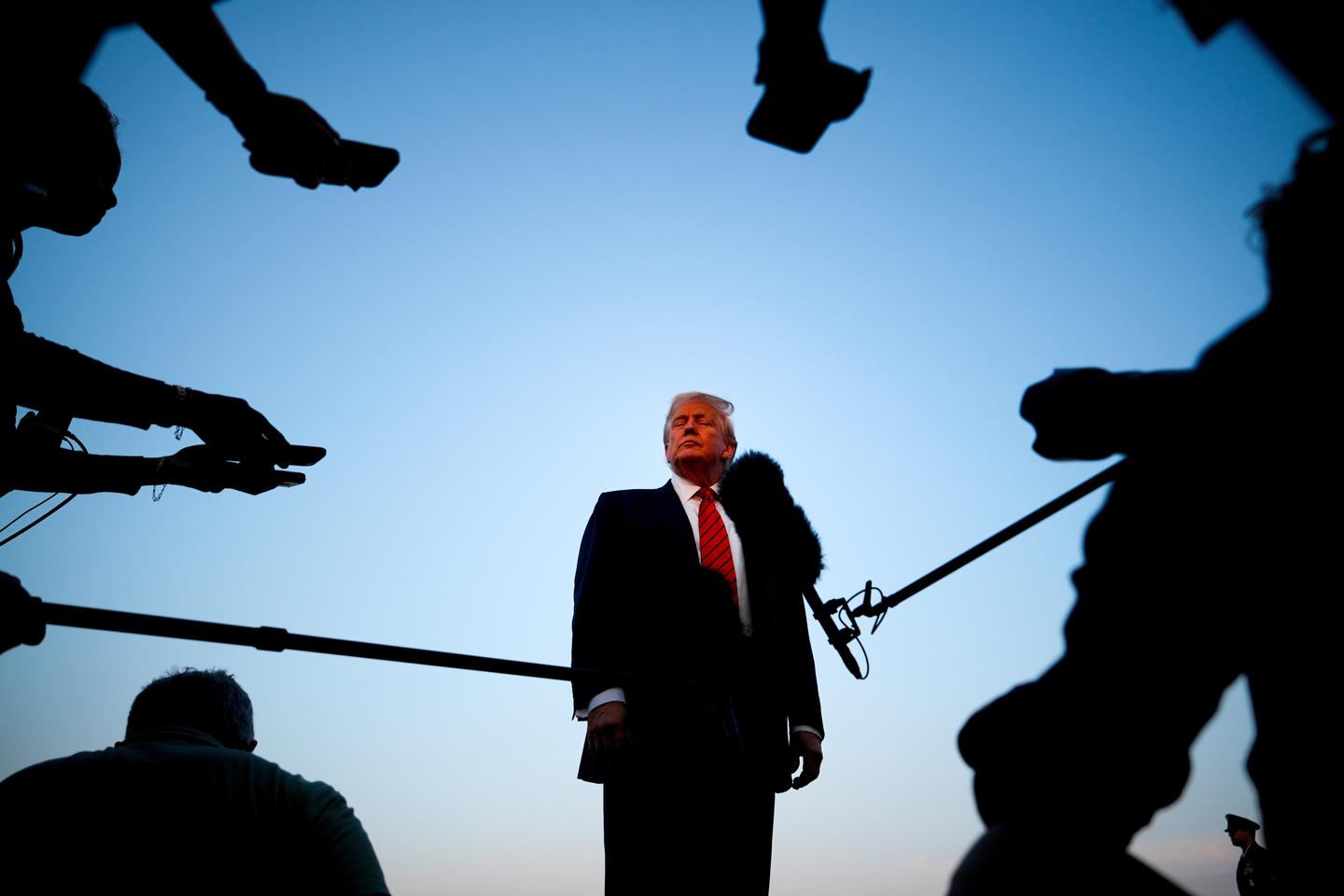
Donald Trump surrounded by journalists on the tarmac at Lehigh Valley Airport, in Allentown, Pennsylvania, on August 3, 2025. JULIA DEMAREE NIKHINSON / AP
Take all the forms of political regime you know, mix them together and pick two at random: you will almost certainly end up with some attempt to define Trumpism. Donald Trump's practice of power has, indeed, placed the United States among the ranks of illiberal democracies, similar to Viktor Orban's Hungary. Yet, does this American version of illiberalism – by virtue of its alliance with Silicon Valley magnates – lean toward the techno-libertarianism of Elon Musk or the reactionary, Christian-inspired nationalism of JD Vance? Does the gap between Trump's populist rhetoric and his policies, which objectively benefit an economic elite, also justify labeling his regime as plutocratic populism, a blend of demagoguery and oligarchy?
Read our series on Tech Oligarchs The day Silicon Valley's oligarchs kissed Trump's ring
Or perhaps, with his drive to dismantle government, privatize services and oppose federal authority, he is moving closer to the anarcho-capitalist branch of libertarianism? But then, what of tariffs and border controls – measures that directly contradict libertarian orthodoxy? All these terms have been used to describe Trumpism. And there are more.