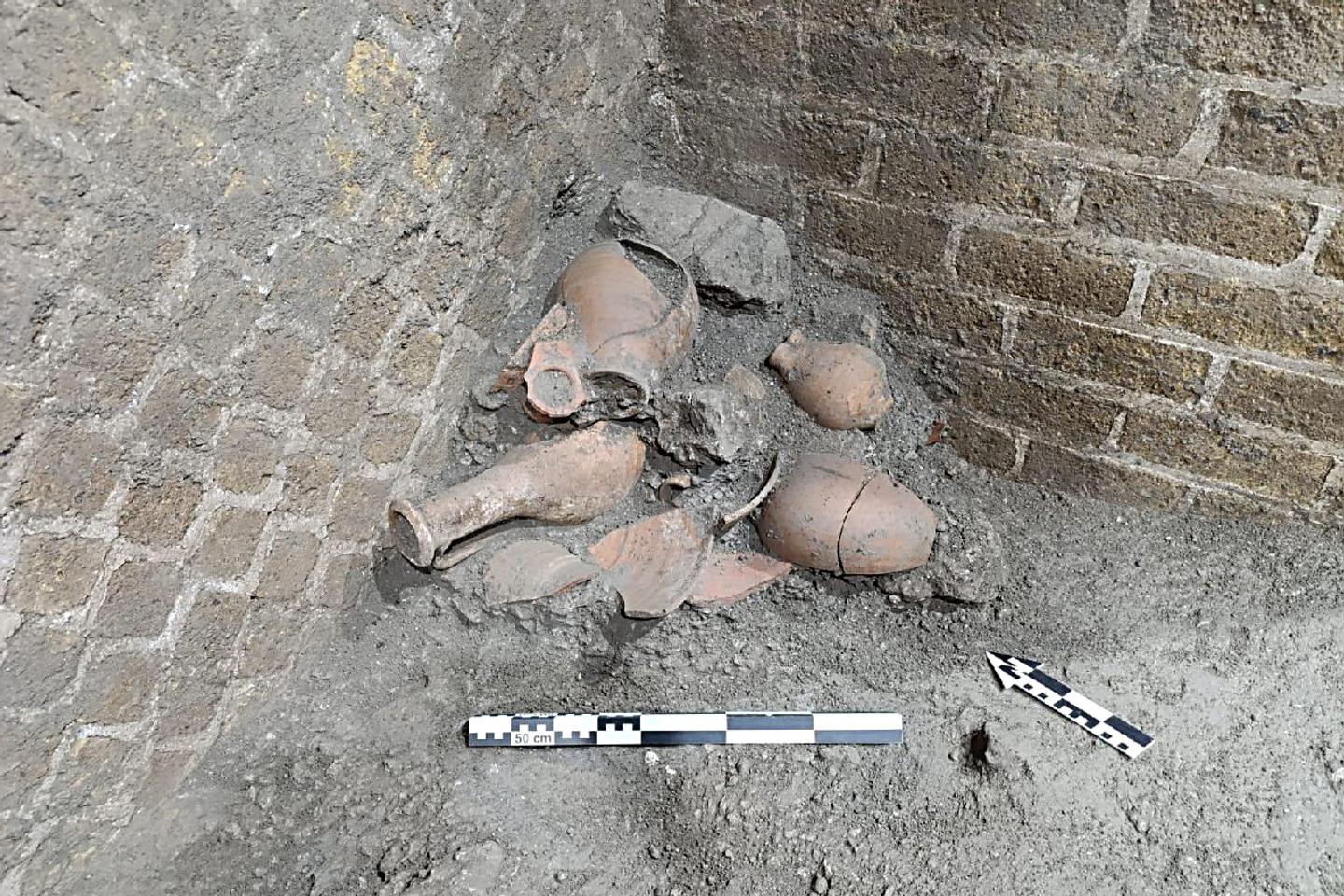
This handout photograph, taken and released by the Pompeii Archaeological Park on August 6, 2025, shows new discoveries at Pompeii. HANDOUT / AFP
Archaeologists have discovered new evidence pointing to the reoccupation of Pompeii following the 79 AD eruption of Mount Vesuvius that left the city in ruins, the directors of the famous site said Wednesday, August 6.
Despite the massive destruction suffered by Pompeii, an ancient Roman city home to more than 20,000 people before the eruption, some survivors who could not afford to start a new life elsewhere are believed to have returned to live in the devastated area. Archaeologists believe they were joined by others looking for a place to settle and hoping to find valuable items left by Pompeii's earlier residents in the rubble.
"Judging by the archaeological data, it must have been an informal settlement where people lived in precarious conditions, without the infrastructure and services typical of a Roman city," before the area was completely abandoned in the fifth century, they said in a statement. While some life returned to the upper floors of the old houses, the former ground floors were converted into cellars with ovens and mills.
This handout photograph, taken and released by the Pompeii Archaeological Park on August 6, 2025, shows new discoveries at Pompeii. HANDOUT / AFP