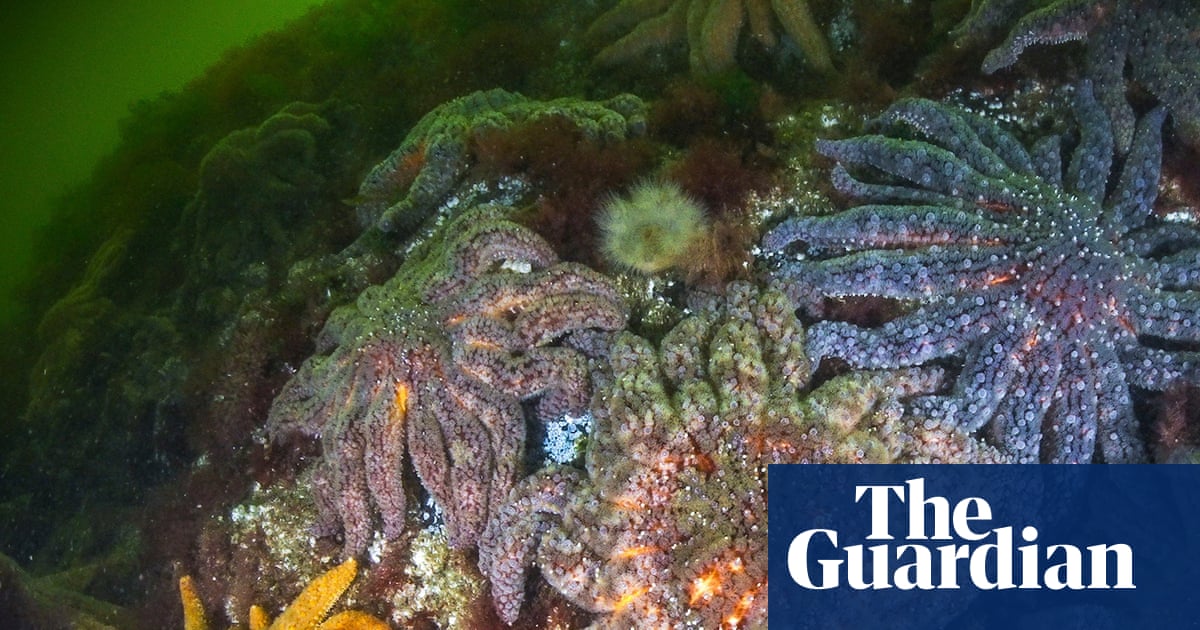
After 90% loss of global sunflower sea star population in 10 years, researchers hope decline can now be tackled
A decade after the onset of a sea star wasting disease (SSWD) epidemic considered the largest ever documented in the wild, researchers have identified the microbial culprit responsible: a strain of the bacterium Vibrio pectenicida.
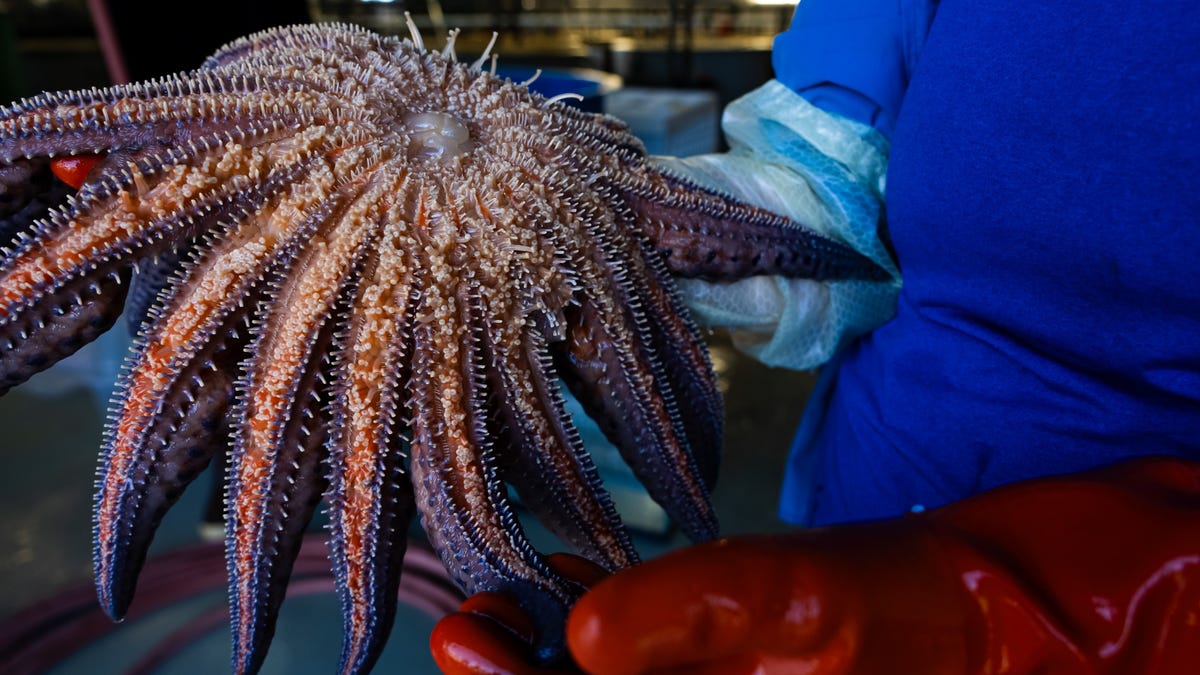
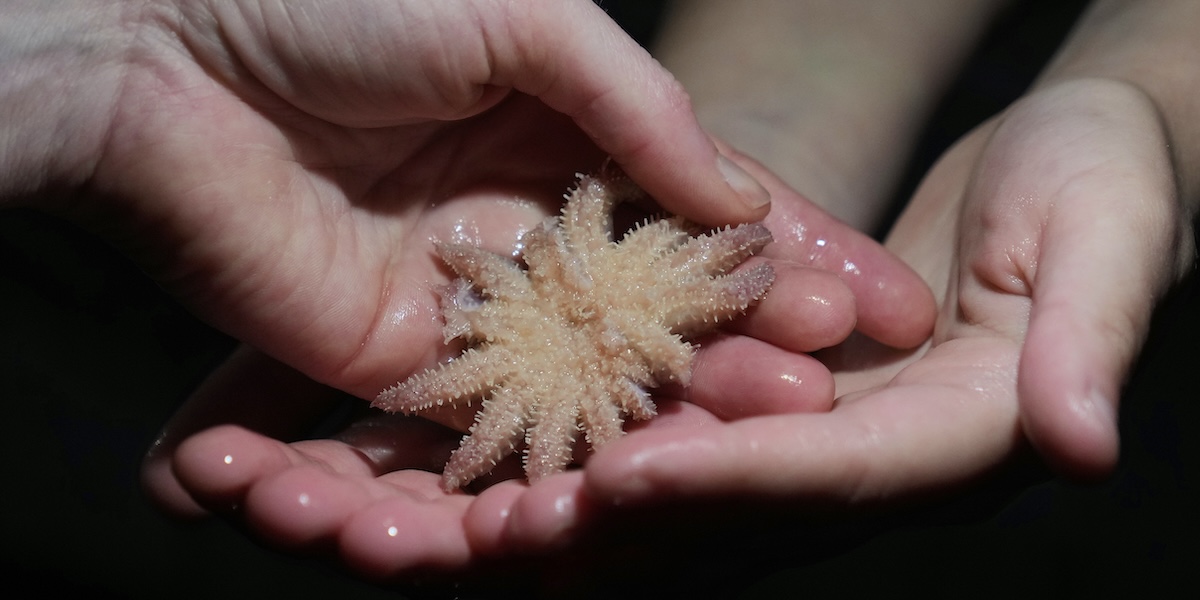
In 10 years, the bacterium has ravaged sunflower sea stars (Pycnopodia helianthoides), a large sea star or starfish, along the western coast of North America, with a loss of 5.8 billion since 2013 – or 90% of the total global population. The sunflower sea star is on the International Union for Conservation of Nature’s red list of critically endangered species.
Previous studies had tested for V pectenicida in tissue samples and yielded inconclusive results. Instead, by examining the sea stars’ coelomic fluid, which acts like blood, researchers were able to confirm with certainty V pectenicida’s role in causing SSWD due to its high abundance there.
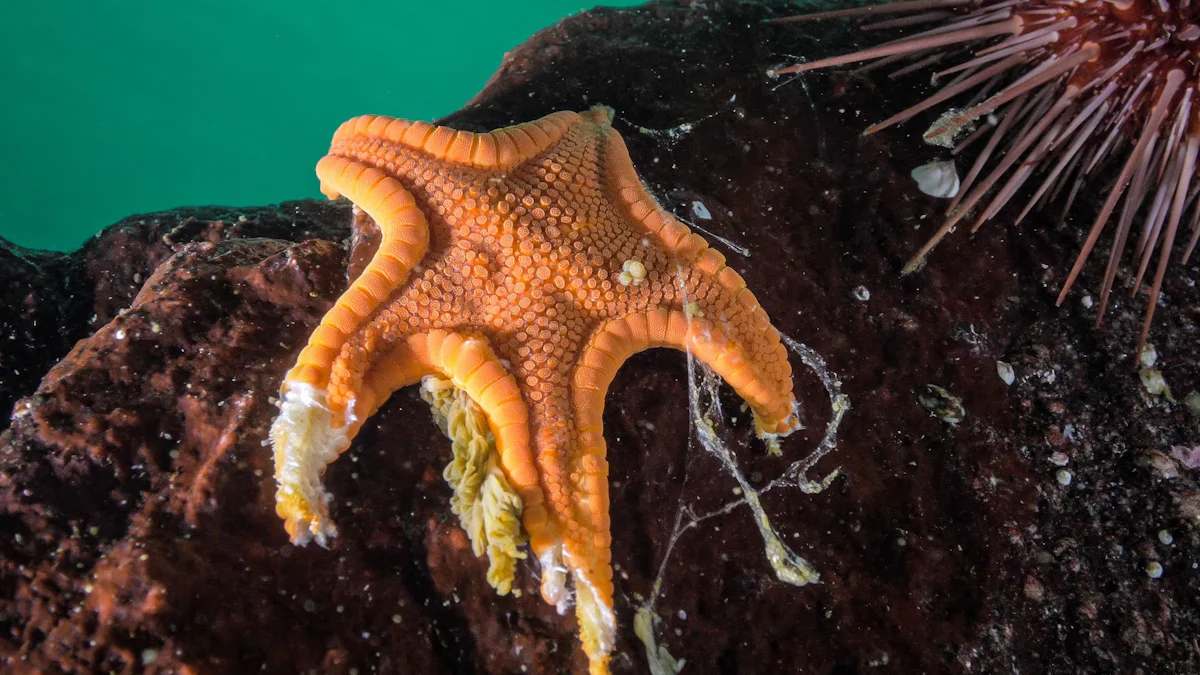
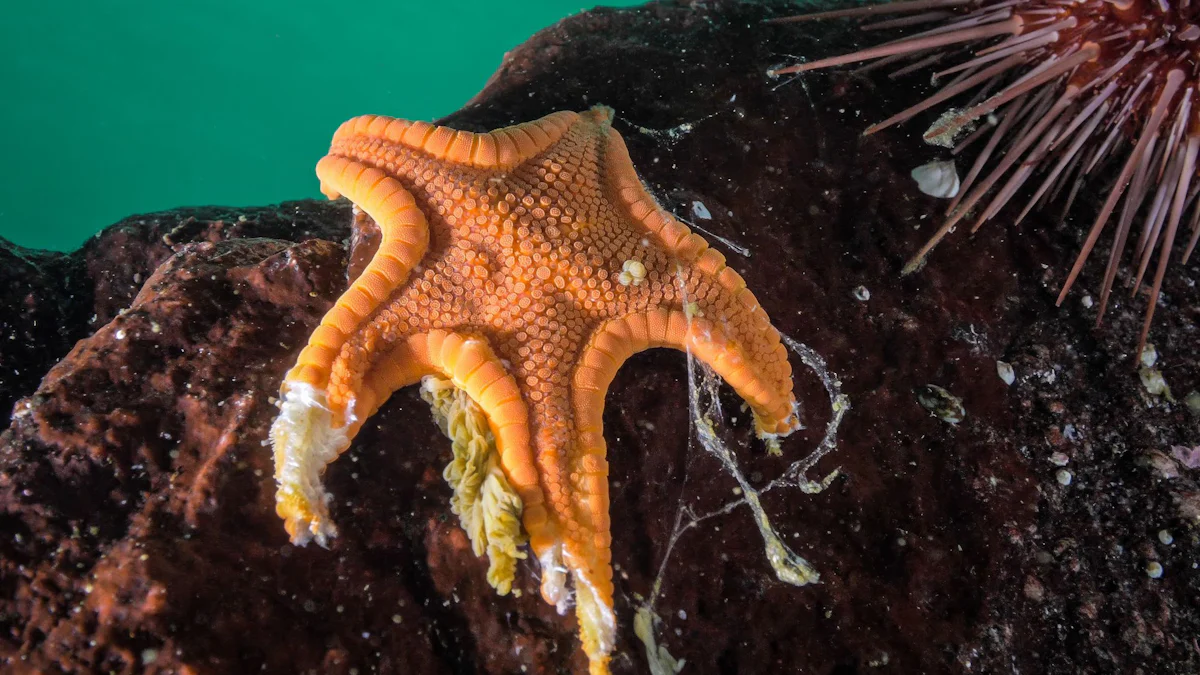
Infection with the V pectenicida strain FHCF-3 begins with exterior lesions, leading to limb loss and contortion, and ultimately kills afflicted individuals by melting their tissues into a white, mucus-like paste. Identifying the disease in afflicted sea stars was impossible without a known pathogen, as sea stars can respond with similar visual signals to other stressors such as low oxygen, salinity variation and extreme heat. The indirect link between rising ocean temperatures and SSWD remains a key area of interest, since V pectenicida is known to proliferate in warm water during seasonal variations and anomalous marine heating events.