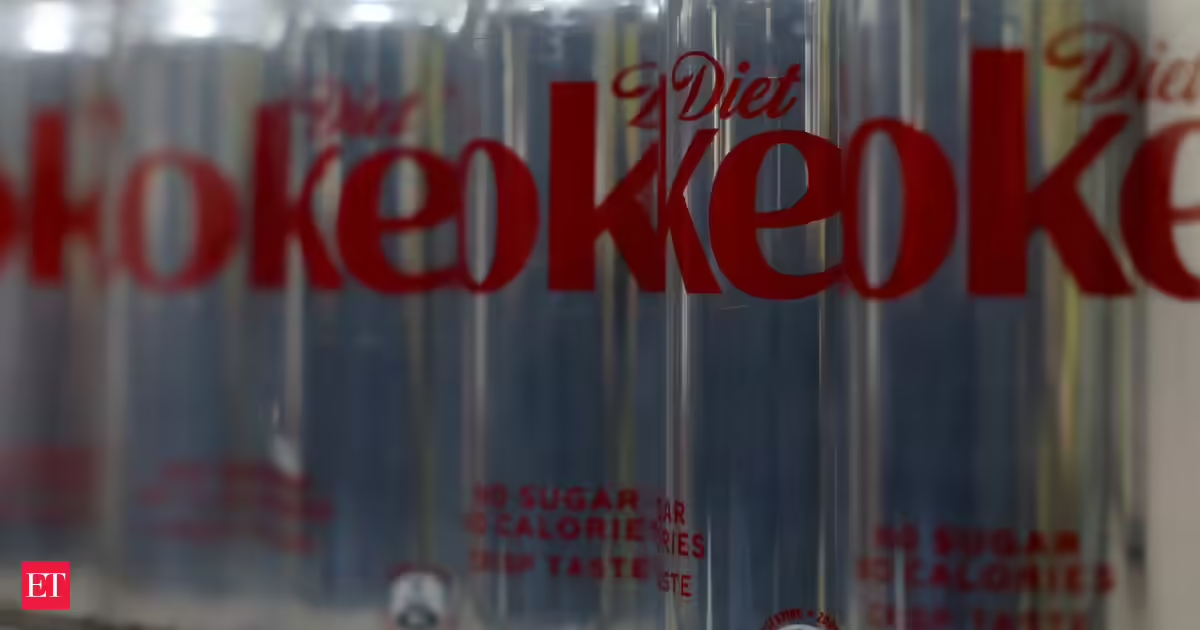
Most of us know how refreshing and satisfying a Coke can be. Whether it’s poured over ice on a hot summer day, is accompanying a burger and fries at lunch or is sipped alongside a tub of buttery popcorn during a blockbuster movie, it's a beverage that has a way of hitting the spot.
But no one drinks a can of cola thinking it’s actually good for them. Among the many Coca-Cola varieties that include Classic, Diet, Zero Sugar and flavored options like Cherry Coke and Vanilla Coke, one is probably better for your health than the others.
Here’s what’s different and similar between the most popular varieties of Coca-Cola, plus which ones are likely to cause the fewest issues for your health goals in the long run.
Coca-Cola is more than just a soft drink; it’s a global brand empire. Founded in 1886 in Atlanta, the company has grown into the world’s largest beverage corporation, boasting over 200 iconic brands. In addition to its flagship cola, Coca-Cola owns well-known drinks like Sprite, Fanta, Powerade, Minute Maid, and even the bottled water brand Dasani.
Its most iconic product, Coca-Cola Classic (usually just called Coke), is a carbonated soft drink made primarily of carbonated water, high-fructose corn syrup (or cane sugar in some countries), caramel coloring, phosphoric acid, caffeine and unspecified “natural flavors,” according to its nutrition label. Sometimes cherry- or vanilla-flavored syrup are also added to the formulation for Cherry Coke and Vanilla Coke varieties.