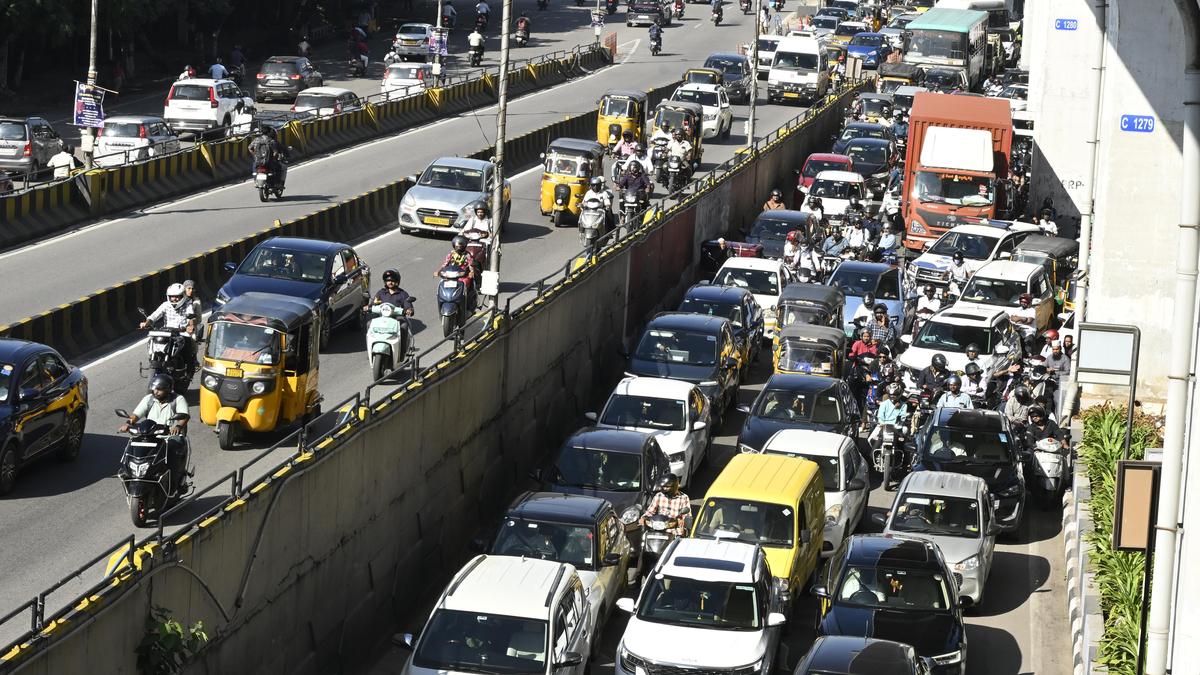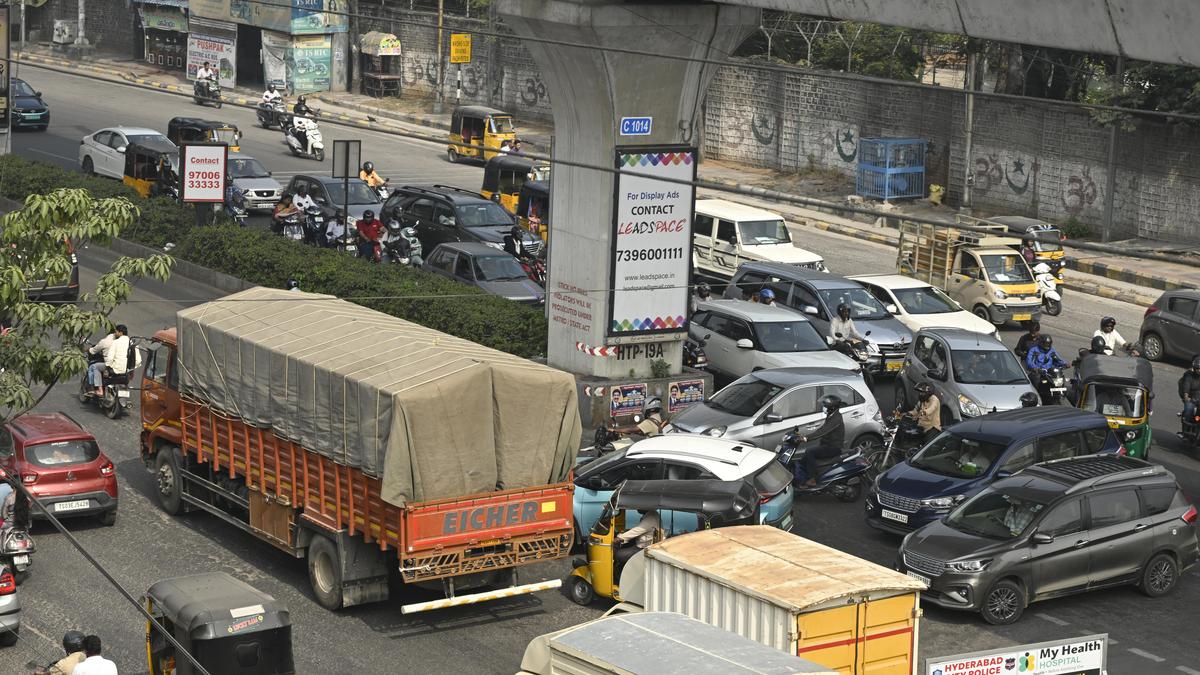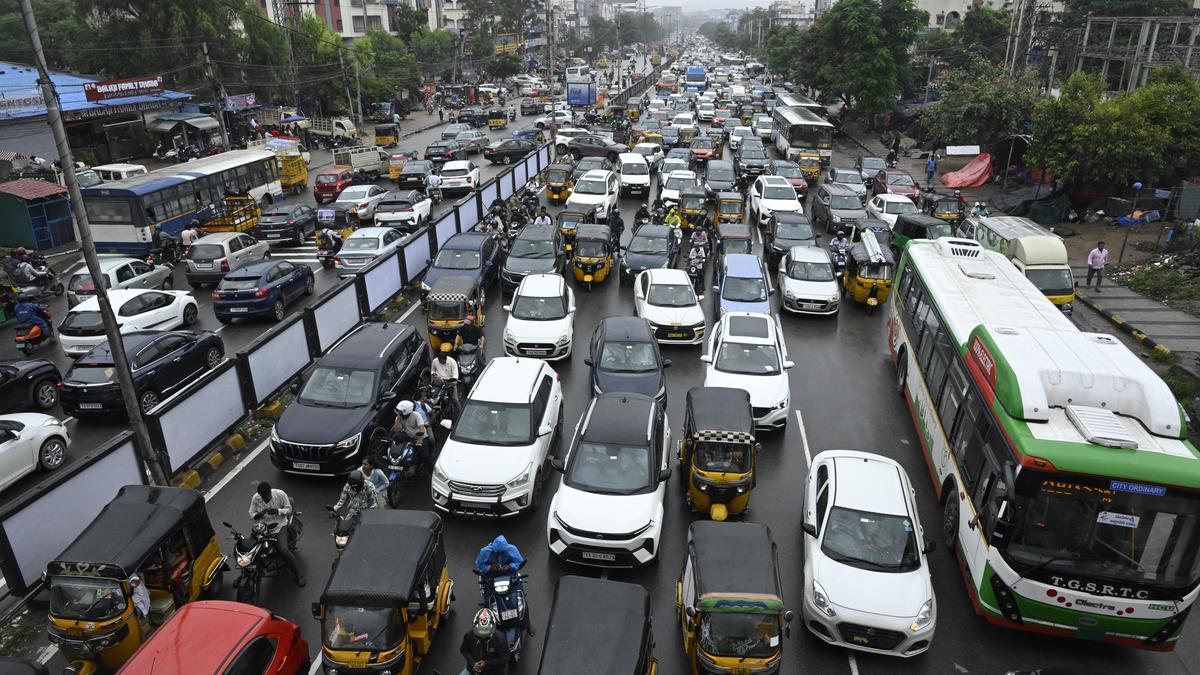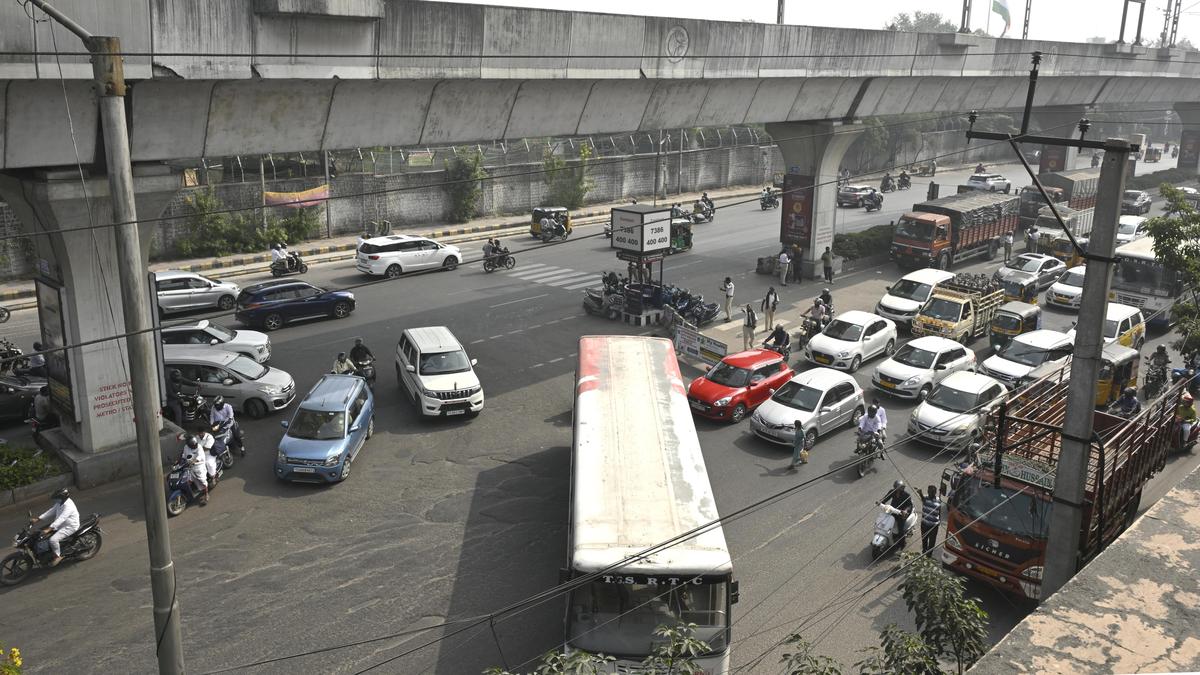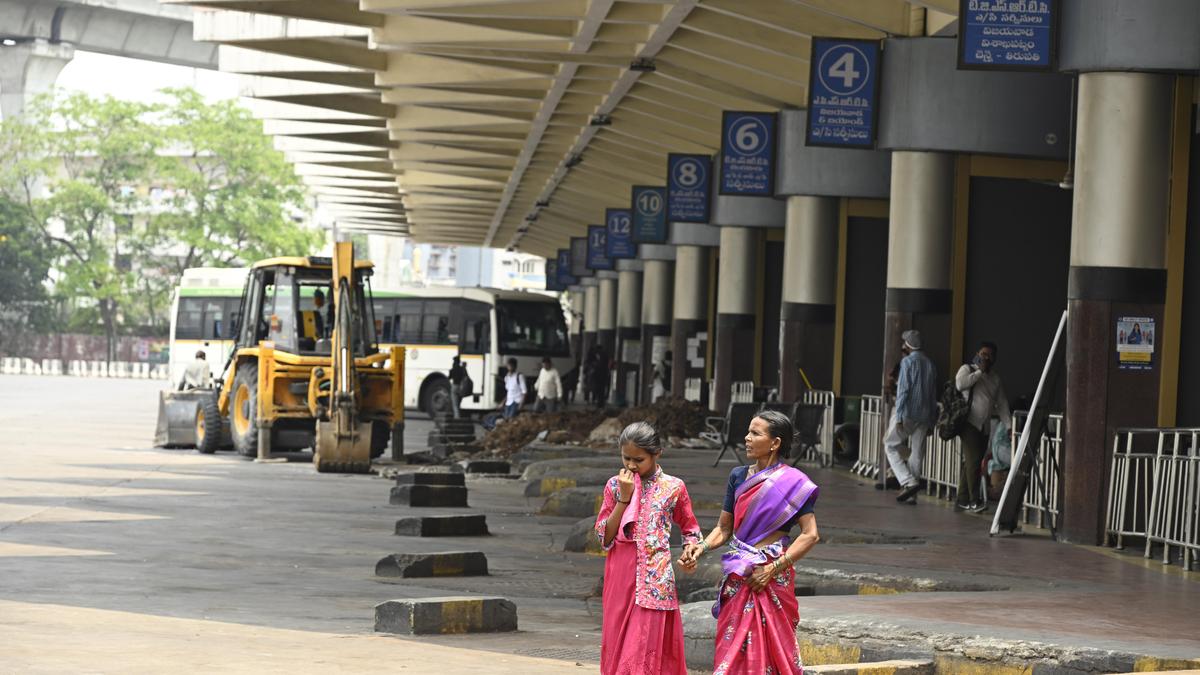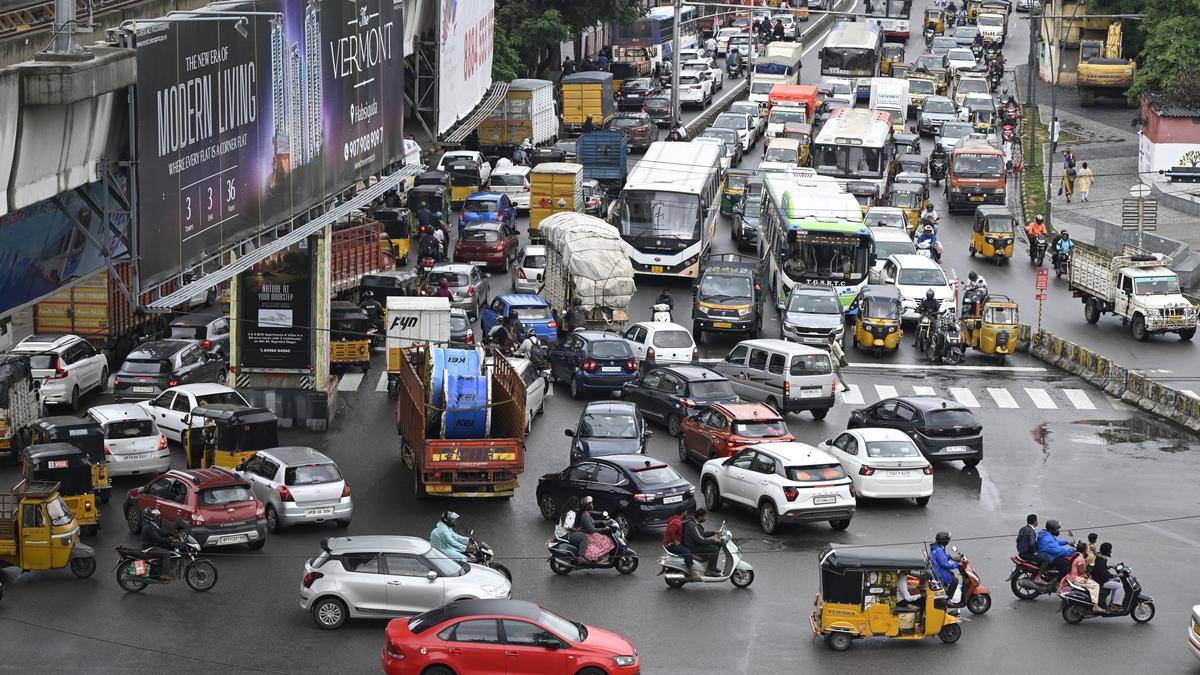
Sangeet junction doesn’t wait for peak hour, it becomes it. By mid-afternoon on a weekday, what begins as a few auto-rickshaws ferrying school children quickly turns into a flood of yellow college buses, RTC services and office-goers queuing up. By around 4 p.m., the transformation is complete: the crossroad slows to a near standstill.
Located at the heart of Secunderabad and named after the now-defunct Sangeet Theatre, the junction is no longer just a nostalgic nod to the city’s cinema culture. It’s where the daily chaos of commuters from Uppal, LB Nagar, Tarnaka and beyond collides with the city’s central artery. What follows is an exercise in patience. Vehicles creep forward a few metres — engines switched off between signal changes — only to stop again. It often takes two or three full signal cycles to make it across the junction. A traffic cop on duty usually overrides the digital signalling system and manages it manually.
A commuter approaching from St. John’s Church ironically halts beside a sign that reads ‘do not block free left’. The free left is anything but free, clogged with waiting two-wheelers, stuck buses and honking cars, all inching ahead. The most severe pressure comes from the Tarnaka-Allagaddabavi side, the main entry point for traffic from East Hyderabad and beyond. Commuters from Vijayawada and Jangaon highways also funnel into this stretch, keeping the junction packed from morning until late into the night.