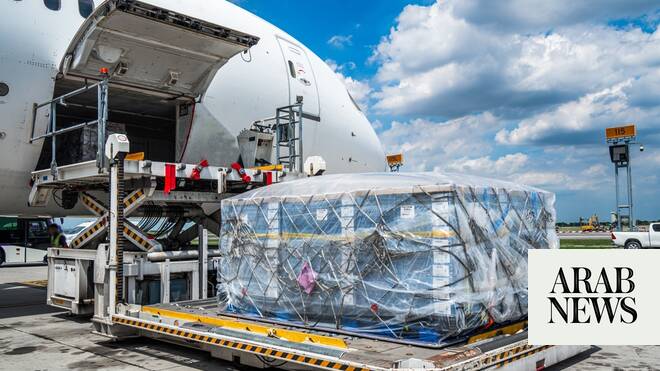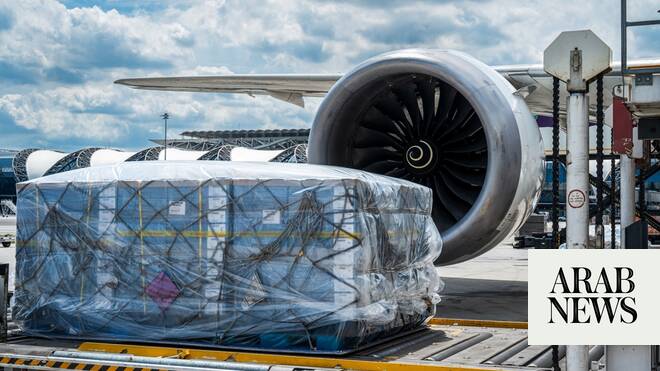
RIYADH: Middle Eastern air cargo capacity grew 1.5 percent year on year in June, even as regional demand contracted by 3.2 percent due to geopolitical tensions and airspace disruptions.
The rise in available cargo space, measured in available cargo tonne-kilometers, came amid route disruptions over parts of Iran, Iraq, Israel, and Lebanon. These factors drove the region’s second consecutive monthly contraction in cargo volumes, according to the International Air Transport Association’s latest air cargo market report.
The performance reflects a broader slowdown in global air cargo, with IATA’s mid-year forecast projecting 0.7 percent volume growth, down from 11.3 percent in 2024.
The slowdown is attributed to rising protectionism, including new US tariffs and the rollback of de minimis exemptions on low-value imports, which could dampen e-commerce-related air freight.
“The June air cargo data made it very clear that stability and predictability are essential supports for trade,” said Willie Walsh, IATA’s director general.