Nord Quantique's plan for error correction involves far less hardware.
Everyone in quantum computing agrees that error correction will be the key to doing a broad range of useful calculations. But early every company in the field seems to have a different vision of how best to get there. Almost all of their plans share a key feature: some variation on logical qubits built by linking together multiple hardware qubits.
A key exception is Nord Quantique, which aims to dramatically cut the amount of hardware needed to support an error-corrected quantum computer. It does this by putting enough quantum states into a single piece of hardware, allowing each of those pieces to hold an error-corrected qubit. Last week, the company shared results showing that it could make hardware that used photons at two different frequencies to successfully identify every case where a logical qubit lost its state.
That still doesn't provide error correction, and they didn't use the logical qubit to perform operations. But it's an important validation of the company's approach.
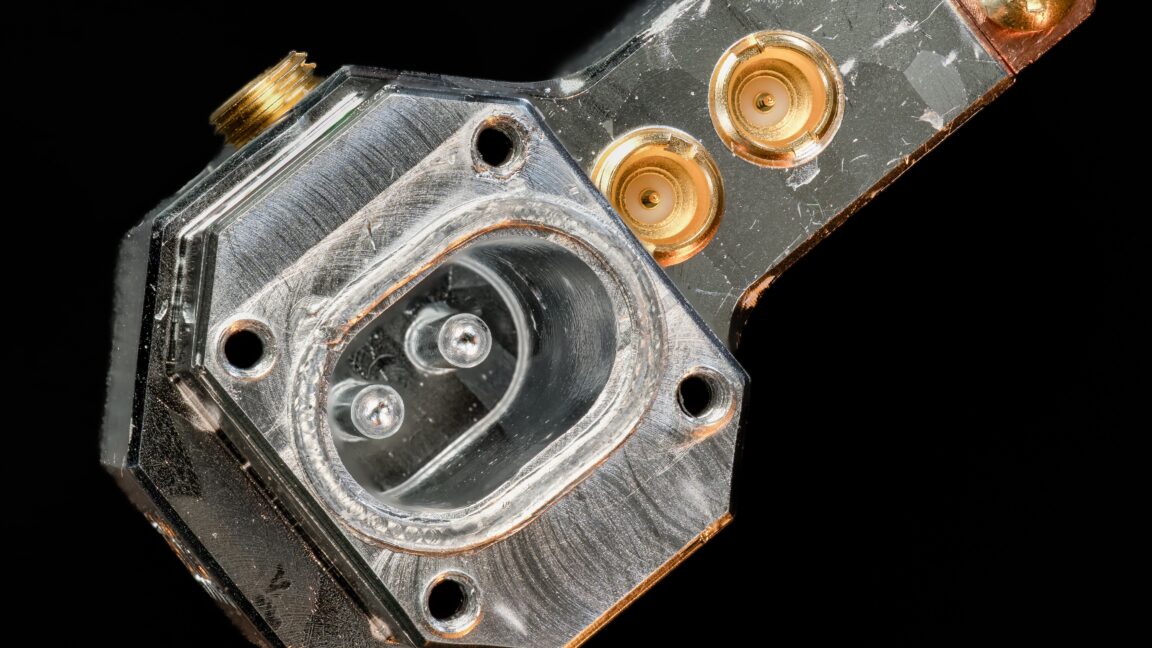
Nord Quantique's hardware is similar to what we described in a recent article about using a single piece of hardware to host quantum systems that store information in three or more states. It involves putting a bunch of microwave photons into a resonator and creating a quantum oscillator with multiple modes, which allows information to be stored in those modes. In the earlier work, researchers used these modes to create a system that could be in as many as four states—instead of the hardware hosting a qubit, it was used to hold either a qutrit or ququart.