HomeAI · summaries
Storia in 2 fonti
Rice University Researchers Engineer Tunable Finite-Temperature Reservoirs in Trapped-Ion Quantum Simulators - Quantum Computing Report
Physicists at Rice University have developed an experimental reservoir-engineering scheme that introduces independently tunable temperatures and dissipation rates to the vibrational modes of a trapped-ion quantum simulator. Published in Physical Review Letters (“Experimental Realization of Thermal Reservoirs with Tunable Temperature in a Trapped-Ion Spin-Boson Simulator“), the technique enables open-system quantum simulations of chemical reactions, charge transfer, and molecular exciton dynamics under realistic thermodynamic conditions. The protocol overcomes a long-standing constraint in trapped-ion quantum simulation: while previous experiments operated either near absolute zero (ground state) or under unconstrained heating (effectively infinite temperature), the Rice framework establishes precise, continuous control across intermediate finite [...]
Confronto fonti
2 prospettive sulla stessa storiaTimeline cronologica
- ·
thequantuminsider.com
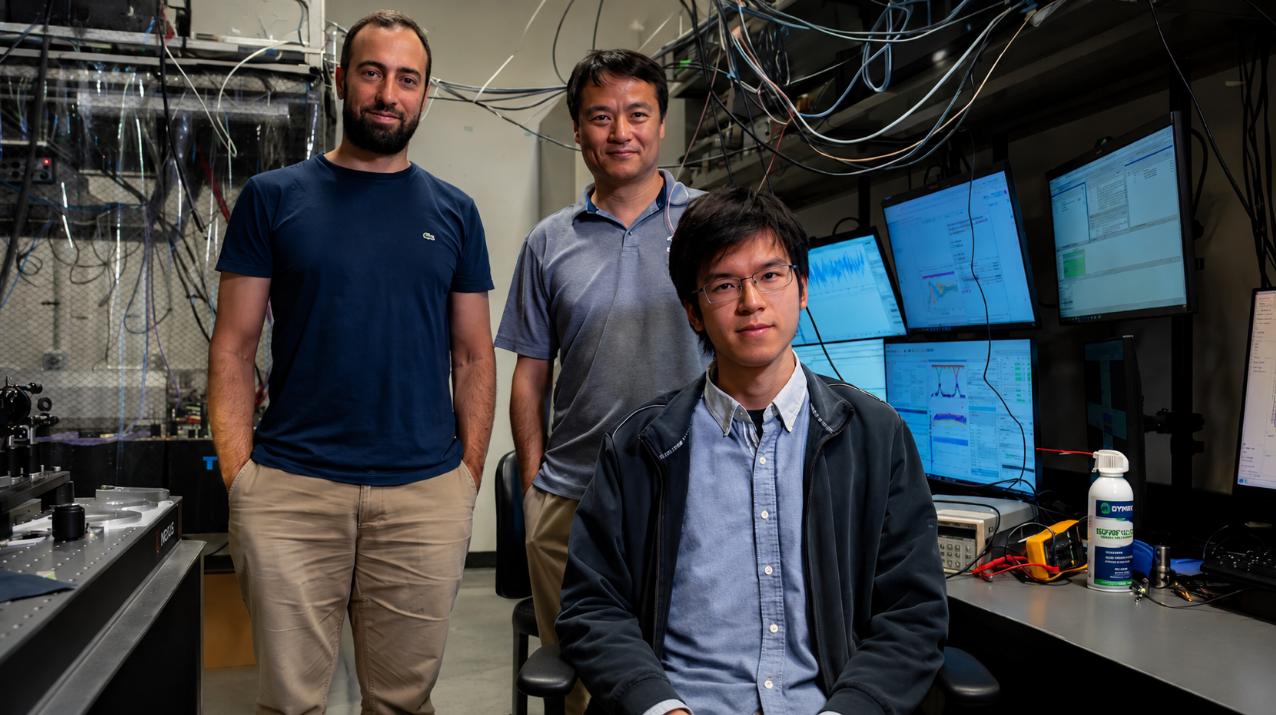
Rice Researchers Improve Trapped-Ion Quantum Simulation with New Temperature Controls
Rice researchers developed new controls for trapped-ion quantum simulators, allowing studies of how temperature affects molecular electron transfer.
- ·
quantumcomputingreport.com

Rice University Researchers Engineer Tunable Finite-Temperature Reservoirs in Trapped-Ion Quantum Simulators - Quantum Computing Report
Physicists at Rice University have developed an experimental reservoir-engineering scheme that introduces independently tunable temperatures and dissipation rates to the…