HomeAI · summaries
Storia in 3 fonti
The post-pandemic classroom is quietly ditching the laptop-for-every-kid model | Fortune
While most schools resumed in-person classes by 2021, many of them continued to rely heavily on online platforms and apps to help their students do their work.Today, however, more and more schools are reconsidering how technology fits into teaching and learning, with many districts establishing clearer expectations about when technology should be used, for what purpose and at what ages.So far, as of late July 2026, lawmakers in at least 17 states had introduced or debated legislation addressing classroom screen time or student use of digital devices. Six states had already enacted new laws, while others had considered or failed to pass similar measures.Iowa, for example, passed a law that limited digital instruction for elementary students. Maine’s legislation did not put specific screen time limits in place but approved a study on the impact of classroom technology.Instead of treating screens as the default tool for instruction, some schools are directing teachers to use laptops only when the technology adds clear instructional value.Students use laptops at Carter Traditional Elementary School in Louisville, Ky., in January 2022. Jon Cherry/Getty Images North America
Confronto fonti
3 prospettive sulla stessa storiaTimeline cronologica
- ·
theconversation.com
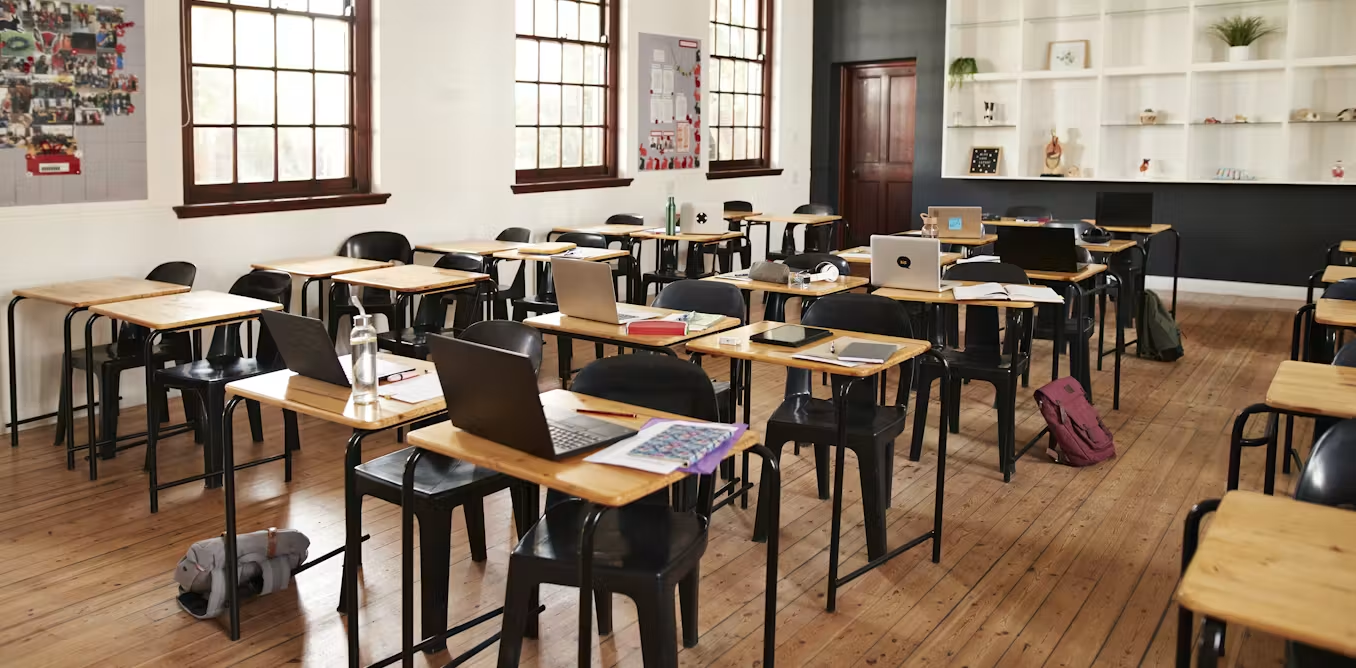
Schools are rethinking whether every student needs a laptop
Rather than considering how much time students spend on screens, the more useful question is whether they are asking questions and solving problems with the help of technology.
- ·
independent.co.uk

Schools rethinking if every student needs a laptop after race to solve digital divide
Many districts are establishing clearer expectations about when technology should be used, for what purpose and at what ages